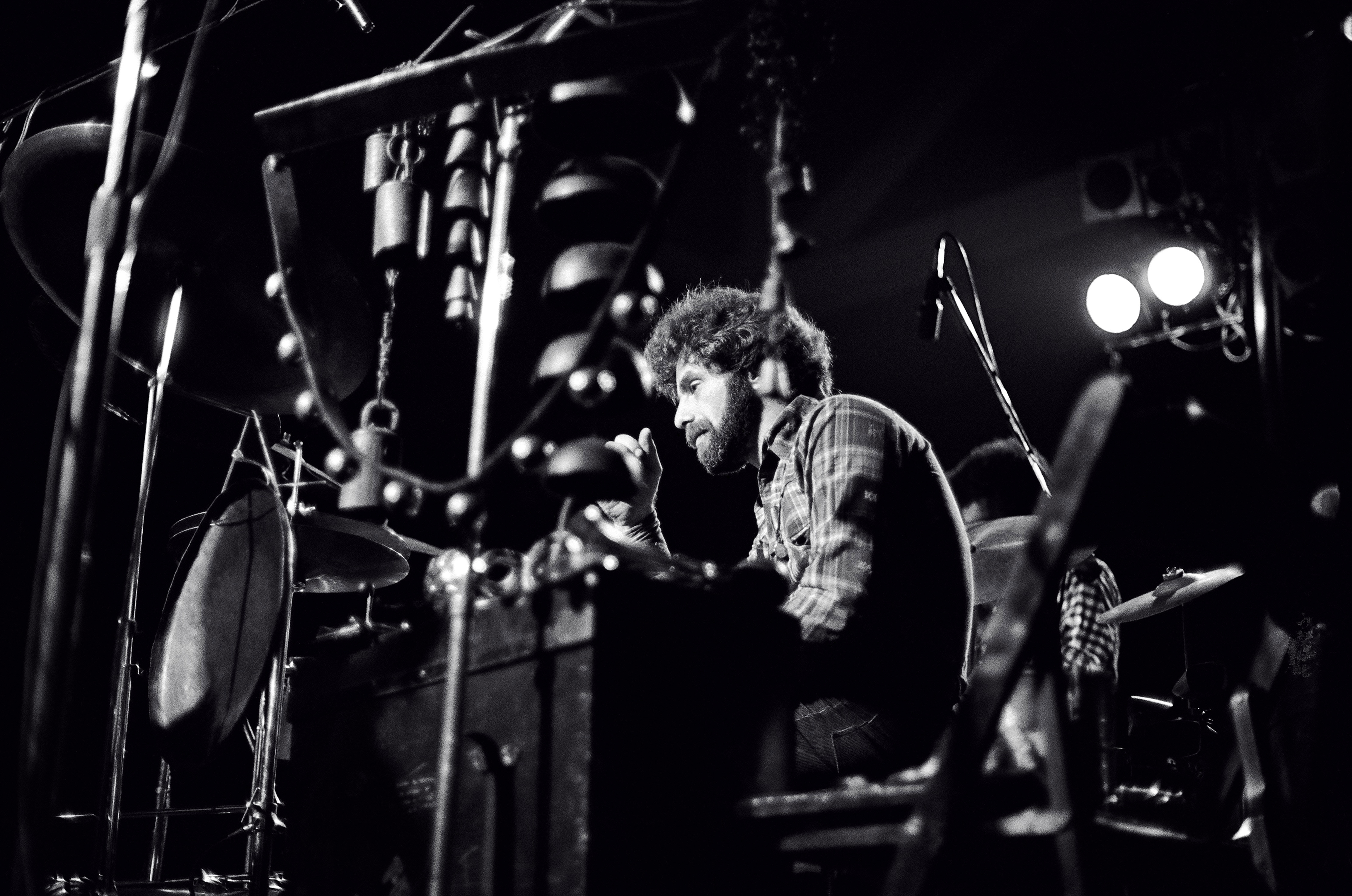
Introduction:
Barry Altschul, a drummer whose name is synonymous with innovation and virtuosity, has left an indelible mark on jazz through his extensive career spanning over five decades. Known for his versatility, creativity, and profound contributions to the avant-garde jazz movement, Altschul’s story is one of relentless exploration and collaboration. From his early days in New York City to his prominent role in groundbreaking ensembles, Altschul’s artistry has not only pushed the boundaries of jazz drumming but has also enriched the genre’s narrative.
Early Life and Introduction to Music:
Born eighty-two years ago today on January 6, 1943, in New York City, Barry Altschul was exposed to a vibrant cultural environment that shaped his artistic sensibilities. He began his musical journey as a self-taught drummer, playing along to records and experimenting with rhythms.
Help yourself to some live jazz, and help the artists and clubs fulfill their dreams. Sign up to Oh! Jazz to watch live and on-demand performances. 25% of your subscription goes back to the artists and 10% to the clubs.
Learn more about Oh! Jazz here.
In the 1960s, Altschul formally studied under the renowned percussionist Charli Persip, who helped refine his technique and instilled in him a deep understanding of jazz’s rhythmic intricacies. Altschul’s ability to adapt to different musical styles and his passion for experimentation became evident during this formative period, laying the groundwork for his future as a key figure in avant-garde jazz.
Breaking Ground: The Circle Era
Altschul’s career took a decisive turn in the late 1960s when he joined the innovative group Circle. Formed by pianist Chick Corea, the ensemble also featured saxophonist Anthony Braxton and bassist Dave Holland. Circle became a pivotal platform for Altschul, allowing him to showcase his skills as a drummer capable of navigating complex, free-flowing improvisations.
Circle’s music was a confluence of avant-garde experimentation and intricate compositions. Altschul’s drumming was integral to the group’s sound, as he seamlessly blended traditional swing rhythms with unconventional time signatures and textures. His use of extended percussion, including cymbals, bells, and gongs, added a distinct sonic dimension to Circle’s performances.
Albums like “Circling In” and “Paris-Concert” captured the group’s exploratory spirit. Altschul’s interplay with Corea, Braxton, and Holland demonstrated his ability to anchor the ensemble while contributing to its dynamic energy. Though Circle disbanded in 1971, the group’s influence on avant-garde jazz remains profound, and Altschul emerged as a sought-after collaborator in the jazz world.
Collaborations with Anthony Braxton:
One of Altschul’s most enduring musical partnerships was with Anthony Braxton, a pioneer of free jazz and experimental music. After Circle, Altschul continued to collaborate with Braxton on numerous projects, including the landmark album “The Complete Braxton.” Their musical relationship was characterized by a shared commitment to pushing boundaries and exploring new forms of expression.
Altschul’s drumming provided a crucial foundation for Braxton’s complex compositions. His ability to navigate shifting tempos, polyrhythms, and unconventional structures made him an ideal collaborator for Braxton’s avant-garde vision. Albums like “Five Pieces 1975” and “Creative Orchestra Music 1976” highlight their synergy, with Altschul’s dynamic drumming complementing Braxton’s intricate saxophone lines.
Expanding Horizons: The 1970s and Beyond
In the 1970s, Altschul’s reputation as a versatile and innovative drummer continued to grow. He played with a diverse array of musicians, including Sam Rivers, Paul Bley, and Kenny Wheeler. His work with pianist Paul Bley, in particular, showcased his ability to adapt to minimalist and introspective styles of jazz.
Altschul’s solo career also flourished during this period. Albums like “You Can’t Name Your Own Tune” (1977) and “Another Time/Another Place” (1978) highlighted his compositional skills and his command over a wide range of rhythmic styles. These recordings reflect Altschul’s deep understanding of jazz traditions while demonstrating his willingness to experiment with new ideas.
Rediscovery and Resurgence:
After a relatively low-profile period during the 1980s and 1990s, Altschul experienced a resurgence in the 2000s. He returned to the jazz scene with renewed energy, forming his own ensembles and collaborating with a new generation of musicians. Albums like “The 3Dom Factor” (2013) and “Tales of the Unforeseen” (2015) reaffirmed his status as a master drummer and composer.
In these later recordings, Altschul’s drumming retained its characteristic intensity and inventiveness. He continued to draw on his vast experience while embracing contemporary influences, demonstrating his ability to remain relevant in an ever-evolving jazz landscape.
Legacy and Influence:
Barry Altschul’s contributions to jazz extend far beyond his technical prowess as a drummer. His career is a testament to the power of collaboration, experimentation, and a relentless pursuit of artistic growth. As a member of Circle and numerous other projects, Altschul has played a vital role in shaping the sound of avant-garde jazz.
His influence can be heard in the work of countless drummers who have drawn inspiration from his ability to blend tradition with innovation. Altschul’s willingness to take risks and explore uncharted musical territory has made him a revered figure in the jazz community.
Barry Altschul’s journey through the rhythms of avant-garde jazz is a story of creativity, resilience, and a deep commitment to the art form. From his early days in New York to his collaborations with some of the most innovative musicians of his time, Altschul has continually pushed the boundaries of what is possible in jazz.
As he continues to perform and record, Altschul’s music remains a source of inspiration for listeners and musicians alike. His legacy as a drummer, composer, and pioneer of avant-garde jazz is secure, and his impact on the genre will undoubtedly resonate for generations to come.
References:
- Cook, R. & Morton, B. (2008). The Penguin Guide to Jazz Recordings. Penguin Books.
- Wilmer, V. (1992). As Serious As Your Life: John Coltrane and Beyond. Serpents Tail.
- Barry Altschul picture. Retrieved from https://en.wikipedia.org/wiki/File:Barry_Altschul.jpg

Leave a Reply