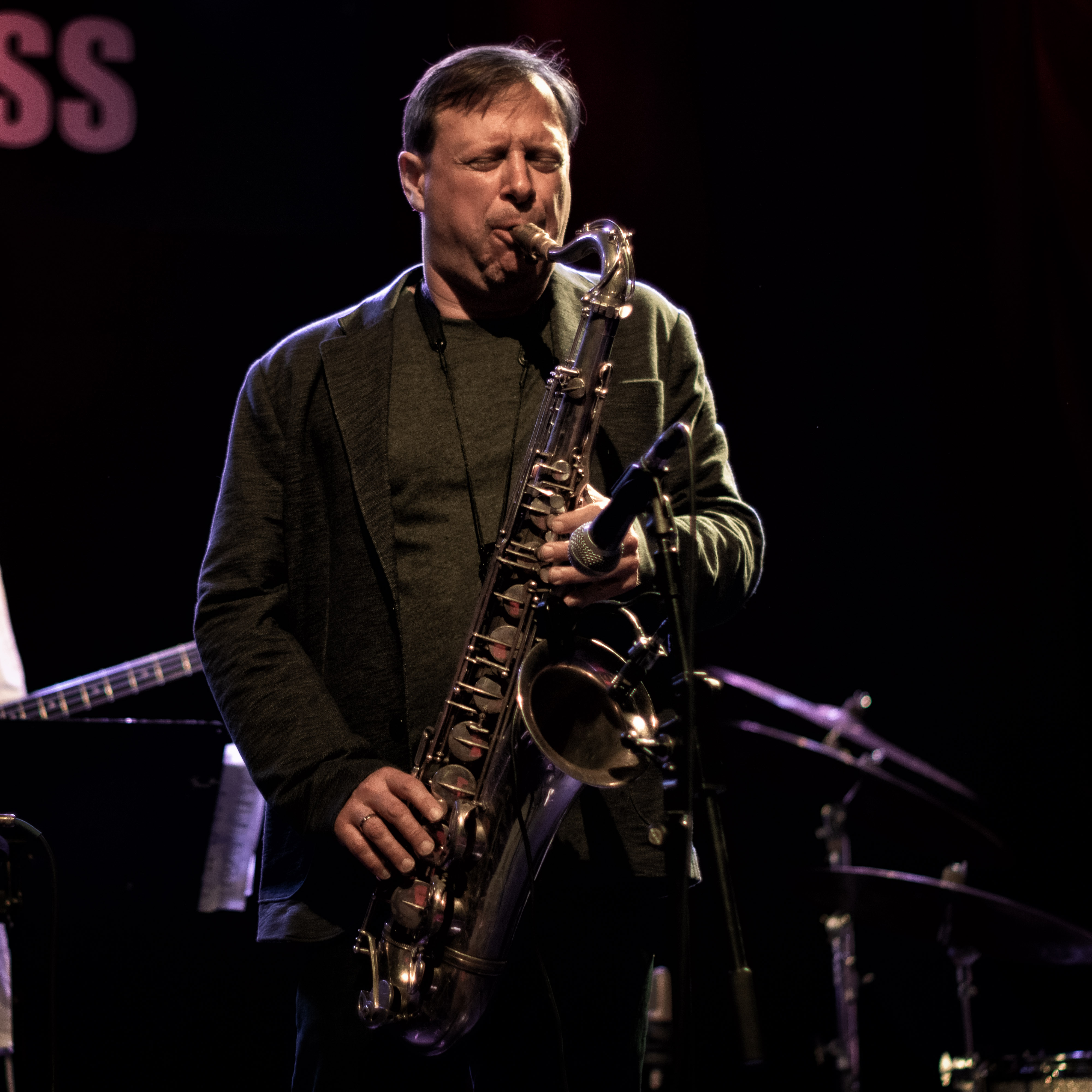
Introduction:
In the world of jazz, there are those who follow tradition and those who push its boundaries to new heights. Chris Potter, an extraordinary saxophonist, composer, and bandleader, falls into the latter category. With his technical brilliance, harmonic sophistication, and an unrelenting quest for innovation, Potter has earned a reputation as one of the most influential voices in contemporary jazz. His remarkable career spans decades, and his contributions to the art form continue to inspire musicians and listeners alike.
Early Life and Musical Beginnings:
Chris Potter was born fifty-four years ago today on January 1, 1971, in Chicago, Illinois, but he spent much of his childhood in Columbia, South Carolina. From an early age, Potter displayed an innate curiosity for a diverse range of musical styles and instruments, mastering both the guitar and piano before discovering his true calling. After hearing the smooth and lyrical sound of Paul Desmond, he found the saxophone to be the perfect medium for his artistic expression. At just 10 years old, Potter began playing the alto saxophone, and by 13, he was already performing his first jazz gigs. His talent quickly garnered a loyal local following as he honed his skills performing alongside seasoned musicians like Johnny Helms and Terry Rosen.
Help yourself to some live jazz, and help the artists and clubs fulfill their dreams. Sign up to Oh! Jazz to watch live and on-demand performances. 25% of your subscription goes back to the artists and 10% to the clubs.
Learn more about Oh! Jazz here.
After graduating from Dreher High School in Columbia, Chris Potter moved to New York City to pursue his passion for music at the collegiate level. He began his studies at The New School before transferring to the Manhattan School of Music, a prestigious institution known for nurturing the next generation of jazz greats. Immersed in the city’s dynamic and bustling jazz scene, Potter found himself surrounded by unparalleled opportunities to collaborate with and learn from some of the most esteemed musicians in the industry.
Rising Star: Early Collaborations
Potter’s professional breakthrough came when he joined bebop legend Red Rodney’s band at just 18 years old. Touring and recording with Rodney provided Potter with invaluable experience and exposure. Critics and audiences alike were amazed by the young saxophonist’s maturity, fluid technique, and inventiveness.
In the 1990s, Potter became a sought-after sideman, collaborating with a wide array of artists, including Paul Motian, Dave Holland, and the Mingus Big Band. His work with Holland, in particular, was a defining chapter in his career. Potter’s tenure in the Dave Holland Quintet showcased his ability to blend complex improvisation with group dynamics, contributing to the ensemble’s groundbreaking albums such as “Prime Directive” and “Not for Nothin’.”
Solo Career and Musical Vision:
While Potter was making waves as a collaborator, he also established himself as a bandleader and composer. His debut album, “Presenting Chris Potter” (1993), marked the beginning of a prolific recording career. Over the years, he released critically acclaimed albums, including “Gratitude” (2001), “Underground” (2006), and “The Dreamer Is the Dream” (2017).
Potter’s compositions often explore intricate harmonic landscapes and rhythmic complexities, seamlessly blending traditional jazz elements with contemporary influences. His music reflects a deep understanding of jazz history while embracing innovation, making him a bridge between the past and the future of the genre.
The Underground Band:
One of Potter’s most celebrated projects is his Underground band, formed in the mid-2000s. Featuring Adam Rogers on guitar, Craig Taborn on keyboards, and Nate Smith on drums, this quartet explored an electric, groove-oriented sound that pushed the boundaries of jazz. Albums like “Underground” and “Follow the Red Line: Live at the Village Vanguard” highlight Potter’s willingness to experiment and redefine the possibilities of the saxophone.
The Underground band’s music is marked by its high-energy improvisations, intricate interplay, and genre-defying approach. It has been praised for attracting a younger audience to jazz, proving Potter’s ability to stay relevant in an ever-evolving musical landscape.
Technical Mastery and Musical Language:
Chris Potter’s technical prowess on the saxophone is nothing short of astounding. Known for his extraordinary speed, precision, and versatility, he is equally comfortable navigating bebop lines, extended harmonics, and avant-garde improvisations. Whether playing a ballad or a complex polyrhythmic composition, he brings a depth of emotion and intellectual rigor to every performance.
Notable Albums:
- “Gratitude” (2001): This album pays homage to Potter’s saxophone heroes, with compositions dedicated to legends like John Coltrane, Sonny Rollins, and Wayne Shorter. The tracks showcase Potter’s reverence for tradition while highlighting his innovative spirit.
- “Underground” (2006): A bold departure from acoustic jazz, “Underground” features electric instrumentation and explores funk, rock, and fusion influences. It is widely regarded as a landmark in modern jazz.
- “Imaginary Cities” (2015): Released with the Chris Potter Underground Orchestra, this ambitious project blends jazz with classical elements, showcasing Potter’s compositional prowess on a grand scale.
- “The Dreamer Is the Dream” (2017): This ECM release features Potter in a quartet setting, delivering introspective and lyrical compositions that reflect his more contemplative side.
Collaboration with Pat Metheny:
A pivotal chapter in Chris Potter’s career was his collaboration with renowned guitarist Pat Metheny. Their work together culminated in the acclaimed album “Unity Band,” featuring Metheny alongside Potter on saxophone, Ben Williams on bass, and Antonio Sánchez on drums. Released by Nonesuch Records on June 12, 2012, the album was met with widespread praise for its innovative compositions and seamless interplay among the musicians. This recognition was cemented when “Unity Band” won the Grammy Award for Best Jazz Instrumental Album at the 2013 Grammy Awards, further solidifying Potter’s status as one of jazz’s most influential voices.
Recognition and Legacy:
Throughout his illustrious career, Chris Potter has garnered widespread recognition, earning numerous accolades, including multiple DownBeat Critics Poll awards. His virtuosity and creative vision have also been acknowledged by the Recording Academy, with a Grammy nomination for Best Jazz Instrumental Solo for his remarkable work on Joanne Brackeen’s album “Pink Elephant Magic.” Beyond these honors, Potter’s profound influence on contemporary jazz is undeniable. His innovative approach to the saxophone and boundary-pushing artistry continue to inspire a new generation of jazz musicians, solidifying his legacy as one of the most important figures in modern jazz.
Despite his numerous achievements, Potter remains humble and dedicated to the music. He continues to push his creative boundaries, whether through new compositions, collaborations, or explorations of different musical traditions.
Chris Potter’s Impact on Jazz:
Chris Potter’s contributions to jazz go beyond his technical skills and compositional talent. He represents a forward-thinking approach to the genre, demonstrating that jazz is a living, breathing art form capable of continuous evolution. His ability to bridge the gap between tradition and innovation has solidified his place as one of the most important jazz musicians of his generation.
As Potter continues to evolve as an artist, his music serves as a testament to the endless possibilities of jazz. For listeners and fellow musicians alike, his work is a reminder of the power of creativity, discipline, and passion in shaping the future of music.
Chris Potter’s journey is far from over, and his continued exploration of new sounds ensures that his legacy will remain influential for decades to come. For anyone seeking to understand the cutting edge of modern jazz, Potter’s work is an essential listening experience.
References:
- Gioia, T. (2021). The History of Jazz. Oxford University Press.
- Chris Potter picture. Retrieved from https://en.wikipedia.org/wiki/File:Chris_Potter_in_Vienna,_2019_1.jpg

Leave a Reply