Introduction:
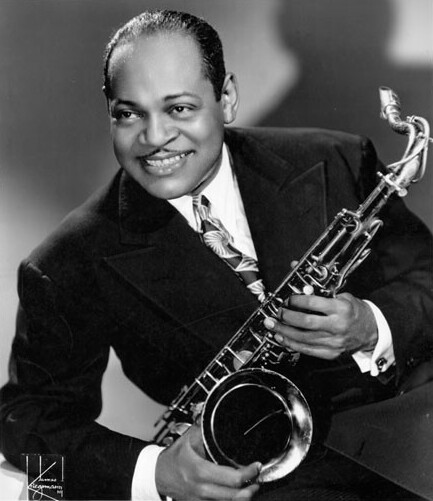
In the annals of jazz history, one name stands out as the patriarch of the tenor saxophone – Coleman Hawkins. Born one hundred and nineteen years ago today on November 21, 1904, in St. Joseph, Missouri, Hawkins would revolutionize jazz through his virtuosic playing, innovative approach, and enduring commitment to musical exploration.
Early Years and Musical Awakening:
Coleman Hawkins embarked on his musical journey at a young age, demonstrating a prodigious talent that would shape jazz history. During his formative years, he exhibited proficiency in piano and cello, later adding the saxophone to his repertoire at nine. By fourteen, his musical prowess echoed through the venues of eastern Kansas, foreshadowing the greatness he would achieve. The early exposure to a diverse range of instruments became the foundation for the expansive tonal palette he would later unveil on the tenor saxophone. In the early 1920s, Hawkins made the pivotal move to New York City, a decision that placed him in the company of jazz legends such as Fletcher Henderson, where he further refined his skills and contributed to the vibrant tapestry of the evolving jazz scene.
Help yourself to some live jazz, and help the artists and clubs fulfill their dreams. Sign up to Oh! Jazz to watch live and on-demand performances. 25% of your subscription goes back to the artists and 10% to the clubs.
Learn more about Oh! Jazz here.
The Tenor Saxophone Trailblazer:
In the 1920s, the tenor saxophone was often overshadowed by its smaller sibling, the alto sax. However, Hawkins changed this narrative. His mastery over the tenor saxophone brought it to the forefront of jazz, establishing it as a powerful and expressive instrument.
One of his groundbreaking recordings, “Body and Soul” (1939), remains a masterpiece and showcases his unparalleled ability to convey emotion through his instrument. The recording is not merely a jazz standard; it’s a testament to Hawkins’ revolutionary approach to the tenor saxophone.
Collaborations and the Swing Era:
Hawkins’ career saw him collaborating with some of the biggest names in jazz. His work with Fletcher Henderson’s Orchestra in the 1920s was pivotal, laying the foundation for the Swing Era. As one of the first to bridge the gap between swing and the emerging bebop style, Hawkins influenced countless musicians who followed.
His collaborations were not confined to a single era or style. From swing with Benny Goodman to bebop with Dizzy Gillespie, Hawkins seamlessly traversed musical landscapes, adapting and evolving with the changing currents of jazz.
Influence on Future Generations:
Hawkins’ influence can be heard in the playing of future generations of saxophonists, which is the mark of a great innovator. Hawkins’ influence reverberates through the fabric of jazz, from Sonny Rollins’ bebop brilliance to John Coltrane’s avant-garde explorations.
His approach to improvisation, his emphasis on tone, and his ability to push the boundaries of the tenor saxophone set a standard that aspiring saxophonists continue to study and admire. Hawkins not only defined an era; he shaped the very essence of jazz expression.
Coleman Hawkins’ journey through the landscape of jazz is a testament to the genre’s ability to evolve and reinvent itself. As the father of the tenor saxophone in jazz, his influence goes beyond the notes he played; it resides in the spirit of exploration and innovation that he instilled in the very essence of jazz.
From the smoky clubs of Kansas City to the studios of the 1960s, Coleman Hawkins’ saxophone was a constant force, pushing boundaries and challenging norms. As we delve into the vast repertoire left by this jazz giant, we continue to discover new facets of the genre through the lens of the instrument he so masterfully pioneered – the tenor saxophone.
References:
- Berendt, J.E. & Huesmann, G. (2009). The Jazz Book: From Ragtime to the 21st Century. Lawrence Hill Books.
- Chilton, J. (1993). The Song of the Hawk: The Life and Recordings of Coleman Hawkins. University of Michigan Press.
- Kernfeld, B. (2003). The New Grove Dictionary of Jazz. Oxford University Press.
- Coleman Hawkins picture. Retrieved from https://en.wikipedia.org/wiki/File:Coleman_Hawkins.jpg

Leave a Reply