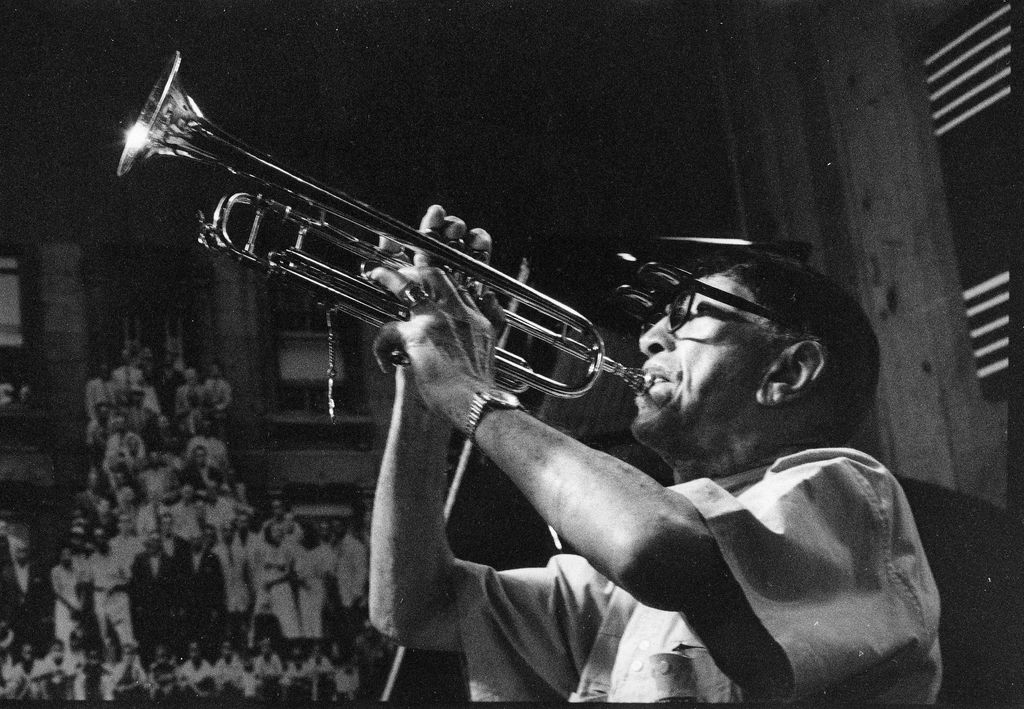
Introduction:
Adolphus “Doc” Cheatham was a master of the trumpet whose career spanned over seven decades. During this extensive period, he collaborated with some of the most influential figures in jazz, and his unwavering dedication to his craft left an indelible mark on the genre. In this blog post, we delve into the life and legacy of Doc Cheatham, exploring his early beginnings, major contributions, and enduring influence on jazz.
Early Life and Beginnings:
Adolphus Anthony Cheatham was born one hundred and nineteen years ago today, on June 13, 1905, in Nashville, Tennessee. In his youth, he remarked that there was no jazz music in Nashville; like many in the United States, he was introduced to the style through early recordings and touring groups at the end of the 1910s. Cheatham began playing music when he was 15, first on the cornet and soon after on the trumpet, taking trumpet lessons from Fisk University professor N. C. Davis. He also played saxophone and drums. Despite his family’s aspirations for him to become a pharmacist, which earned him the medically inspired nickname “Doc,” he chose to pursue a music career.
Help yourself to some live jazz, and help the artists and clubs fulfill their dreams. Sign up to Oh! Jazz to watch live and on-demand performances. 25% of your subscription goes back to the artists and 10% to the clubs.
Learn more about Oh! Jazz here.
In the 1920s, the allure of jazz music drew Cheatham to Chicago, a major hub for jazz musicians at the time. Chicago’s vibrant music scene offered Cheatham ample opportunities to hone his skills and establish himself as a professional musician. He began performing with local bands and soon caught the attention of some of the leading jazz musicians of the era.
Rise to Prominence:
Cheatham played in Albert Wynn’s band and occasionally substituted for Louis Armstrong at the Vendome Theater. He recorded on saxophone with Ma Rainey before moving to Philadelphia in 1927, where he worked with the bands of Bobby Lee and Wilbur de Paris. In 1928, Cheatham relocated to New York City and briefly played with Chick Webb before touring Europe with Sam Wooding’s band. Upon returning to the United States in 1930, he performed with Marion Handy and McKinney’s Cotton Pickers. Cheatham then secured a position with Cab Calloway, serving as the lead trumpeter from 1932 to 1939. His time with Calloway was a period of significant artistic growth, and he quickly became known for his expressive trumpet solos. Cheatham’s work with Calloway also allowed him to tour extensively and gain exposure to a wider audience.
World War II and Beyond:
In the 1940s, Cheatham performed with prominent figures such as Benny Carter, Teddy Wilson, Fletcher Henderson, and Claude Hopkins. After World War II, he began working regularly with Latin bands in New York City, including those led by Perez Prado, Marcelino Guerra, Ricardo Ray, and Machito, among others. During the post-war years, Cheatham’s versatility as a musician became increasingly evident. His adaptability ensured he remained a highly sought-after musician, capable of collaborating with a diverse array of artists.
Later Career and Recognition:
The 1960s and 1970s were a period of resurgence for Cheatham’s career. He began to focus more on small group settings, which allowed him to showcase his talents as a soloist. He also started to gain recognition as a vocalist, adding another dimension to his already impressive repertoire.
One of the most significant milestones in Cheatham’s later career was his collaboration with fellow trumpet virtuoso Nicholas Payton. Their album “Doc Cheatham & Nicholas Payton,” released in 1997, was a critical success and won a Grammy Award for Best Jazz Instrumental Solo. This collaboration highlighted Cheatham’s enduring relevance in the jazz world and his ability to connect with younger generations of musicians.
Legacy and Influence:
Doc Cheatham’s influence on jazz cannot be overstated. His career spanned an incredible seven decades, during which he witnessed and contributed to the evolution of jazz. Cheatham’s dedication to his craft and his ability to adapt to changing musical styles ensured that he remained a prominent figure in the jazz community.
Cheatham’s lyrical trumpet style and impeccable technique have inspired countless musicians. His approach to music, characterized by a deep respect for tradition coupled with a willingness to explore new ideas, serves as a model for aspiring jazz artists. Moreover, his collaborations with a diverse range of musicians demonstrate the importance of versatility and openness in the world of jazz.
Doc Cheatham’s life and career are a testament to the enduring power of jazz music. From his early days in the vibrant Chicago jazz scene to his later years as a celebrated soloist and collaborator, Cheatham’s contributions to jazz have left an indelible mark on the genre. His ability to adapt and evolve with the changing landscape of jazz ensured that he remained a vital and influential figure throughout his life. As we celebrate his legacy, we are reminded of the timeless beauty of jazz and the extraordinary musicians like Doc Cheatham who have shaped its history.
References:
- Cheatham, D., Shipton, A., & Rye, H. (1998). I Guess I’ll Get the Papers and Go Home: The Life of Doc Cheatham. UNKNO.
- Feather, L. & Gitler, I. (2007). The Biographical Encyclopedia of Jazz. Oxford University Press.
- Doc Cheatham picture. Retrieved from https://en.wikipedia.org/wiki/File:Doc_Cheatham_2.jpg

Leave a Reply