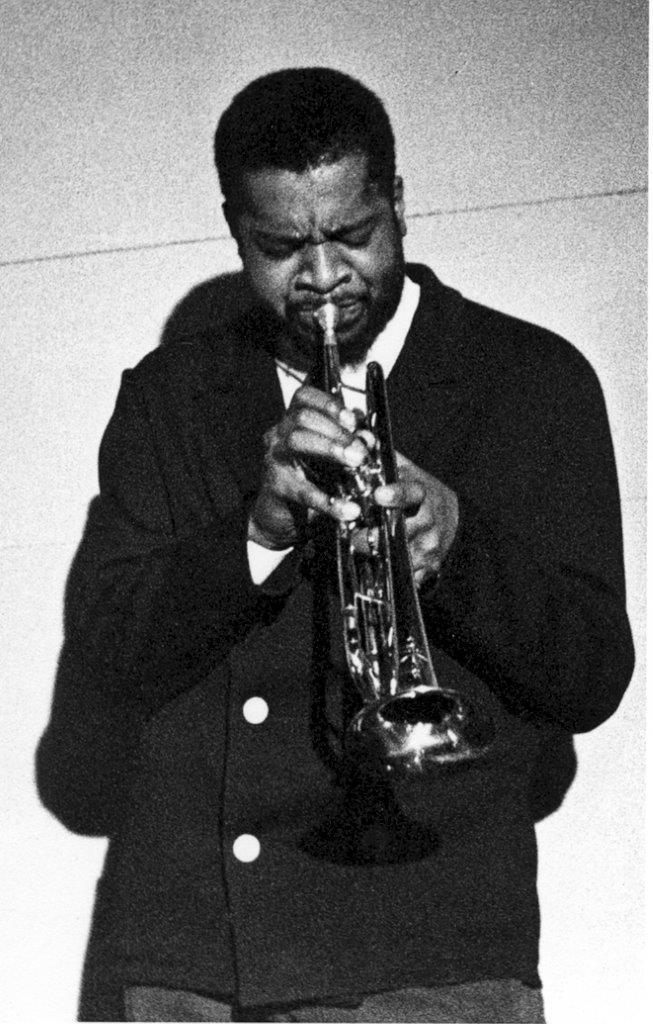
Introduction:
Donald Byrd, a name synonymous with brilliance in jazz, left an indelible mark on the genre as a virtuoso trumpeter, composer, and educator. Born ninety-one years ago today on December 9, 1932, in Detroit, Michigan, Byrd’s musical journey was nothing short of extraordinary. From his early days playing in the hard bop era to later embracing fusion and funk influences, Byrd’s versatility and innovative spirit propelled him to the forefront of the jazz scene. This blog post will delve into the life, career, and musical contributions of Donald Byrd, exploring the evolution of his sound and his enduring impact on the world of jazz.
Early Years and Musical Roots:
Donaldson Toussaint L’Ouverture Byrd II, as he was fully named, grew up in a city with a rich musical heritage. Detroit, a hotbed for jazz talent, provided Byrd with a fertile ground to nurture his musical inclinations. His early exposure to big band sounds and the vibrant jazz scene of Detroit laid the foundation for what would become a stellar career. Byrd’s instrument of choice was the trumpet, and he quickly established himself as a standout talent. His early studies at Cass Technical High School set the stage for his future endeavors, and he continued his education at Wayne State University and later at the Manhattan School of Music. It was during these formative years that Byrd honed his technical prowess and developed a deep understanding of the theoretical aspects of music.
Help yourself to some live jazz, and help the artists and clubs fulfill their dreams. Sign up to Oh! Jazz to watch live and on-demand performances. 25% of your subscription goes back to the artists and 10% to the clubs.
Learn more about Oh! Jazz here.
Rise to Prominence:
Donald Byrd’s ascent to prominence in the jazz world unfolded during the dynamic era of the 1950s. While still a student at the Manhattan School of Music, Byrd made a significant mark by stepping into the illustrious role of Clifford Brown as a member of Art Blakey’s Jazz Messengers. This formative period in 1955 saw him collaborate with notable figures such as Gigi Gryce, Jackie McLean, and Mal Waldron. Following his departure from the Jazz Messengers in 1956, Byrd’s journey took him through a constellation of jazz luminaries. He shared stages and recording studios with iconic figures like John Coltrane, Sonny Rollins, and Thelonious Monk, setting the stage for his enduring musical legacy. In subsequent years, Byrd continued to evolve, crossing paths with the emerging talents of Herbie Hancock, and contributing to the ever-evolving tapestry of jazz.
The hard bop movement, characterized by its complex harmonic structures and a focus on improvisation, found a formidable exponent in Donald Byrd. Albums like “Byrd in Hand” (1959) and “Fuego” (1960) showcased his ability to navigate intricate musical landscapes with finesse. His collaborations with artists like Art Blakey and Horace Silver further solidified his reputation as a leading force in the hard bop genre.
Innovations and Evolution:
As the 1960s unfolded, Donald Byrd, like many of his contemporaries, began exploring new musical territories. The influence of rhythm and blues, soul, and funk started seeping into his compositions. The 1964 album “A New Perspective” is a testament to this evolving sound, featuring a gospel choir and incorporating elements of soul jazz.
Byrd’s openness to innovation and his keen ear for emerging musical trends continued to define his work. In the late 1960s and early 1970s, he embraced the fusion movement, incorporating electric instruments and funk grooves into his music. Albums like “Black Byrd” (1973) became commercial successes, reflecting the changing landscape of jazz during that era.
Educator and Academic Pursuits:
Beyond his noteworthy performance and recording career, Donald Byrd stands tall as a significant contributor to the realm of education. His academic journey included the attainment of a master’s degree from the Manhattan School of Music and the prestigious accomplishment of a Ph.D. in music education from Teachers College, Columbia University. Byrd’s dedication to academic pursuits was not merely a testament to his commitment to education; it also mirrored his profound belief in the transformative power of music as a catalyst for social change.
He was a professor at several institutions, including North Carolina Central University and Howard University. By bridging the worlds of academia and performance, Byrd shaped the next generation of jazz musicians and contributed to preserving the genre’s rich traditions.
Legacy and Influence:
Donald Byrd’s impact on the world of jazz is immeasurable. His ability to traverse different styles, from hard bop to soul jazz and fusion, showcased both his versatility and his commitment to musical exploration. Byrd’s influence extends not only through his recordings but also through the countless musicians he mentored and inspired during his tenure as an educator.
His legacy is not without controversy, particularly regarding his foray into more commercial and accessible sounds in the 1970s. However, this period of his career remains a testament to his adaptability and willingness to embrace change.
Donald Byrd’s journey in jazz encapsulates the evolution of the genre itself. From the hard bop brilliance of the 1950s to the fusion experiments of the 1970s, Byrd’s trumpet echoed the changing rhythms of the musical landscape. As a performer, composer, and educator, he left an indelible mark on jazz, shaping its trajectory and ensuring its vitality for generations to come. Donald Byrd’s legacy continues to resonate, reminding us that the spirit of innovation and exploration is at the heart of jazz.
References:
- Gioia, T. (2021). The History of Jazz. Oxford University Press.
- Donald Byrd picture. Retrieved from https://en.wikipedia.org/wiki/File:Donald_Byrd.jpg

Leave a Reply