Introduction:
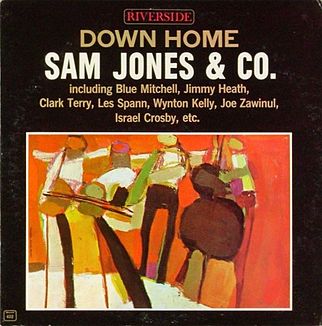
Sam Jones, a name synonymous with impeccable bass lines and soulful performances, is often celebrated for his work as a sideman in the Cannonball Adderley Quintet. However, his contributions as a leader have left an indelible mark on the jazz world, particularly with his 1962 album, “Down Home.” This album, recorded and released on the Riverside label, showcases Jones not only as a masterful bassist but also as a cellist and bandleader, bringing together an array of jazz luminaries to create a work that embodies the essence of hard bop. In this post, we’ll delve into the details of “Down Home,” exploring its musical significance, the collaboration of talented musicians, and its place in the broader jazz landscape.
The Album’s Context and Recording:
“Down Home” was recorded over two sessions on June 25 and August 15–16, 1962, in New York City. The album is the third in a series of recordings Jones made as a leader for Riverside Records, following “The Soul Society” (1960) and “The Chant” (1961). Produced by the legendary Orrin Keepnews, “Down Home” is a testament to the vibrant jazz scene of the early 1960s, a period marked by the flourishing of hard bop, a subgenre that merged the rhythmic and improvisational elements of bebop with blues, gospel, and rhythm and blues.
Help yourself to some live jazz, and help the artists and clubs fulfill their dreams. Sign up to Oh! Jazz to watch live and on-demand performances. 25% of your subscription goes back to the artists and 10% to the clubs.
Learn more about Oh! Jazz here.
The album features eight tracks, blending original compositions by Jones with jazz standards and contributions from other renowned composers. The interplay between the musicians on this album is a highlight, showcasing the synergy of a group of seasoned professionals at the peak of their creative powers.
Track-by-Track Exploration:
- “Unit 7” – 4:49: The album opens with “Unit 7,” a composition by Jones that had become a staple of the Cannonball Adderley Quintet’s repertoire. The track is an energetic piece that perfectly encapsulates the hard bop ethos. The driving rhythm section, punctuated by the brass and woodwind arrangements, sets the stage for improvisational excellence. The soloists, including Jones on bass, deliver performances that are both technically brilliant and deeply emotive.
- “Come Rain or Come Shine” (Harold Arlen, Johnny Mercer) – 4:05: The second track is a tender rendition of the classic standard “Come Rain or Come Shine.” Jones switches to the cello for this piece, adding a rich, warm texture to the arrangement. The choice of cello, rather than bass, for the lead voice is a bold move that pays off, highlighting Jones’ versatility and deep understanding of jazz harmony. The accompaniment is subtle, allowing the melodic line to shine through with clarity and emotion.
- “‘Round Midnight” (Thelonious Monk) – 5:31: “‘Round Midnight,” one of Thelonious Monk’s most famous compositions, is given a fresh interpretation on “Down Home.” Jones’ arrangement stays true to the haunting beauty of Monk’s original, while the addition of flute and cello creates a unique sonic landscape. The interplay between the instruments on this track is particularly noteworthy, as they weave in and out of the melody, creating a sense of tension and release that mirrors the complexity of the composition itself.
- “O.P.” – 5:07: Named after the legendary bassist Oscar Pettiford, “O.P.” is a tribute to one of Jones’ influences. The track features a swinging rhythm and a bluesy melody, with Jones once again taking the lead on cello. The arrangement is sparse, allowing the rhythm section to drive the groove while the soloists explore the harmonic possibilities of the piece. The result is a track that feels both laid-back and deeply rooted in the blues tradition.
- “Thumbstring” (Ray Brown) – 4:31: “Thumbstring” is another bass-centric composition, this time penned by Ray Brown. The track is a showcase for Jones’ virtuosic bass playing, with intricate lines that dance around the melody. The brass section adds a punchy counterpoint to Jones’ bass, creating a dynamic and engaging performance.
- “Down Home” – 4:08: The title track, “Down Home,” is a reflective piece that draws on the themes of nostalgia and tradition. The melody is simple yet evocative, conjuring images of rural landscapes and the comforts of home. Jones’ cello takes center stage, delivering a performance that is both introspective and full of longing. The arrangement is understated, with the rhythm section providing a gentle backdrop to the cello’s lyrical lines.
- “Strollin’” (Horace Silver) – 4:12: “Strollin’,” composed by Horace Silver, is a bright and breezy number that adds a touch of levity to the album. The track features a lively interplay between the brass and woodwind sections. The solos are playful, with the musicians clearly enjoying the relaxed vibe of the piece. “Strollin’” is a perfect example of the hard bop style, combining intricate improvisation with a strong sense of groove.
- “Falling in Love With Love” (Lorenz Hart, Richard Rodgers) – 7:03: The album concludes with a sumptuous rendition of the Rodgers and Hart standard, “Falling in Love With Love.” Here, Jones’s cello steps into the spotlight, delivering a solo that is both technically masterful and deeply expressive. The track not only showcases his skill on the cello but also encapsulates the emotional richness and intricate musicality that permeate “Down Home,” making it a fitting and memorable finale to the album.
The Musicians and Their Contributions:
One of the most remarkable aspects of “Down Home” is the lineup of musicians who contributed to the album. The list reads like a who’s who of jazz greats, each bringing their unique voice to the project:
- Les Spann (flute) contributes delicate and expressive lines, particularly on tracks like “‘Round Midnight” and “Falling in Love With Love.”
- Snooky Young, Blue Mitchell, and Clark Terry (trumpet) provide the bright, brassy tones that drive the more up-tempo tracks.
- Jimmy Cleveland (trombone) adds a rich, sonorous layer to the brass section, enhancing the album’s harmonic depth.
- Frank Strozier (alto saxophone) and Jimmy Heath (tenor saxophone) deliver standout solos, their improvisations brimming with energy and creativity.
- Pat Patrick (baritone saxophone) adds a robust bottom end to the woodwind section, grounding the arrangements with his deep, resonant tone.
- Wynton Kelly and Joe Zawinul (piano) provide the harmonic foundation, their comping both supportive and rhythmically inventive.
- Ron Carter and Israel Crosby (double bass) alternate with Jones, each contributing their distinctive style to the album’s groove.
- Vernel Fournier and Ben Riley (drums) keep the rhythmic pulse steady and swinging, their subtle yet powerful drumming driving the music forward.
The album’s arrangements, many of which were handled by Ernie Wilkins, are masterclasses in orchestration, balancing the individual voices of the musicians while maintaining a cohesive group sound.
Reception and Legacy:
“Down Home” received critical acclaim upon its release, with reviewers praising both the musicianship and the production quality. Scott Yanow of AllMusic described the album as “excellent hard bop-based music,” while Billboard hailed it as “a fine showcase for Jones.” The album’s blend of original compositions and jazz standards, combined with the stellar performances of the musicians involved, has ensured its place as a classic in the jazz canon.
The album’s influence extends beyond its initial release, with later jazz musicians citing it as an inspiration for their own work. Jones’ ability to seamlessly switch between bass and cello, as well as his skill in leading a large ensemble, set a standard for future generations of jazz artists.
“Down Home” is more than just a collection of tracks; it reflects Sam Jones’ deep understanding of jazz and his ability to bring together some of the best musicians of his time to create something truly special. The album stands as a testament to the hard bop era, a period of jazz that emphasized groove, emotion, and technical prowess. For those who appreciate the artistry of jazz, “Down Home” offers a rich listening experience, filled with memorable performances and masterful compositions. It is an album that deserves to be revisited time and time again, not only as a showcase of Sam Jones’ talents but also as a celebration of the collaborative spirit that lies at the heart of jazz.
References:
- Larkin, C. (2006). The Encyclopedia of Popular Music. Oxford University Press.
- Cook, R. & Morton, B. (2008). The Penguin Guide to Jazz Recordings. Penguin Books.
- “Down Home” album cover art. Retrieved from https://en.wikipedia.org/wiki/File:Down_Home_(Sam_Jones_album).jpg
.jpg)
Leave a Reply