Introduction:
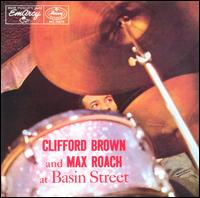
“Clifford Brown and Max Roach at Basin Street,” also known simply as “At Basin Street,” is a landmark album in the annals of jazz history, a testament to the virtuosity and creativity of two of the genre’s most legendary figures. Released in 1956, this album marked the culmination of the Clifford Brown and Max Roach Quintet’s studio recordings, capturing the group at the peak of its powers before tragedy struck later that year. Let’s delve into the magic of this album, its significance in the context of the era, and its enduring appeal.
The Quintet’s Swansong: A Tribute to Greatness:
“At Basin Street” stands as a poignant tribute to the brilliance of Clifford Brown, pianist Richie Powell, and the entire quintet. It was the last studio album recorded by the quintet, with Brown and Powell tragically losing their lives in a car accident just months after its release. This adds a layer of poignancy to the album, making it a bittersweet swansong that immortalizes their artistry.
Help yourself to some live jazz, and help the artists and clubs fulfill their dreams. Sign up to Oh! Jazz to watch live and on-demand performances. 25% of your subscription goes back to the artists and 10% to the clubs.
Learn more about Oh! Jazz here.
A Stellar Lineup of Talent:
The album features a stellar lineup, with Clifford Brown on trumpet, Sonny Rollins on tenor saxophone, Richie Powell on piano, George Morrow on double bass, and Max Roach on drums. The addition of Rollins, one of the most innovative tenor saxophonists of his time, adds depth and complexity to the quintet’s sound, elevating their collective improvisations to new heights.
Exploring the Tracks: A Musical Journey
The album opens with a vibrant rendition of Cole Porter’s “What Is This Thing Called Love?” showcasing Brown’s dazzling trumpet work and Rollins’ emotive saxophone playing. This sets the tone for the rest of the album, which features a mix of standards and original compositions, each performed with impeccable skill and passion.
Other highlights include the tender rendition of “Love Is a Many-Splendored Thing,” the energetic “I’ll Remember April,” and the playful “Powell’s Prances” and “Gertrude’s Bounce,” both penned by Richie Powell. The album also includes bonus tracks that offer a glimpse into the quintet’s creative process, with alternate takes and breakdowns providing insight into their musical experimentation.
The Legacy of At Basin Street:
At Basin Street remains a cornerstone of Hard Bop, a genre known for its infectious rhythms, complex harmonies, and soulful melodies. It has been hailed as one of the essential hard bop recordings, a testament to the enduring appeal of Clifford Brown and Max Roach’s music.
In conclusion, At Basin Street is more than just an album; it is a testament to the enduring legacy of Clifford Brown, Richie Powell, and the entire quintet. It stands as a timeless masterpiece, showcasing the brilliance of these jazz luminaries and their contributions to the world of music.
References:
- Swenson, J. (1985). Rolling Stone Jazz Record Guide. Random House.
- Cook, R. & Morton, B. (2008). The Penguin Guide to Jazz Recordings. Penguin Books.
- “At Basin Street” album cover art. Retrieved from https://en.wikipedia.org/wiki/File:At_Basin_Street.jpg

Leave a Reply