Introduction:
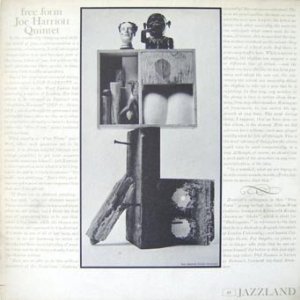
In the pantheon of jazz innovators, certain figures loom large for their audacity in breaking musical conventions and forging new paths. Among these, Jamaican saxophonist Joe Harriott stands out, particularly for his seminal 1961 album “Free Form.” This record, recorded in London in November 1960 and released on the Jazzland label, showcases Harriott’s pioneering approach to jazz, blending hard bop influences with avant-garde improvisation. As we delve into the intricate world of “Free Form,” we uncover an album that, much like its contemporaries by Ornette Coleman, redefined the boundaries of jazz and remains a touchstone for adventurous musicians and listeners alike.
A Revolutionary Approach to Jazz:
“Free Form” is an album that defies easy categorization. While it draws on the hard bop traditions that Harriott had mastered, it pushes far beyond, embracing a more abstract and exploratory style. The album consists of eight compositions, all penned by Harriott, each offering a distinct window into his innovative musical vision.
Help yourself to some live jazz, and help the artists and clubs fulfill their dreams. Sign up to Oh! Jazz to watch live and on-demand performances. 25% of your subscription goes back to the artists and 10% to the clubs.
Learn more about Oh! Jazz here.
Track Listing:
- “Formation” – 6:13
- “Coda” – 8:00
- “Abstract” – 3:39
- “Impression” – 5:32
- “Parallel” – 5:42
- “Straight Lines” – 5:57
- “Calypso” – 4:44
- “Tempo” – 6:23
Each track on “Free Form” is a testament to Harriott’s creative genius, incorporating complex structures and free-flowing improvisations that challenge both the musicians and the audience.
The Making of “Free Form”:
Recorded in London, “Free Form” features an ensemble of accomplished musicians who perfectly complement Harriott’s avant-garde leanings. The lineup includes Shake Keane on trumpet, Pat Smythe on piano, Coleridge Goode on bass, and Phil Seamen on drums. Produced by Denis Preston and Bill Grauer, the album benefits from a production that allows the intricacies of each performance to shine through.
Personnel:
- Joe Harriott – alto saxophone
- Shake Keane – trumpet
- Pat Smythe – piano
- Coleridge Goode – bass
- Phil Seamen – drums
The collaboration between Harriott and his bandmates is seamless, with each musician bringing their unique flair to the project. Shake Keane’s trumpet work, in particular, stands out for its lyrical yet avant-garde approach, perfectly complementing Harriott’s saxophone.
Critical Reception and Legacy:
Upon its release, “Free Form” received critical acclaim for its groundbreaking approach, though it was often misunderstood and underappreciated by a broader audience. Over time, however, the album has gained recognition as a significant work in the jazz canon.
Professional Ratings:
AllMusic: 4 stars
AllMusic’s review highlights the album’s adventurous compositions and draws comparisons to Ornette Coleman’s contemporaneous work. Reviewer Al Campbell notes, “Comparable to Ornette Coleman’s recordings of the period, these eight pieces incorporate Harriott’s hard bop influence, cutting through adventurous compositions.”
Influences and Comparisons:
Joe Harriott’s work on “Free Form” is often compared to that of Ornette Coleman, another pioneering figure in the free jazz movement. Both musicians sought to break away from the rigid structures of bebop and hard bop, exploring more fluid and dynamic forms of expression. However, while Coleman gained widespread acclaim and recognition in the United States, Harriott’s contributions were largely overlooked during his lifetime.
Despite this, Harriott’s influence has endured. In 1999, tenor saxophonist Ken Vandermark released an album featuring Harriott’s compositions, including three tracks from “Free Form.” This project aimed to shed light on Harriott’s overlooked genius and bring his music to a new generation of jazz enthusiasts.
Joe Harriott’s “Free Form” remains a landmark album in the history of jazz. Its blend of hard bop and avant-garde elements, combined with the exceptional talents of Harriott and his band, create a listening experience that is both challenging and rewarding. While it may not have received the recognition it deserved upon its release, “Free Form” stands as a testament to Harriott’s visionary approach to music.
In revisiting “Free Form” today, we not only celebrate Harriott’s legacy but also acknowledge the album’s enduring influence on the jazz genre. It’s a record that continues to inspire musicians and listeners alike, proving that true innovation never goes out of style.
References:
- Gioia, T. (2021). The History of Jazz. Oxford University Press.
- “Free Form” album cover art. Retrieved from https://en.wikipedia.org/wiki/File:Free_Form_(Joe_Harriott_album).jpg
.jpg)
Leave a Reply