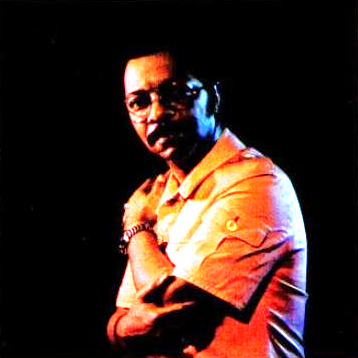
Introduction:
Grady Tate was a drummer, vocalist, and consummate musician whose contributions to jazz, soul, and popular music spanned decades. Whether driving the pulse of a big band, offering delicate brushwork behind a ballad, or singing in his soulful baritone, Tate’s artistry left an indelible mark on the music world. His unique ability to balance technical brilliance with emotional depth made him a sought-after collaborator and a beloved figure among fans and peers alike.
Early Life and Musical Foundations:
Grady Bernard Tate was born ninety-three years ago today on January 14, 1932, in Durham, North Carolina, into a family that nurtured his musical instincts. From an early age, Tate displayed a remarkable gift for music, beginning his singing journey at just four years old. His performances captivated local church and school audiences in Durham, showcasing his innate vocal abilities. However, like many young singers, his journey faced a brief interruption when his voice changed at the age of 12.
Help yourself to some live jazz, and help the artists and clubs fulfill their dreams. Sign up to Oh! Jazz to watch live and on-demand performances. 25% of your subscription goes back to the artists and 10% to the clubs.
Learn more about Oh! Jazz here.
Initially self-taught as a drummer, Tate’s musical evolution continued during his service in the U.S. Air Force from 1951 to 1955. It was during this time that he immersed himself in the fundamentals of jazz drumming, refining his skills through discipline and practice. His time in the Air Force also introduced him to arranger Bill Berry, who recognized Tate’s vocal potential and created vocal charts tailored to his abilities. This period laid the foundation for a career that would blend technical precision with emotional depth, marking Tate as a multifaceted artist destined for greatness.
After his discharge from the Air Force, Grady Tate returned to Durham, where he pursued studies in psychology, literature, and theater at North Carolina College. This academic phase reflected his broad intellectual curiosity and desire for personal growth. In 1959, Tate relocated to Washington, D.C., marking a turning point in his career. While teaching high school, he began immersing himself in the city’s vibrant music scene, joining forces with the legendary organist Wild Bill Davis. This step not only solidified his commitment to music but also laid the groundwork for the illustrious career that lay ahead.
Breaking Through in New York City:
Tate arrived in New York in 1963, a period of fertile creativity in the jazz scene. His first major break came when he joined Quincy Jones’ orchestra, where he demonstrated his ability to blend the hard-swinging drive of traditional big band drumming with the subtleties of modern jazz. His work with Jones laid the groundwork for his reputation as a versatile and innovative musician.
Tate’s exceptional drumming captured the attention of renowned producer Creed Taylor, who brought him on board as the house drummer for the influential CTI label. With CTI, Tate became an integral part of the label’s signature sound, lending his dynamic and versatile drumming to numerous iconic recordings.
Tate’s work is prominently featured on some of Jimmy Smith’s and Wes Montgomery’s most celebrated albums, including 1964’s “The Cat” and 1965’s “Bumpin’.” His artistry graced the works of a staggering array of musical legends, including Nat Adderley, Stan Getz, Tony Bennett, Kenny Burrell, Ella Fitzgerald, Benny Goodman, Rahsaan Roland Kirk, Count Basie, Oscar Peterson, Duke Ellington, J.J. Johnson, and Kai Winding. His contributions spanned genres and generations, cementing his status as one of the most sought-after drummers of his time.
A Drummer for the Ages:
Grady Tate’s drumming style was a marvel of balance—he possessed both the restraint needed for quiet ballads and the explosive power required for uptempo numbers. His technical mastery was evident in his fluid stick work, clean articulation, and innovative use of cymbals. Yet, his playing always served the music rather than drawing attention to itself.
The Vocalist Emerges:
While Tate was widely known as a drummer, his vocal talents were equally remarkable. His warm, smooth baritone was first showcased in the late 1960s when he recorded the album “Windmills of My Mind” (1968), featuring interpretations of popular standards. The title track, a hauntingly beautiful ballad, demonstrated Tate’s ability to convey deep emotion with subtle phrasing and rich tonal quality.
Tate’s singing career complemented his drumming, and he often performed as both a drummer and vocalist during live shows. His vocal recordings, including albums such as “She Is My Lady” (1972) and “By Special Request” (1974), earned critical acclaim and introduced him to a broader audience. His interpretations of jazz standards and pop ballads highlighted his versatility and deep connection to the material.
Grady Tate and the Studio Era:
In addition to his work as a live performer, Grady Tate became one of the most in-demand session drummers of his generation. His ability to read complex charts, adapt to various musical styles, and deliver flawless performances made him a favorite among producers and arrangers.
Tate played on countless recordings, spanning jazz, pop, and rock. His drumming can be heard on albums by Paul Simon (“There Goes Rhymin’ Simon”), Simon & Garfunkel (“The Concert in Central Park”), and Roberta Flack (“Killing Me Softly”).
His work in the studio demonstrated his commitment to excellence and his ability to bring a personal touch to any project. Whether playing a straight-ahead swing tune, a lush orchestral ballad, or a funky groove, Tate always delivered performances that elevated the music.
The Educator and Mentor:
Beyond his illustrious career as a performer, Grady Tate was deeply committed to education and the art of mentorship. From 1989 to 2009, he served as a professor of jazz singing and drumming at Howard University, becoming a cornerstone of the university’s jazz program. Known for his patient and understated teaching style, Tate fostered an environment of growth and creativity, imparting his profound understanding of rhythm and musicality to countless students. His dedication to nurturing talent extended beyond technical instruction; he inspired confidence and artistry in a new generation of musicians. Many of his students have credited Tate’s guidance as instrumental in shaping their skills and helping them navigate their own musical journeys. Through his teaching, Tate ensured that his legacy would endure not just in recordings but in the lives and careers of those he mentored.
Legacy and Influence:
Grady Tate’s contributions to music are immeasurable. As a drummer, he set a standard of excellence that few have matched, blending technical precision with soulful expression. As a vocalist, he brought warmth and depth to every song he performed. As a teacher, he inspired countless musicians to pursue their dreams and strive for greatness.
Tate’s versatility and adaptability ensured his relevance across decades and genres. From bebop to bossa nova, from swing to soul, his work reflected a deep respect for tradition and a fearless embrace of innovation. His ability to collaborate with artists as diverse as Quincy Jones, Wes Montgomery, and Paul Simon speaks to the universality of his talent.
Grady Tate passed away on October 8, 2017, at the age of 85, leaving behind a rich legacy that continues to inspire musicians and listeners alike. His recordings remain a testament to his artistry, offering a masterclass in musical excellence and emotional authenticity.
Grady Tate was much more than a drummer or a vocalist—he was a complete musician whose contributions to jazz and popular music have left an indelible mark. His ability to navigate the complexities of rhythm and melody, combined with his dedication to education and mentorship, made him a towering figure in the music world.
Whether you’re drawn to the precision of his drumming, the warmth of his singing, or the generosity of his teaching, exploring Grady Tate’s work is a journey into the heart of musical excellence. He remains a shining example of what it means to dedicate one’s life to the pursuit of art and expression.
References:
- Chilton, J. (1985). Who’s Who Of Jazz (Storyville to Swing Street). Da Capo.
- Yanow, S. (2008). The Jazz Singers: The Ultimate Guide. Backbeat.
- Grady Tate picture. Retrieved from https://en.wikipedia.org/wiki/File:Grady_Tate_-_American_jazz_drummer.png


Leave a Reply