Introduction:
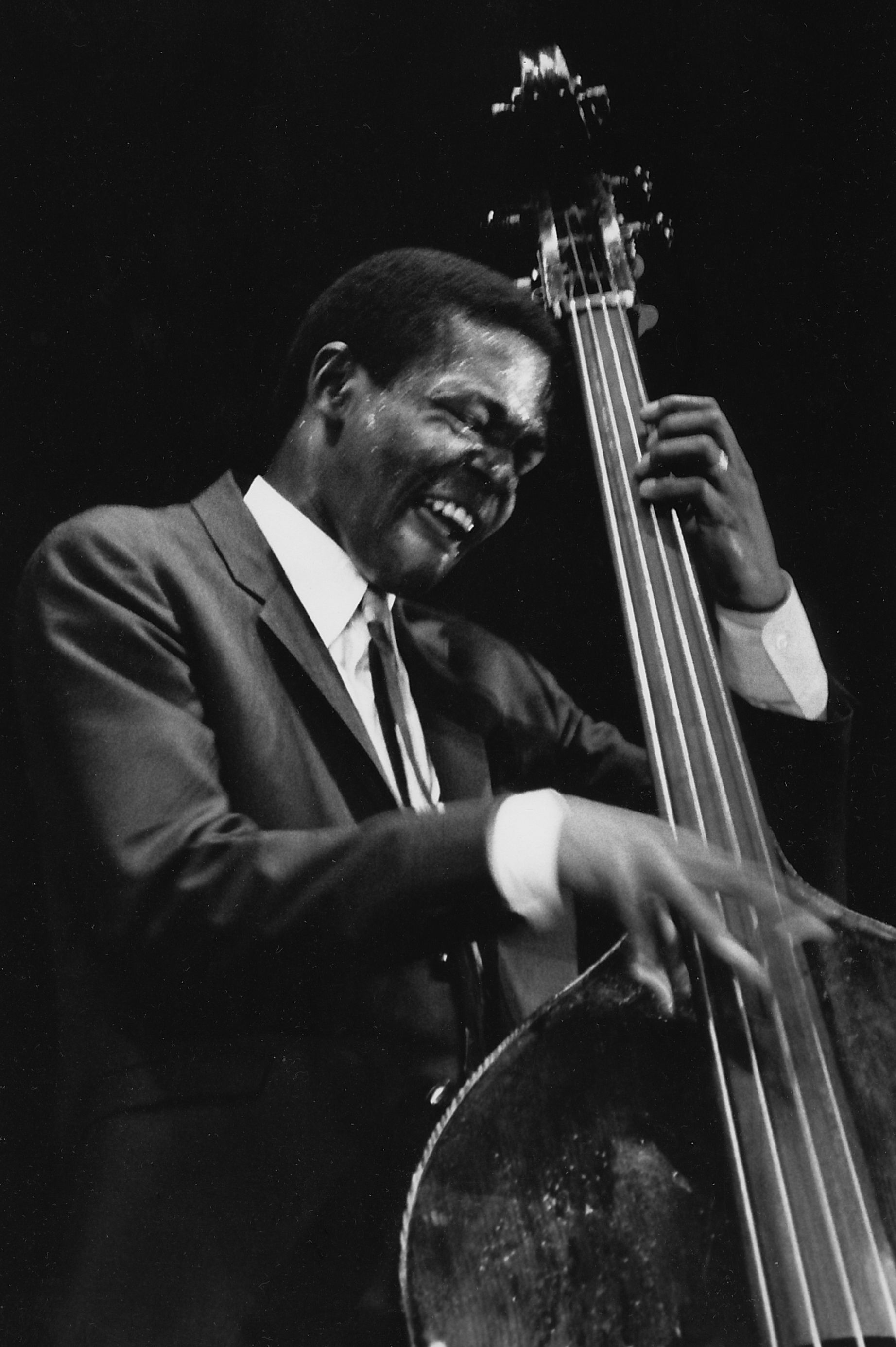
Jimmy Garrison was an American jazz double bassist best known for his work with the legendary John Coltrane Quartet. Born ninety years ago today on March 3, 1934, in Miami, Florida, Garrison developed a unique and influential style that helped redefine the role of the bass in modern jazz. This blog post explores Garrison’s life, music, and enduring legacy.
Early Life and Musical Beginnings:
Garrison relocated to Philadelphia at the age of 10, and it was there, during his senior year of high school, that he first picked up the bass. He emerged as a musician during the vibrant 1950s Philadelphia jazz scene, rubbing shoulders with notable musicians such as fellow bassists Reggie Workman and Henry Grimes, as well as pianist McCoy Tyner and trumpeter Lee Morgan.
Help yourself to some live jazz, and help the artists and clubs fulfill their dreams. Sign up to Oh! Jazz to watch live and on-demand performances. 25% of your subscription goes back to the artists and 10% to the clubs.
Learn more about Oh! Jazz here.
Joining the John Coltrane Quartet:
Garrison got his big break in 1962 when he replaced Reggie Workman in the John Coltrane Quartet. This quartet, which included Coltrane on saxophone, McCoy Tyner on piano, and Elvin Jones on drums, is widely considered one of jazz’s most innovative and influential groups. Garrison’s deep, resonant bass lines laid the groundwork for the quartet’s experimental and daring sound, allowing Coltrane and the other players to explore the limits of jazz improvisation.
Garrison’s playing on albums such as “Live at the Village Vanguard,” “Impressions,” and “A Love Supreme” showcased his exceptional technique and musical sensitivity. His ability to navigate complex harmonic structures and create intricate melodic lines helped define the quartet’s sound and contributed to its groundbreaking approach to jazz.
Innovative Techniques and Musical Contributions:
Garrison was known for using innovative techniques on the bass, including playing chords and using a bow to create rich, orchestral textures. His approach to rhythm was also highly innovative, often employing complex polyrhythms and syncopated patterns that added depth and complexity to the quartet’s music.
Garrison brought more to the quartet than just his technical skill. He was a brilliant improviser who could easily work his way through Coltrane’s difficult compositions and give the music his own distinct voice. He was able to collaborate with his bandmates with ease because of his profound understanding of harmony and rhythm, which was essential to the quartet’s style.
Legacy and Influence:
Garrison’s influence on the jazz world extended far beyond his work with the Coltrane quartet. His innovative approach to the bass inspired countless musicians and helped redefine the role of the instrument in modern jazz. His use of chordal playing and bowing techniques opened up new possibilities for bassists, while his adventurous spirit and willingness to explore new musical territories continue to inspire musicians today.
Garrison’s legacy lives on through his recordings with the Coltrane quartet, his solo work, and collaborations with other artists. His contributions to jazz music are celebrated by fans and musicians alike, and his innovative spirit continues to inspire new generations of bassists and jazz musicians around the world.
In conclusion, Jimmy Garrison was a pioneering bassist whose innovative approach to the instrument helped shape the course of modern jazz. His work with the John Coltrane Quartet remains some of the most influential and celebrated music in the jazz canon, and his legacy continues to inspire musicians and jazz fans alike.
References:
- Kernfeld, B. (2003). The New Grove Dictionary of Jazz. Oxford University Press.
- Larkin, C. (1995). The Guinness Encyclopedia of Popular Music. Guinness Publishing.
- Feather, L. (2007). The Biographical Encyclopedia of Jazz. Oxford University Press.
- Jimmy Garrison picture. Retrieved from https://en.wikipedia.org/wiki/File:Jimmyegarrison.jpg

Leave a Reply