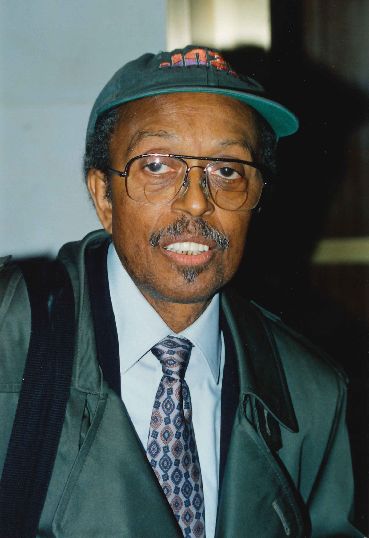
Introduction:
Jimmy Heath, a saxophonist, composer, and arranger, stands as one of the most influential and versatile figures in jazz history. Throughout a career spanning more than seven decades, Heath carved out a unique legacy with his contributions to both the bebop movement and beyond. His work as a performer and composer left an indelible mark on jazz, and his collaborations with some of the genre’s greatest artists solidified his reputation as a dynamic force in the music world.
In this blog post, we’ll delve into Heath’s life, his music, and the impact he left on jazz. From his roots in a musical family to his work with Miles Davis, Dizzy Gillespie, and John Coltrane, Heath’s story is one of resilience, innovation, and boundless creativity.
Early Life and Musical Beginnings:
Help yourself to some live jazz, and help the artists and clubs fulfill their dreams. Sign up to Oh! Jazz to watch live and on-demand performances. 25% of your subscription goes back to the artists and 10% to the clubs.
Learn more about Oh! Jazz here.
James Edward Heath was born ninety-eight years ago today on October 25, 1926, in Philadelphia, into a highly musical family. His brothers, Percy and Albert “Tootie” Heath, also became celebrated jazz musicians, forming a family trio that would eventually leave its own distinct mark on the jazz world. Heath’s early exposure to music came from his parents, who encouraged their children to explore different instruments.
Initially drawn to the alto saxophone, Heath was inspired by the big band sounds of the era, including musicians like Johnny Hodges and Benny Carter. As Heath matured musically, he began to absorb the burgeoning bebop style, which had taken root in the 1940s. His early exposure to the work of Charlie Parker was particularly transformative; the young Heath adopted a Parker-influenced approach to improvisation that would shape his early career.
Heath joined the orchestra of Nat Towles, a renowned territory bandleader, which gave him valuable experience as a touring musician. He also performed with trumpeter Howard McGhee’s band, a group that was at the forefront of bebop. This period solidified his identity as a saxophonist and provided a platform to network with the burgeoning bebop scene in New York.
Becoming “Little Bird”:
One of the defining moments of Heath’s early career came when he switched from alto saxophone to tenor saxophone in the late 1940s. The change was partly due to his close association with the bebop scene and his admiration for the great tenor players of the time, such as Dexter Gordon and Sonny Stitt. But it was his early work on the alto saxophone that earned him the nickname “Little Bird,” due to his stylistic similarities to Charlie Parker, who was often called “Bird.”
Heath’s nickname highlighted both his technical prowess and the deep connection he felt with bebop’s intricate musical language. While he later moved away from the Parker-inspired alto lines to develop a broader and more personal sound on the tenor sax, Heath always retained the bebop roots that had first defined his playing.
The 1950s and Early Recognition:
Heath’s career was beginning to take off when it faced a serious obstacle in the 1950s. His growing recognition in the New York jazz scene led to opportunities to work with some of the genre’s luminaries, including Dizzy Gillespie, Miles Davis, and J.J. Johnson. However, his involvement with drugs led to a prison sentence in 1955, halting his career for several years. Heath’s time in prison would ultimately serve as a turning point, as he emerged from incarceration with a renewed focus on his craft and a determination to leave behind his past struggles.
Upon his release in 1959, Heath rejoined the jazz scene with even greater momentum. His talent as a saxophonist, combined with his skills as an arranger and composer, made him a sought-after collaborator. He joined Miles Davis’ group briefly in 1959, and while that stint was short-lived, it marked an important validation of his abilities at the highest level of jazz.
Composer and Arranger Extraordinaire:
One of Heath’s most enduring contributions to jazz was his work as a composer and arranger. While his saxophone playing was widely admired, Heath had an equally impressive talent for writing original compositions. His tunes blended the sophisticated harmonic language of bebop with melodic accessibility, and many of his works have since become jazz standards.
Some of Heath’s most famous compositions include “Gingerbread Boy,” “C.T.A.,” and “Gemini,” all of which have been recorded by multiple jazz greats. His work as an arranger also shone brightly. He arranged for big bands and small ensembles alike, crafting music that was both complex and deeply rooted in swing traditions.
“Gingerbread Boy,” for instance, gained immense popularity after being recorded by Miles Davis on the iconic 1967 album “Miles Smiles.” The tune features a catchy and rhythmically inventive melody that encapsulates Heath’s signature balance of complexity and swing.
Heath’s contributions to big band jazz are also significant. He led several large ensembles over his career, including his own big band in the 1970s, which featured an impressive roster of players. As a big band leader, Heath had the opportunity to showcase his talents as a composer and arranger on a grand scale while also providing a platform for up-and-coming talent.
The Heath Brothers: A Family Legacy
In the 1970s, Jimmy Heath joined forces with his brothers Percy and Tootie to form The Heath Brothers, a group that became a celebrated jazz ensemble in its own right. Percy Heath, a celebrated bassist, was best known for his work with the Modern Jazz Quartet (MJQ), while Tootie Heath was a highly respected drummer who had worked with artists like Art Farmer and Herbie Hancock.
The Heath Brothers band allowed the three siblings to combine their talents into a cohesive group sound. Albums like “Marchin’ On” (1975) and “Live at the Public Theater” (1979) showcased their musical chemistry and collective virtuosity. The group blended elements of bebop, hard bop, and modal jazz with a distinct family identity, creating music that was at once deeply personal and universally appealing.
Later Years and Legacy:
Jimmy Heath’s career continued to thrive well into his later years. He recorded extensively as both a leader and sideman, contributing to a vast discography that spans decades. In 1992, he released “Little Man Big Band,” a critically acclaimed album that featured Heath at the helm of a powerful big band ensemble. The record further cemented his reputation as one of jazz’s finest arrangers.
In addition to his work as a performer, Heath was deeply committed to jazz education. He served as a professor at Queens College in New York, where he mentored younger musicians and passed on his wealth of knowledge to the next generation. His dedication to education reflected his belief in the importance of preserving and advancing the jazz tradition.
In recognition of his monumental contributions to music, Jimmy Heath garnered numerous accolades throughout his illustrious career. In 2003, he was honored with the prestigious title of NEA Jazz Master, the highest distinction awarded to jazz musicians in the United States. The following year, in 2004, Queens College bestowed upon him an honorary Doctorate of Human Letters, a tribute to both his artistic achievements and his commitment to jazz education and mentorship.
Jimmy Heath’s contributions to jazz are immeasurable. As a saxophonist, composer, and arranger, he left an indelible mark on the genre, helping to shape the sound of bebop and modern jazz while staying true to the traditions that came before him. His music, characterized by its melodic inventiveness, harmonic sophistication, and rhythmic vitality, continues to inspire jazz musicians and listeners alike.
Heath’s journey from the bebop clubs of Philadelphia to the stages of the world’s most prestigious concert halls is a testament to his talent, resilience, and unwavering dedication to the art of jazz. He passed away on January 19, 2020, at the age of 93, but his legacy lives on in the countless musicians he influenced and the timeless music he created.
Jimmy Heath will always be remembered as a giant in the jazz world—a musician whose contributions transcended the saxophone to encompass the entire language of jazz. His enduring impact ensures that his name will continue to resonate through the ages.
References:
- Cook, R. & Morton, B. (2008). The Penguin Guide to Jazz Recordings. Penguin Books.
- Heath, J. & McLaren, J. (2010). I Walked with Giants: The Autobiography of Jimmy Heath. Temple University Press.
- DeVeaux, S. & Giddins, G. (2015). Jazz. W. W. Norton & Company.
- Jimmy Heath picture. Retrieved from https://en.wikipedia.org/wiki/File:Jimmy_Heath_1998.jpg

Leave a Reply