Introduction:
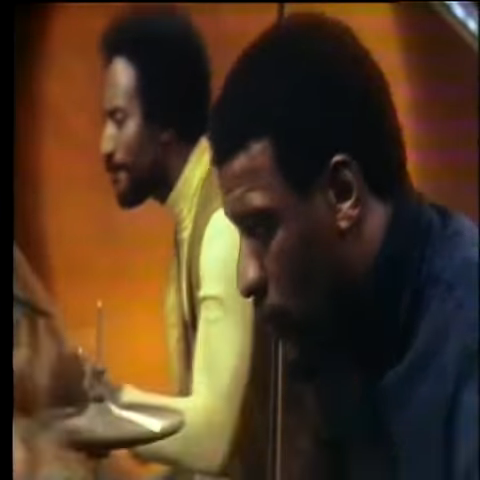
Joe Chambers, born eighty-two years ago today on June 25, 1942, in Stoneacre, Virginia, stands as a pivotal figure in the jazz world, not only for his virtuosity as a drummer but also for his remarkable talents as a pianist, vibraphonist, and composer. Over a career spanning more than six decades, Chambers has contributed significantly to the evolution of jazz, working with some of the most influential artists of the 20th century. His work, both as a sideman and a bandleader, has left an indelible mark on the genre, and his role as an educator has inspired a new generation of musicians.
Early Life and Musical Beginnings:
Chambers’ early life in Chester, Pennsylvania, was steeped in music. His initial musical aspirations focused heavily on composition, even as he learned to play the drums. After high school, he studied composition at the Philadelphia Conservatory and later at American University in Washington, D.C. His professional career began at the young age of 18, performing with R&B artist Bobby Lewis. It was during his time in D.C. that Chambers joined the JFK Quintet, which featured saxophonist Andrew White and bassist Walter Booker. This exposure led to his introduction to trumpeter Freddie Hubbard, who encouraged Chambers to move to New York City.
Help yourself to some live jazz, and help the artists and clubs fulfill their dreams. Sign up to Oh! Jazz to watch live and on-demand performances. 25% of your subscription goes back to the artists and 10% to the clubs.
Learn more about Oh! Jazz here.
Rise to Prominence in the 1960s:
Chambers relocated to New York City in 1963 and quickly became a sought-after drummer. He worked with a plethora of high-profile artists including Eric Dolphy, Jimmy Giuffre, and Andrew Hill. His big break came when Freddie Hubbard hired him for the album “Breaking Point!” in 1964. This session introduced Chambers to Bobby Hutcherson and Wayne Shorter, leading to further collaborations.
Chambers’ drumming style, characterized by a light touch and impeccable timekeeping, set him apart from his contemporaries. He was not flashy, but his subtle and dynamic approach made him an invaluable collaborator. His work on Hutcherson’s “Dialogue” in 1965 and Shorter’s “The All Seeing Eye” in 1966 cemented his reputation as a versatile and innovative drummer.
Expanding Horizons in the 1970s:
The 1970s saw Chambers expanding his musical horizons. He joined Max Roach’s M’Boom, a pioneering percussion ensemble, and collaborated with Charles Mingus. His leader debut, “The Almoravid,” was released in 1974 on the Muse label. This album showcased Chambers’ compositional skills and featured an eclectic mix of sidemen, including bassist Richard Davis and trumpeter Woody Shaw.
Chambers’ versatility was further demonstrated in 1978 with the release of “Double Exposure,” a duo album with organist Larry Young. This period also saw him working extensively with M’Boom, Archie Shepp, and Lee Konitz, among others.
The Educator and Innovator:
In the 1980s and 1990s, Chambers continued to innovate while also dedicating himself to education. He began teaching at the New School for Jazz and Contemporary Music in New York City, where he led the Outlaw Band. His contributions to jazz education extended to his appointment as the Thomas S. Kenan Distinguished Professor of Jazz at the University of North Carolina Wilmington in 2008.
Chambers’ discography as a leader grew during this time, with notable releases such as “Phantom of the City” (1992) and “Mirrors” (1998). The latter marked his debut as a leader for Blue Note Records, featuring a quintet that included trumpeter Eddie Henderson and pianist Mulgrew Miller.
Continued Creativity in the 21st Century:
The new millennium saw Chambers continuing to push the boundaries of jazz. He released “Urban Grooves” in 2002, an album that blended jazz with Afro-Latin and funk influences. In 2006, he released “Outlaw” on Savant Records, a critically acclaimed album that featured saxophonist Logan Richardson.
Chambers paid tribute to his influences with “Horace to Max” in 2010, a homage to Horace Silver and Max Roach. This album was followed by “Joe Chambers Moving Pictures Orchestra” in 2012, a large ensemble recording that showcased his skills as an arranger and conductor.
Recent Works and Legacy:
Chambers returned to Blue Note Records in 2021 with “Samba de Maracatu,” an album that highlighted his mastery of Brazilian percussion. This was followed by “Dance Kobina” in 2023, which featured a diverse ensemble and continued to showcase Chambers’ innovative spirit.
Throughout his career, Chambers has been recognized for his contributions to jazz. He has played on some of the most important albums in the genre, including Joe Henderson’s “Mode for Joe” and Wayne Shorter’s “Adam’s Apple.” His compositions, such as “Mirrors” and “Breaking Point”, have become jazz standards.
Joe Chambers’ journey through jazz is a testament to his remarkable talent and dedication. As a drummer, composer, and educator, he has made significant contributions to the genre, influencing countless musicians and leaving a lasting legacy. His ability to blend traditional jazz with modern elements has ensured that his music remains relevant and inspiring. As Chambers continues to create and perform, his impact on the jazz world will undoubtedly continue to grow.
References:
- Larkin, C. (1995). The Guinness Encyclopedia of Popular Music. Guinness Publishing.
- Joe Chambers and Freddie Waits picture. Retrieved from https://en.wikipedia.org/wiki/File:Joe_Chambers_and_Freddie_Waits.png

Leave a Reply