Introduction:
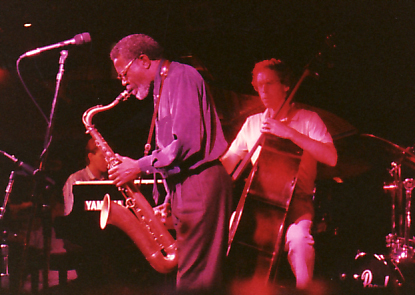
Joe Henderson’s legacy in jazz is undeniable, marked by his innovative compositions and unmistakable saxophone sound. Born in Lima, Ohio, eighty-seven years ago today on April 24, 1937, Henderson’s musical journey began early, eventually leading him to become one of the most influential figures in modern jazz.
Early Life and Education:
Growing up, Henderson showed a natural talent for music, particularly the saxophone. He honed his skills in high school and later studied music at Kentucky State College and Wayne State University. These formative years laid the foundation for his future success in the jazz world.
Help yourself to some live jazz, and help the artists and clubs fulfill their dreams. Sign up to Oh! Jazz to watch live and on-demand performances. 25% of your subscription goes back to the artists and 10% to the clubs.
Learn more about Oh! Jazz here.
Early Career and New York City:
In the early 1960s, Henderson relocated to New York City, the heart of the jazz world. It was there that he collaborated with esteemed musicians such as Kenny Dorham, Horace Silver, and Lee Morgan, honing his distinctive sound and refining his musical style.
Breakthrough Albums and Recognition:
Henderson’s debut album, “Page One,” recorded in 1963 for Blue Note Records, propelled him into the spotlight. The album featured his composition “Recorda Me,” which became a jazz standard. Throughout the 1960s and 1970s, Henderson released a series of acclaimed albums that showcased his virtuosity and musical vision.
Blue Note Recordings:
From 1963 to 1968, Henderson left an indelible mark on the Blue Note label, contributing to nearly 30 albums, including five under his leadership. His recordings showcased a wide spectrum, from the more traditional hard-bop sessions, such as “Page One” in 1963, to the more adventurous explorations found in “Inner Urge” and “Mode for Joe” in 1966. Henderson’s influence extended beyond his own albums; he played a pivotal role in several groundbreaking recordings led by others, including Horace Silver’s “Song for My Father,” Herbie Hancock’s “The Prisoner,” Lee Morgan’s “The Sidewinder,” as well as avant-garde projects with pianist Andrew Hill (“Black Fire” in 1963 and “Point of Departure” in 1964) and drummer Pete La Roca (“Basra” in 1965).
“The State of the Tenor: Live at the Village Vanguard”:
One of Henderson’s most celebrated albums is “The State of the Tenor: Live at the Village Vanguard,” recorded in 1985. The album captured Henderson’s masterful playing alongside Ron Carter on bass and Al Foster on drums, showcasing his improvisational prowess and deep musicality.
Musical Style and Innovation:
Henderson’s music was distinguished by its versatility and innovative spirit, seamlessly blending hard bop, modal jazz, and free jazz elements. His compositions were renowned for their complex harmonic structures and intricate melodies, continually pushing the boundaries of the jazz tradition.
Legacy and Influence:
Henderson’s influence extends far beyond his recordings. His compositions are regularly performed by jazz musicians worldwide, and his innovative approach to the saxophone continues to inspire new generations of musicians. Henderson’s music remains a testament to the enduring power of jazz as an art form.
Joe Henderson’s impact on jazz is immeasurable. His contributions as a composer, saxophonist, and bandleader have left an indelible mark on the genre. As we celebrate his legacy, we are reminded of the timeless beauty and innovation that define his music.
References:
- Larkin, C. (1995). The Guinness Encyclopedia of Popular Music. Guinness Publishing.
- Joe Henderson picture. Retrieved from https://en.wikipedia.org/wiki/File:Joe_Henderson_2.jpg

Leave a Reply