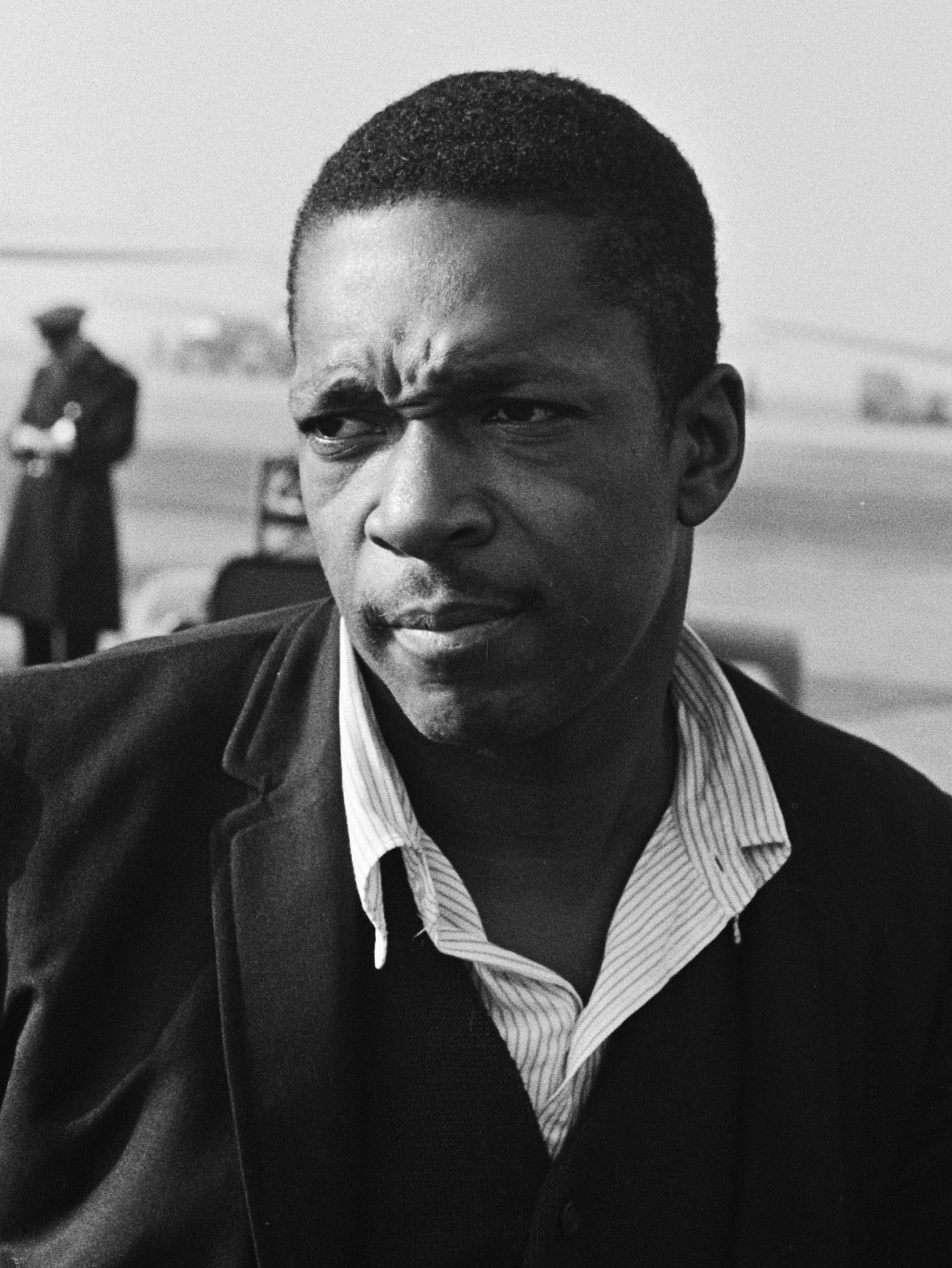
Introduction:
John Coltrane, often referred to simply as ‘Trane,’ stands as one of the most influential figures in the history of jazz. His innovative approach to improvisation, coupled with a tireless quest for musical exploration, reshaped the landscape of jazz and inspired countless musicians across genres. This blog post endeavors to illuminate the life, music, and legacy of the colossus of jazz, John Coltrane.
Early Years and Musical Genesis:
John William Coltrane was born ninety-seven years ago today on September 23, 1926, in Hamlet, North Carolina. Raised in a musical family, he honed his skills playing in community and school bands. The young Coltrane quickly revealed prodigious talent, mastering the alto saxophone before moving on to the tenor saxophone.
Help yourself to some live jazz, and help the artists and clubs fulfill their dreams. Sign up to Oh! Jazz to watch live and on-demand performances. 25% of your subscription goes back to the artists and 10% to the clubs.
Learn more about Oh! Jazz here.
Apprenticeships and Early Career:
Coltrane’s professional journey took off in the late 1940s and early to mid-1950s when he joined bands led by Dizzy Gillespie, Earl Bostic, and Johnny Hodges. It was while working with the legendary Miles Davis that Coltrane’s innovative potential began to shine through, particularly in the groundbreaking “Kind of Blue” sessions in 1959.
Giant Steps: A Harmonic Revolution
The album “Giant Steps,” released in 1960, was one of John Coltrane’s most innovative contributions to the jazz language. This album is widely regarded as a watershed moment in jazz harmony evolution. Coltrane’s creative approach to chord progressions is especially evident on the title track. It includes a chord sequence known as “Coltrane Changes,” which is distinguished by quick and complicated modulations across a major third cycle. This progression was a daunting challenge for musicians at the time, and it has since become a regular study in jazz instruction. “Giant Steps” demonstrates Coltrane’s bold attitude and willingness to push the boundaries of standard harmonic patterns, cementing his status as a true innovator in the jazz world.
Atonal Expeditions and Spiritual Awakening:
The late 1950s and early 1960s marked a period of intense experimentation for Coltrane. His fascination with atonal music and Indian ragas led to the development of his iconic ‘sheets of sound’ technique. His spiritual quest also deepened during this time, significantly influencing his compositions and performances.
The Classic Quartet and Musical Evolution:
Coltrane’s association with pianist McCoy Tyner, bassist Jimmy Garrison, and drummer Elvin Jones in the classic quartet is legendary. Together, they produced a series of seminal albums including “A Love Supreme,” which stands as a pinnacle of spiritual jazz. Coltrane’s relentless pursuit of new musical frontiers continued to expand the boundaries of jazz.
Legacy and Influence:
John Coltrane’s untimely passing in 1967 at the age of 40 left an indelible mark on the world of music. His discography, spanning a mere two decades, is a testament to his ceaseless innovation. Coltrane’s influence resonates not only in the jazz community but also in various other musical genres. Musicians from rock to classical have acknowledged his impact on their own artistic journeys.
Enduring Masterpieces:
Examining Coltrane’s body of work reveals a treasure trove of masterpieces. “Giant Steps,” “My Favorite Things,” “A Love Supreme,” and “Ascension” are but a few of the groundbreaking albums that continue to captivate listeners and serve as a source of inspiration for musicians worldwide.
Cultural and Philosophical Significance:
Beyond his musical prowess, Coltrane’s life and work contain significant cultural and philosophical significance. His spiritual journey is intimately intertwined into the fabric of his music, influenced by personalities such as Gandhi and Dr. Martin Luther King Jr. Coltrane’s works frequently have spiritual themes, reflecting his search for greater consciousness.
The legacy of John Coltrane serves as a reminder of the endless possibilities in artistic expression. His unwavering technical mastery, spiritual investigation, and never-ending invention have had a lasting impression on the music industry. We are reminded of the transformational impact of a distinct artistic vision as we listen to his recordings again and learn more about his life.
References:
- Porter, L. (2000). John Coltrane: His Life and Music. University of Michigan Press.
- Thomas, J.C. (1976). Coltrane Chasin’ the Trane. Da Capo Press.
- Nisenson, E. (1995). Ascension: John Coltrane And His Quest. Da Capo Press.
- John Coltrane picture. Retrieved from https://en.wikipedia.org/wiki/File:John_Coltrane_1963_cropped_ver2.jpg

Leave a Reply