Introduction:
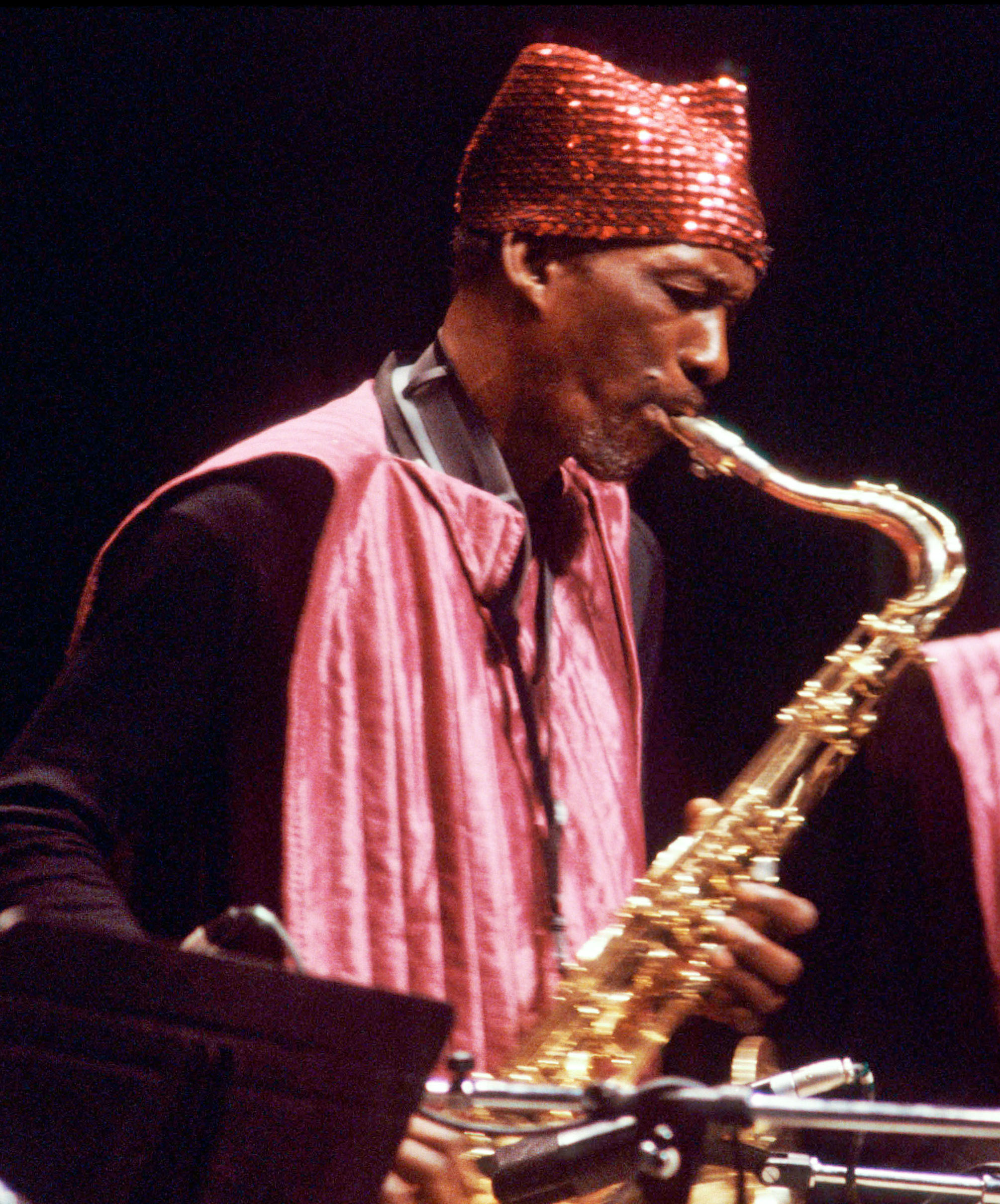
In the pantheon of jazz, where the names of saxophonists like John Coltrane, Sonny Rollins, and Charlie Parker loom large, one figure remains shrouded in mystery yet revered among musicians and aficionados: John Gilmore. A central figure in the avant-garde movement, Gilmore spent most of his career as the tenor saxophonist for Sun Ra’s Arkestra, playing a key role in shaping the sound of experimental jazz. Despite his extraordinary contributions, Gilmore never sought the spotlight, making him one of the most enigmatic yet influential jazz musicians of the 20th century.
Born in Summit, Mississippi, ninety-three years ago today on September 28, 1931, Gilmore’s journey into the world of jazz began in Chicago and culminated in his legendary tenure with Sun Ra. His innovative saxophone playing, which married the harmonic advancements of bebop with the free-form exploration of avant-garde jazz, made him an essential voice in pushing the boundaries of the art form.
Early Life and Musical Beginnings:
Help yourself to some live jazz, and help the artists and clubs fulfill their dreams. Sign up to Oh! Jazz to watch live and on-demand performances. 25% of your subscription goes back to the artists and 10% to the clubs.
Learn more about Oh! Jazz here.
John Gilmore’s formative years were heavily influenced by the thriving jazz scene of Chicago, where he moved as a child. The city’s dynamic jazz and blues culture provided fertile ground for him to develop his musical abilities. At 14, Gilmore started on the clarinet, an instrument that laid the foundation for his later work. His serious focus on the tenor saxophone began during his time in the United States Air Force, where he served from 1948 to 1951. Upon returning to civilian life, he fully committed to his music, launching his career by touring nationally as a tenor saxophonist with the Harlem Globetrotters’ ensemble, which notably included the legendary pianist Earl Hines in 1952. This experience served as a critical stepping stone for Gilmore’s future contributions to avant-garde jazz.
The Sun Ra Arkestra: A Lifelong Journey
John Gilmore’s most significant and enduring collaboration began in 1953 when he joined Sun Ra’s Arkestra. Sun Ra, a visionary bandleader, pianist, and composer, was one of the most eccentric and innovative figures in jazz history. His music blended traditional jazz, African rhythms, electronic experimentation, and cosmic themes into a unique sound. For Gilmore, who was already an accomplished saxophonist with a deep understanding of bebop, joining the Arkestra opened up new dimensions of musical expression.
Over the next four decades, Gilmore would become the cornerstone of the Arkestra’s sound. His tenor saxophone was a bridge between the familiar and the unknown, seamlessly blending structured bebop lines with the freewheeling improvisation that characterized Sun Ra’s more avant-garde compositions. Gilmore’s extraordinary ability to navigate these two worlds set him apart from his contemporaries.
Despite his importance to the Arkestra, Gilmore was not one to seek attention. His commitment to Sun Ra’s musical and philosophical vision was total, and he was content to remain in the background, even as other saxophonists of his generation—most notably John Coltrane—rose to widespread fame. This self-imposed anonymity contributed to Gilmore’s reputation as one of jazz’s most underappreciated figures.
Gilmore’s Influence on John Coltrane:
Perhaps one of the most fascinating aspects of John Gilmore’s career is his profound influence on one of jazz’s greatest saxophonists, John Coltrane. Though Coltrane is often hailed as the architect of modal jazz and free improvisation, he acknowledged that Gilmore’s approach to the tenor saxophone had a deep impact on his own playing.
In the late 1950s, Coltrane and Gilmore spent time together, sharing musical ideas and techniques. Coltrane, who was already experimenting with extended harmonics and modal structures, found in Gilmore a kindred spirit. Gilmore’s exploration of overtones, multiphonics, and atonality pushed the boundaries of what was possible on the saxophone. This interaction had a direct influence on Coltrane’s sound, especially as he began to venture into the spiritual and avant-garde realms that would define his later work, such as “A Love Supreme” and “Ascension.”
Despite this connection, Gilmore never capitalized on his influence over Coltrane. While Coltrane’s star continued to rise, Gilmore remained firmly committed to the Arkestra, content to explore the fringes of jazz rather than pursue commercial success.
The Power and Complexity of Gilmore’s Sound:
John Gilmore’s saxophone sound is often described as paradoxical: simultaneously structured and free, warm and abrasive, melodic and dissonant. This duality made his playing highly versatile and capable of fitting into a wide range of musical contexts.
In Sun Ra’s compositions, which often veered into abstract territories, Gilmore’s saxophone served as both an anchor and a guide. His ability to play with technical precision while embracing free improvisation allowed the Arkestra’s music to maintain a sense of cohesion even in its most experimental moments. Gilmore could execute rapid bebop runs with ease, but he could also manipulate the saxophone’s sound in ways that made it seem otherworldly, producing squawks, squeals, and overblown harmonics that added a cosmic dimension to the Arkestra’s performances.
His solos were marked by their emotional depth and intensity. Whether playing a tender ballad or an aggressive free-form improvisation, Gilmore’s sound was always imbued with a sense of urgency and purpose. He approached every performance as a journey into uncharted musical territory, and his solos often felt like a narrative unfolding in real time.
Outside the Arkestra: Occasional Forays into Mainstream Jazz
While Gilmore is best known for his work with Sun Ra, he did occasionally step outside the Arkestra to collaborate with other jazz musicians. These forays into the more mainstream side of jazz provided a glimpse of what Gilmore might have achieved had he pursued a solo career.
He recorded with Art Blakey’s Jazz Messengers, contributing to the 1965 release “‘S Make It,” a hard-bop record that showcased Gilmore’s ability to excel in more conventional settings. His performance on the album revealed his deep roots in bebop and hard bop, highlighting his technical mastery and lyrical sensibility.
Gilmore also played with pianists Andrew Hill and Paul Bley, two figures who, like Sun Ra, were known for pushing the boundaries of jazz. These collaborations further demonstrated Gilmore’s versatility and his openness to exploring different musical contexts.
However, despite these occasional side projects, Gilmore always returned to the Arkestra. His loyalty to Sun Ra was unwavering, and he remained with the group until Sun Ra died in 1993, after which he briefly took over as leader of the Arkestra before his own passing in 1995.
Legacy and Influence on Future Generations:
Although John Gilmore never achieved the mainstream recognition that some of his contemporaries did, his influence on the jazz world is undeniable. His contributions to the avant-garde movement and his role in shaping the sound of Sun Ra’s Arkestra have left an indelible mark on jazz.
Musicians who followed in Gilmore’s footsteps, particularly in the avant-garde and free jazz scenes, have acknowledged his importance as both a player and a conceptual thinker. His willingness to embrace dissonance, extended techniques, and non-traditional forms of expression paved the way for later saxophonists like Pharoah Sanders, Albert Ayler, and David S. Ware.
Furthermore, Gilmore’s influence on John Coltrane continues to be one of the most significant aspects of his legacy. Coltrane’s admiration for Gilmore’s playing speaks volumes about the depth of Gilmore’s artistry, and the fact that one of jazz’s greatest innovators looked to Gilmore for inspiration solidifies his place in jazz history.
John Gilmore may not have sought fame or fortune, but his contributions to jazz are immeasurable. As the sonic architect of Sun Ra’s Arkestra, he helped shape the sound of avant-garde jazz, creating music that was as daring as it was profound. His influence on John Coltrane and countless other musicians further cements his status as one of the most important, if underappreciated, saxophonists of his generation.
Gilmore’s legacy is one of quiet dedication to the art of music. In an era when many musicians were seeking stardom, Gilmore chose to devote his life to exploring the outer reaches of sound, working tirelessly in the service of Sun Ra’s cosmic vision. His playing, at once beautiful and strange, will continue to inspire generations of musicians to come, ensuring that John Gilmore’s name will remain etched in the history of jazz.
References:
- Campbell, R. (2000). The Earthly Recordings of Sun Ra. Cadence Jazz Books.
- Szwed, J. (2020). Space Is the Place: The Lives and Times of Sun Ra. Duke University Press Books.
- Litweiler, J. (1990). The Freedom Principle: Jazz After 1958. Da Capo Press.
- Porter, L. (2000). John Coltrane: His Life and Music. University of Michigan Press.
- John Gilmore picture. Retrieved from https://en.wikipedia.org/wiki/File:JohnGilmore2.jpg

Leave a Reply