Introduction:
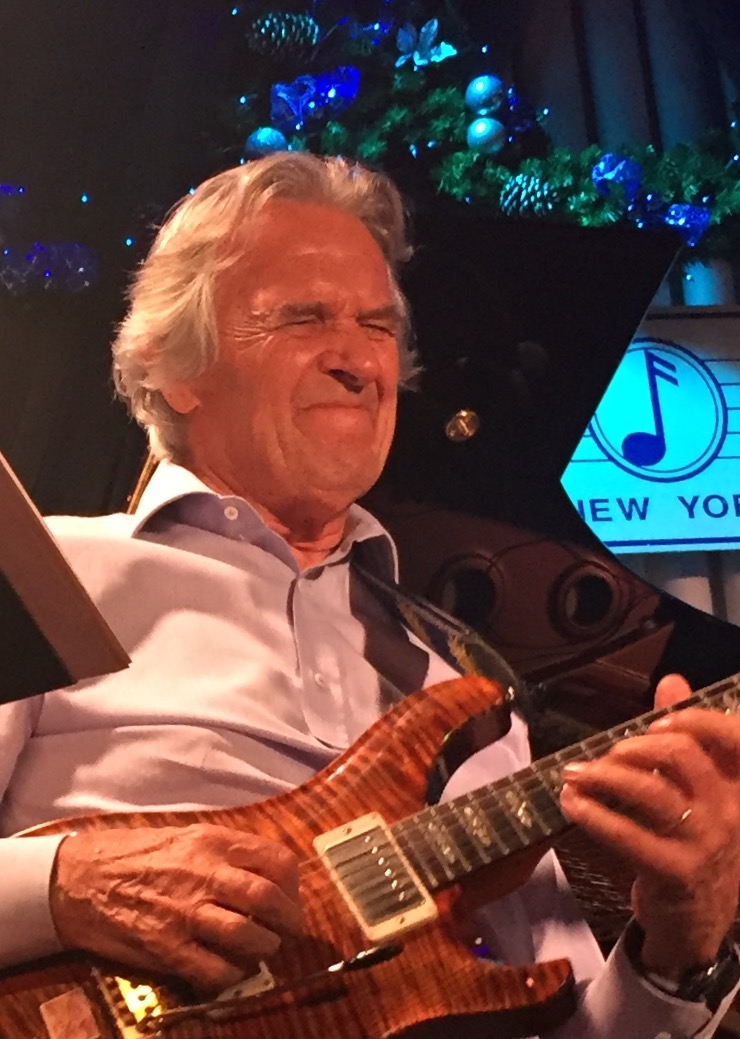
John McLaughlin, born eighty-three years ago today on January 4, 1942, in Doncaster, Yorkshire, England, is widely regarded as one of the greatest and most innovative guitarists in modern music. Renowned for his technical brilliance, genre-defying creativity, and groundbreaking compositions, McLaughlin has been instrumental in shaping the development of jazz fusion and world music. Over a career spanning more than six decades, his contributions have influenced countless musicians and redefined the boundaries of jazz, rock, and classical music.
Early Life and Musical Foundation:
Born into a musical family, McLaughlin was exposed to a wide range of music from an early age. Initially trained in classical piano and violin, he shifted his focus to the guitar at the age of eleven. Influenced by a mix of blues, flamenco, and jazz, he began experimenting with various styles, drawing inspiration from artists like Tal Farlow, Django Reinhardt, and Stéphane Grappelli.
Help yourself to some live jazz, and help the artists and clubs fulfill their dreams. Sign up to Oh! Jazz to watch live and on-demand performances. 25% of your subscription goes back to the artists and 10% to the clubs.
Learn more about Oh! Jazz here.
In the early 1960s, John McLaughlin moved to London, quickly establishing himself as a sought-after session musician. Immersed in the city’s vibrant music scene, he collaborated with prominent blues and R&B pioneers like Alexis Korner and Graham Bond, all while deepening his exploration of jazz. In January 1969, McLaughlin recorded his groundbreaking debut album, “Extrapolation,” in London—a project that showcased his prodigious talent and forward-thinking approach. The album featured the dynamic interplay of John Surman on saxophone and Tony Oxley on drums, adding depth and texture to McLaughlin’s compositions. Among its standout tracks is “Binky’s Beam,” a heartfelt tribute to his friend, the visionary bassist Binky McKenzie. While “Extrapolation” leans heavily into post-bop traditions, it stands apart from McLaughlin’s later fusion masterpieces. Over time, its innovative spirit and nuanced artistry earned widespread critical acclaim, cementing its place as a hidden gem of modern jazz by the mid-1970s.
Miles Davis and the Birth of Fusion:
McLaughlin’s career took a transformative turn in 1969 when he moved to the United States and joined Miles Davis’ band. This collaboration marked the birth of jazz fusion, blending jazz improvisation with rock, funk, and electronic elements. McLaughlin’s fiery and inventive guitar work became a cornerstone of Davis’ seminal albums, including:
- “In a Silent Way” (1969): Known for its atmospheric textures, this album features McLaughlin’s delicate yet innovative contributions, blending seamlessly into Davis’ vision of electric jazz.
- “Bitches Brew” (1970): A groundbreaking double album that introduced jazz fusion to the world. McLaughlin’s intense, distorted guitar lines and rhythmic interplay helped define its revolutionary sound.
- “Jack Johnson” (1971): A funk-driven, bluesy masterpiece where McLaughlin’s guitar takes center stage, delivering raw and expressive solos.
Miles Davis named a track “John McLaughlin” on “Bitches Brew,” a testament to McLaughlin’s influence and their close artistic bond.
The Mahavishnu Orchestra: A Fusion Revolution
In 1971, McLaughlin formed the Mahavishnu Orchestra, a band that pushed the boundaries of jazz, rock, and classical music. With an electrifying lineup that included Billy Cobham (drums), Jan Hammer (keyboards), Jerry Goodman (violin), and Rick Laird (bass), the group’s music was characterized by intricate time signatures, virtuosic solos, and high-energy performances.
Their debut album, “The Inner Mounting Flame” (1971), set a new standard for jazz fusion with tracks like “Meeting of the Spirits” and “The Dance of Maya.” The follow-up album, “Birds of Fire” (1973), further cemented the Mahavishnu Orchestra’s place in music history. The group’s blend of spiritual themes, rock intensity, and jazz complexity attracted a diverse audience, including both jazz purists and rock fans.
However, the band’s demanding schedules and creative tensions led to its dissolution in 1973. McLaughlin went on to form a second iteration of the Mahavishnu Orchestra with new members, continuing to explore the fusion landscape in albums like “Apocalypse” (1974), produced by George Martin of Beatles fame.
Shakti and the Exploration of Indian Music:
In the mid-1970s, McLaughlin turned his attention to Indian classical music, forming the acoustic ensemble Shakti. Collaborating with Indian virtuosos like violinist L. Shankar and tabla maestro Zakir Hussain, Shakti blended traditional Indian music with jazz improvisation. Albums like “Shakti with John McLaughlin” (1976) and “Natural Elements” (1977) were groundbreaking, introducing Indian rhythms and melodies to Western audiences.
McLaughlin’s deep interest in Indian spirituality and philosophy heavily influenced this phase of his career. His use of custom-made acoustic guitars designed for microtonal playing demonstrated his commitment to authenticity and innovation.
Guitar Trios and Collaborative Mastery:
In the late 1970s and 1980s, McLaughlin returned to Western jazz and fusion. One of his most celebrated projects during this period was the Guitar Trio, featuring fellow guitar virtuosos Al Di Meola and Paco de Lucía. Their live album, “Friday Night in San Francisco” (1981), became an instant classic, showcasing dazzling technical prowess and telepathic interplay.
Tracks like “Mediterranean Sundance/Rio Ancho” and “Frevo Rasgado” demonstrated their ability to blend flamenco, jazz, and classical elements into an electrifying experience. The trio’s chemistry continued to shine in subsequent collaborations, including the studio album “Passion, Grace & Fire” (1983).
Innovations in the 1990s and Beyond:
Throughout the 1990s and 2000s, John McLaughlin demonstrated his unwavering commitment to innovation and musical exploration. In 2007, he unveiled a new jazz fusion quartet, the 4th Dimension, featuring the versatile Gary Husband on keyboards and drums, the virtuosic Hadrian Feraud on bass, and the dynamic Mark Mondesir on drums. This ensemble revitalized McLaughlin’s signature sound, blending intricate compositions with electrifying improvisations. In late 2008, McLaughlin embarked on a remarkable tour with an all-star lineup, including Chick Corea, Vinnie Colaiuta, Kenny Garrett, and Christian McBride. Performing under the banner of the Five Peace Band, the group’s collaboration culminated in a critically acclaimed double-CD live album released in early 2009. A poignant highlight of McLaughlin’s career came on July 2, 2010, when he reunited with Mahavishnu Orchestra drummer Billy Cobham for a memorable performance at the 44th Montreux Jazz Festival in Switzerland—their first time sharing the stage since the iconic band’s dissolution.
McLaughlin’s Legacy:
John McLaughlin’s impact on music extends far beyond his virtuosity on the guitar. He is a trailblazer who consistently sought to bridge cultural and stylistic divides, whether through jazz fusion, Indian classical music, or flamenco collaborations. His work with Miles Davis, the Mahavishnu Orchestra, Shakti, and countless other projects has left an indelible mark on the world of music.
McLaughlin’s influence can be heard in the playing of guitarists like Eric Johnson, Mike Stern, and Al Di Meola. His compositions, often marked by intricate harmonies and rhythmic complexity, have inspired musicians across genres.
Selected Discography:
- “Extrapolation” (1969)
- “My Goal’s Beyond” (1971)
- “The Inner Mounting Flame” (1971) – Mahavishnu Orchestra
- “Birds of Fire” (1973) – Mahavishnu Orchestra
- “Shakti with John McLaughlin” (1976) – Shakti
- “Friday Night in San Francisco” (1981) – with Al Di Meola and Paco de Lucía
- “Industrial Zen” (2006)
- “Liberation Time” (2021)
John McLaughlin is more than a musician—he is a visionary whose relentless pursuit of artistic exploration has reshaped the musical landscape. From the electrifying heights of the Mahavishnu Orchestra to the spiritual depths of Shakti, McLaughlin’s career is a testament to the power of innovation and collaboration. As he continues to inspire new generations of musicians, his legacy as a true maestro of fusion remains secure.
References:
- Nicholson, S. (1998). Jazz-Rock: A History. Schirmer Books.
- John McLaughlin picture. Retrieved from https://en.wikipedia.org/wiki/File:John_McLaughlin_Blue_Note_2016.JPG

Leave a Reply