Introduction:
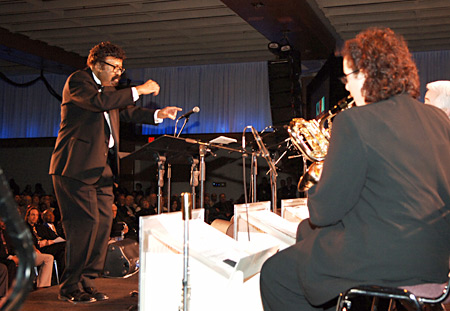
In the tapestry of jazz history, certain figures stand out not just for their musical prowess but for their transformative impact on the genre. Among these luminaries is David Baker, a maestro whose influence extended far beyond his skillful trombone and cello playing. This blog post aims to delve into the multifaceted legacy of David Baker, exploring his contributions as a performer, composer, and, notably, as a pioneering force in jazz education.
Early Life and Musical Odyssey:
Born ninety-two years ago today on December 21, 1931, in Indianapolis, Indiana, David Nathaniel Baker Jr. was immersed in a vibrant musical environment from a young age. Growing up, he navigated the rich musical landscape of Indianapolis, attending the city’s public schools and graduating from Crispus Attucks High School—a notable segregated institution for African American students. His educational journey continued at Indiana University in Bloomington, where he earned a bachelor’s degree in music education in 1953, followed by a master’s degree in music education in 1954.
Help yourself to some live jazz, and help the artists and clubs fulfill their dreams. Sign up to Oh! Jazz to watch live and on-demand performances. 25% of your subscription goes back to the artists and 10% to the clubs.
Learn more about Oh! Jazz here.
David Baker’s academic pursuits were complemented by invaluable mentorship and training. Under the guidance of luminaries like J.J. Johnson, János Starker, and George Russell, he honed his craft and expanded his musical horizons. His commitment to excellence led him to the Lenox School of Jazz in Lenox, Massachusetts, where he further refined his skills from 1959 to 1960, supported by a scholarship.
This foundational period of education and mentorship not only shaped Baker’s musical identity but also set the stage for his later contributions as a performer, composer, and groundbreaking figure in jazz education. The diverse influences and rigorous training during these formative years became the bedrock upon which David Baker built his enduring legacy in the world of jazz.
Composer Extraordinaire:
David Baker’s prowess extended beyond his instrumental skills; he emerged as a prolific and innovative composer. His compositions, ranging from big band pieces to chamber music, reflected a deep understanding of both jazz and classical traditions. His works showcase his ability to seamlessly blend the complexities of jazz with the sophistication of classical forms.
Jazz Education Revolutionary:
Perhaps David Baker’s most enduring legacy lies in his groundbreaking contributions to jazz education. Recognizing the need for structured jazz pedagogy, Baker played a pivotal role in establishing jazz studies as an academic discipline. His tenure at Indiana University, where he began teaching in 1966, marked the genesis of formalized jazz education programs.
Baker’s approach was holistic, emphasizing not just performance but also the historical and theoretical aspects of jazz. He authored numerous educational materials, including the influential “Jazz Improvisation: A Comprehensive Method for All Musicians,” which became a standard text in jazz education. His impact reached beyond the classroom, influencing the curricula of jazz programs across the nation.
Versatility in Performance:
As a performer, David Baker’s versatility was evident. His skill on both trombone and cello made him a sought-after collaborator in various ensembles. Whether leading his own groups or contributing to larger orchestras, Baker’s ability to traverse genres showcased the expansiveness of his musical vocabulary.
Recognition and Honors:
The efforts of David Baker were not overlooked. Many honors were bestowed upon him, such as a 1979 Grammy nomination and a 1973 Pulitzer Prize nomination for his classical compositions. His lasting influence on the jazz scene was recognized when the National Endowment for the Arts named him a Jazz Master in 2000.
Legacy and Continued Impact:
David Baker’s passing in 2016 left a void in the jazz community, but his legacy endures through the countless students and musicians he inspired. Jazz education, as it stands today, bears the imprint of Baker’s innovative spirit. His compositions continue to be performed, ensuring that his musical voice resonates in concert halls and jazz clubs alike.
David Baker’s life journey was a harmonious blend of performance, composition, and education. His influence on jazz education was revolutionary, shaping the way the genre is taught and studied. As we reflect on the legacy of this maestro, we recognize David Baker not just as a musician but as a torchbearer, illuminating the path for future generations of jazz enthusiasts and educators.
References:
- Herzig, M. (2011). David Baker: A Legacy in Music. Indiana University Press.
- David Baker picture. Retrieved from https://en.wikipedia.org/wiki/File:David_Baker_(far_left)_leading_the_Smithsonian_Jazz_Masterworks_Orchestra.jpg
_leading_the_Smithsonian_Jazz_Masterworks_Orchestra.jpg)
Leave a Reply