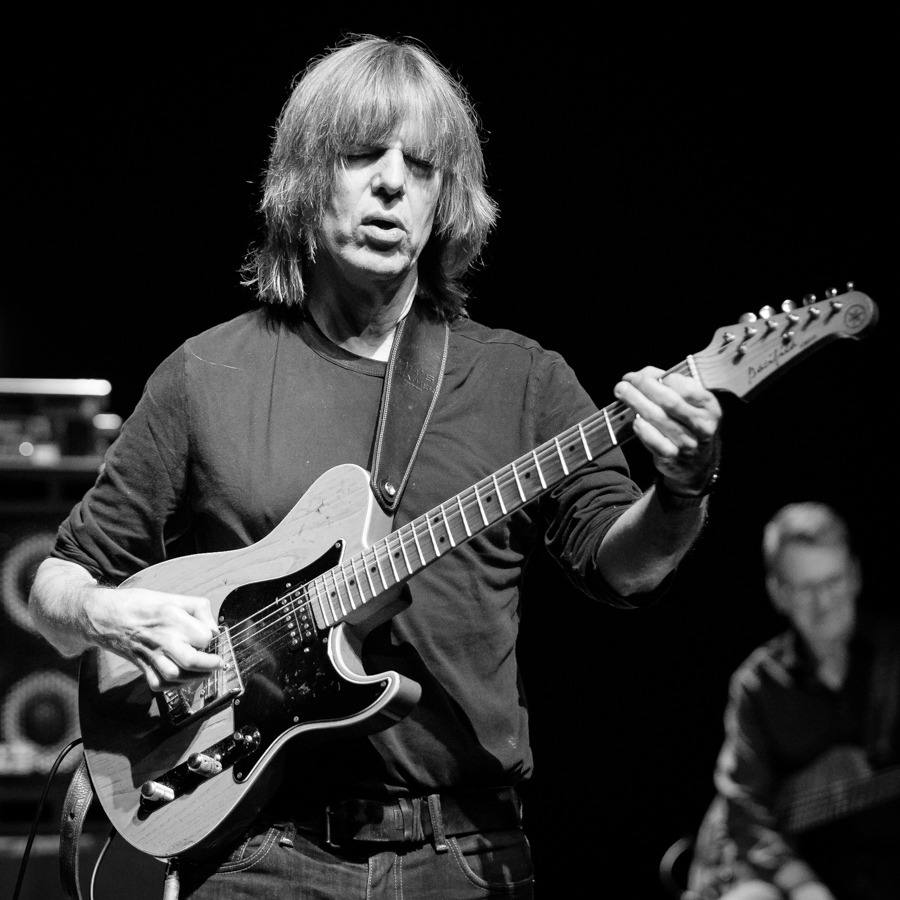
Introduction:
Mike Stern, one of the most celebrated guitarists in contemporary jazz, has carved a unique path with his innovative fusion of bebop, rock, and blues. With a career spanning over four decades, Stern’s playing exudes a rare combination of technical mastery, emotional depth, and stylistic versatility. From his early work with Blood, Sweat & Tears and Miles Davis to his flourishing solo career, Stern’s contributions have left an indelible mark on modern jazz guitar.
This article delves into the life, music, and legacy of Mike Stern, exploring the milestones of his career and his profound influence on the world of jazz.
Early Life and Musical Foundations:
Help yourself to some live jazz, and help the artists and clubs fulfill their dreams. Sign up to Oh! Jazz to watch live and on-demand performances. 25% of your subscription goes back to the artists and 10% to the clubs.
Learn more about Oh! Jazz here.
Mike Stern was born Michael Sedgwick seventy-two years ago today on January 10, 1953, in Boston, Massachusetts. He is the son of Helen Stern, a sculptor and prominent art patron, and Henry Dwight Sedgwick V. He grew up in Washington, D.C., with his mother and his adoptive stepfather Philip M. Stern, the son of businessman Edgar B. Stern Sr. Notably, Stern’s family ties extend to the entertainment world, as his half-sister is the acclaimed actress Kyra Sedgwick. Stern is married to Leni Stern, a celebrated guitarist and vocalist in her own right. He began playing guitar at the age of 12, inspired by legendary musicians such as B.B. King, Eric Clapton, and Jimi Hendrix, influences that would shape his early musical journey and contribute to his evolution as one of jazz’s most innovative guitarists.
At the age of 19, Mike Stern enrolled at the prestigious Berklee College of Music in Boston, an institution renowned for nurturing some of the world’s greatest jazz talents. There, he studied under the legendary guitarist and educator Mick Goodrick, whose innovative teaching methods and approach to improvisation profoundly influenced Stern’s musical outlook. Berklee provided the ideal environment for Stern to refine his craft, offering both technical rigor and exposure to a diverse range of musical ideas. It was during his time at Berklee that he developed the solid technical foundation, advanced harmonic understanding, and fluid improvisational skills that would later become hallmarks of his distinctive style. This period marked the beginning of his transformation from a promising student to a world-class guitarist.
Early Career: Blood, Sweat & Tears
Mike Stern’s professional career began in the mid-1970s when he joined the iconic jazz-rock band Blood, Sweat & Tears. Though the group was past its commercial zenith by the time Stern joined, his tenure from 1975 to 1978 provided him with invaluable experience performing and recording with seasoned musicians.
This period marked Stern’s first exposure to blending jazz improvisation with rock elements—a fusion approach that would become a hallmark of his career. While with Blood, Sweat & Tears, Stern’s distinctive guitar tone and fluid phrasing started to emerge, hinting at the brilliance that would soon take center stage.
The Miles Davis Era: A Fusion Revolution
In 1981, Stern’s career reached a turning point when he was recruited by the legendary Miles Davis. Returning from a five-year hiatus, Davis was venturing into a new era of electric fusion, and Stern’s fiery, rock-infused playing proved to be the perfect match. Stern made his debut with Davis on the album “The Man with the Horn” (1981), which showcased a blend of funk, rock, and jazz that was emblematic of Davis’ electric period.
Stern’s work with Davis reached its apex on the live album “We Want Miles” (1982), where his high-octane solos and dynamic interplay with saxophonist Bill Evans cemented his reputation as a leading voice in fusion guitar. Critics praised Stern’s ability to combine searing intensity with melodic elegance, drawing comparisons to guitar greats like John McLaughlin and Larry Carlton.
Working with Davis also exposed Stern to a global audience and introduced him to other luminaries of the jazz world. It was during this time that Stern formed lasting musical relationships with bassist Marcus Miller and drummer Al Foster, among others.
Solo Career: Establishing a Unique Voice
In 1986, Stern released the album “Upside Downside” on Atlantic Records. Featuring an all-star lineup, including Jaco Pastorius on bass and David Sanborn on saxophone, the album showcased Stern’s ability to seamlessly blend jazz, rock, and blues. Tracks like the title song and “Mood Swings” revealed Stern’s penchant for combining intricate melodies with fiery improvisation.
Stern continued to build on this momentum with albums like “Time in Place” (1988), “Jigsaw” (1989), and “Standards (and Other Songs)” (1992). The latter, a collection of jazz standards and original compositions, highlighted Stern’s deep respect for jazz tradition while showcasing his modern sensibilities. Throughout the 1990s, Stern solidified his reputation as one of the foremost guitarists in jazz, earning widespread acclaim for his sophisticated harmonies and blistering solos.
Collaborations and Band Projects:
Beyond his celebrated solo career, Mike Stern has established himself as one of the most sought-after collaborators in the jazz and fusion worlds, contributing his unique voice to a wide range of projects across genres. In 1989, Stern formed a powerhouse touring group alongside saxophonist Bob Berg, drummer Dennis Chambers, and bassist Lincoln Goines. The ensemble’s fiery interplay and virtuosity left a lasting impression on the jazz fusion scene, culminating in their work on Stern’s album “Odds or Evens” (1991). This group remained together through 1992, delivering electrifying performances that showcased Stern’s ability to seamlessly blend melodic sensibility with technical brilliance.
In 1992, Stern joined the reunited Brecker Brothers Band, an iconic fusion group led by Randy and Michael Brecker. Over the next two years, his incisive guitar work became an integral part of their sound, further solidifying his reputation as a top-tier guitarist in the jazz-fusion sphere.
Stern also collaborated with legendary drummer Billy Cobham, appearing on Cobham’s 1981 album “Stratus.” Cobham’s dynamic and rhythmically complex style provided Stern with a fertile ground to push the boundaries of his playing. These collaborations not only highlighted Stern’s versatility but also underscored his ability to enhance and adapt to the unique dynamics of any musical setting.
Style and Technique:
Mike Stern’s guitar style is an amalgamation of diverse influences, blending the harmonic sophistication of jazz with the raw energy of rock and the emotional depth of blues. His playing is characterized by:
- Fluid Phrasing: Stern’s solos often feature long, lyrical lines that weave through complex harmonic landscapes.
- Distinctive Tone: Using a Yamaha Pacifica guitar and a combination of effects, Stern achieves a warm, slightly overdriven tone that balances clarity with grit.
- Versatility: From bebop to funk to straight-ahead jazz, Stern’s ability to adapt his style to different contexts is a testament to his technical mastery and musical intuition.
Challenges and Resilience:
In 2016, Stern faced a significant setback when he suffered nerve damage in both hands following an accidental fall. The injury severely impacted his ability to play the guitar, threatening to derail his career. However, Stern demonstrated remarkable resilience, undergoing extensive physical therapy and adapting his technique to accommodate his condition.
Despite the challenges, Stern returned to performing and recording with renewed determination. His 2017 album “Trip” was a testament to his perseverance, featuring compositions that reflected both his struggles and his triumphs. Critics hailed the album as one of Stern’s most emotionally resonant works, applauding his ability to channel adversity into artistic expression.
Awards and Recognition:
Mike Stern’s remarkable contributions to jazz have garnered widespread recognition, including six Grammy Award nominations, a testament to his enduring influence and exceptional artistry. On January 21, 2012, he was honored with Guitar Player magazine’s prestigious Certified Legend Award, solidifying his status as one of the most innovative and respected guitarists of his generation. Stern’s impact transcends the jazz world, inspiring musicians across a wide spectrum of genres to pursue creativity, technical mastery, and artistic authenticity. His fearless approach to blending styles and pushing musical boundaries continues to resonate with aspiring and established artists alike.
Legacy and Influence:
As a trailblazer in jazz fusion, Mike Stern has paved the way for countless guitarists seeking to bridge the gap between genres. His ability to honor jazz’s traditions while pushing its boundaries has made him a vital figure in the evolution of the genre. Beyond his technical prowess, Stern’s music resonates with listeners because of its emotional depth and accessibility, bridging the gap between virtuosity and storytelling.
Mike Stern’s journey through the worlds of jazz and fusion is a testament to his boundless creativity, resilience, and passion for music. From his early days with Blood, Sweat & Tears to his groundbreaking work with Miles Davis and his prolific solo career, Stern has continually redefined what it means to be a jazz guitarist.
As he continues to perform and inspire audiences worldwide, Stern remains a beacon of innovation and artistry. His legacy as a pioneer of jazz fusion and a master of the guitar is secure, ensuring that his music will resonate for generations to come.
References:
- Cook, R. & Morton, B. (2008). The Penguin Guide to Jazz Recordings. Penguin Books.
- Mike Stern picture. Retrieved from https://en.wikipedia.org/wiki/File:Mike_Stern_Kongsberg_Jazzfestival_2018_(225558).jpg
.jpg)
Leave a Reply