Introduction:
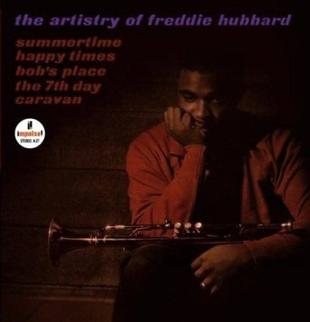
Freddie Hubbard’s 1963 album “The Artistry of Freddie Hubbard” marks a pivotal moment in the career of one of jazz’s greatest trumpeters. As his first release on the Impulse! label, the album showcases Hubbard’s evolving artistry, bridging the hard bop traditions he honed with Art Blakey’s Jazz Messengers and the freer, exploratory spirit that would characterize his later work. Featuring an all-star ensemble, including Curtis Fuller, John Gilmore, Tommy Flanagan, Art Davis, and Louis Hayes, “The Artistry of Freddie Hubbard” is a masterclass in post-bop innovation, dynamic improvisation, and sheer instrumental brilliance.
A New Chapter: Hubbard Joins Impulse!
By the time Hubbard recorded “The Artistry of Freddie Hubbard” in July 1962, he had already established himself as one of the most exciting young trumpeters on the scene. His tenure with the Jazz Messengers, beginning in 1961, placed him in the lineage of great trumpet players like Clifford Brown and Lee Morgan. He had also released a series of impressive albums as a leader on Blue Note, including “Ready for Freddie” (1962), which hinted at his expanding musical vision.
Help yourself to some live jazz, and help the artists and clubs fulfill their dreams. Sign up to Oh! Jazz to watch live and on-demand performances. 25% of your subscription goes back to the artists and 10% to the clubs.
Learn more about Oh! Jazz here.
Impulse! Records, known for its adventurous approach to jazz and for being the home of John Coltrane’s groundbreaking work, provided an ideal platform for Hubbard’s artistic growth. Under producer Bob Thiele’s guidance, Hubbard assembled a sextet that blended seasoned players with fresh voices, creating a sound that was both sophisticated and electrifying.
The Ensemble: A Blend of Power and Finesse
Hubbard’s band on this session featured:
- Freddie Hubbard – Trumpet
- Curtis Fuller – Trombone
- John Gilmore – Tenor Saxophone
- Tommy Flanagan – Piano
- Art Davis – Bass
- Louis Hayes – Drums
Curtis Fuller, a fellow Jazz Messenger and a master of warm, fluid trombone lines, provides a robust counterpoint to Hubbard’s sharp, fiery trumpet. John Gilmore, primarily known for his avant-garde work with Sun Ra, brings an edge to the frontline, offering a unique blend of post-bop phrasing and exploratory intensity. Tommy Flanagan, already a widely respected pianist, adds his signature touch of swing and elegance. Art Davis, a bassist comfortable in both straight-ahead and more experimental settings, anchors the group with deep, resonant tones. Louis Hayes, a powerhouse drummer with experience playing alongside Cannonball Adderley, injects the session with rhythmic vitality and dynamic drive.
Track-by-Track Breakdown:
- “Caravan” (Duke Ellington, Irving Mills, Juan Tizol) – 7:28: The album opens with a bold take on Ellington’s classic “Caravan.” From the outset, Davis and Hayes establish a hypnotic groove, setting the stage for the horns to deliver the exotic, swirling melody. Hubbard’s solo is a display of technical mastery—blistering runs, dynamic shifts, and a commanding tone that soars above the ensemble. Gilmore follows with a muscular, searching solo, his Sun Ra influence subtly evident in his phrasing. Fuller’s trombone adds a robust and lyrical contrast, further enriching the piece’s tonal palette.
- “Bob’s Place” (Hubbard) – 10:03: One of Hubbard’s original compositions, “Bob’s Place” is a hard-swinging number built on a bluesy structure but with a modernist twist. The rhythm section lays down a solid foundation, allowing Hubbard to deliver a solo filled with bright, cascading lines. Flanagan’s piano work is particularly notable, offering crisp, melodic comping and a solo that elegantly dances between bebop sophistication and soulful expression. The piece exudes confidence, serving as a declaration of Hubbard’s arrival as a mature bandleader.
- “Happy Times” (Hubbard) – 4:29: This track brings a more playful, uplifting energy. Hubbard’s bright tone and rhythmic agility are on full display as he weaves through the tune’s buoyant structure. Hayes’ drumming stands out here, providing a propulsive yet nuanced pulse that drives the tune forward. Fuller and Gilmore complement Hubbard with harmonized horn lines, adding depth to the arrangement.
- “Summertime” (George Gershwin, Ira Gershwin, Dubose Heyward) – 10:06: One of the album’s standout tracks, this rendition of Gershwin’s Summertime is a hauntingly beautiful reimagining of the classic standard. Hubbard’s impeccable tone and remarkable range shine through in this Latin-tinged interpretation, blending lyrical sensitivity with bold, expressive phrasing. His phrasing adds a fresh, modern dimension to the timeless melody, making it both intimate and exhilarating.
- “The 7th Day” (Hubbard) – 10:34: The album closes with another Hubbard original, “The 7th Day,” a slow-burning piece that gradually builds in intensity. The groove is deep and infectious, with Davis’ bassline and Hayes’ subtle cymbal work locking into a relaxed yet insistent pocket. The interplay between the horns is particularly engaging, with Hubbard, Fuller, and Gilmore engaging in call-and-response exchanges that simmer with tension before finally resolving into a powerful, climactic conclusion.
The Album’s Legacy and Impact:
Upon its release in early 1963, “The Artistry of Freddie Hubbard” received strong critical acclaim. DownBeat praised its adventurous spirit and Hubbard’s technical brilliance, while The Rolling Stone Jazz & Blues Album Guide later highlighted it as a key transitional work in Hubbard’s discography. While it may not be as widely celebrated as some of his later albums like “Red Clay” (1970) or “First Light” (1971), “The Artistry of Freddie Hubbard” remains an essential document of his early artistic evolution.
The album also demonstrated Hubbard’s ability to balance straight-ahead jazz with a more exploratory sensibility. His fearless improvisation, combined with the impeccable musicianship of his sidemen, set the stage for his future work as a bandleader and collaborator in the post-bop and fusion movements of the late ’60s and ’70s.
For fans of Freddie Hubbard, “The Artistry of Freddie Hubbard” is an indispensable listen—an album that captures a rising star in full command of his instrument and his musical vision. Whether it’s the high-energy swing of “Bob’s Place,” the smoldering intensity of “Summertime,” or the hypnotic drive of “Caravan,” the album is filled with moments of brilliance that reaffirm Hubbard’s place in the jazz pantheon.
This album serves as a bridge between the hard bop tradition of the late 1950s and the more expansive, modal, and avant-garde explorations that would define the 1960s. It’s a testament to Hubbard’s artistry—not just as a trumpet player, but as a bandleader and composer unafraid to push boundaries while remaining deeply rooted in jazz’s core traditions.
Whether you’re a longtime Hubbard admirer or a newcomer looking to explore his early work, “The Artistry of Freddie Hubbard” is a rewarding, exhilarating listen that stands as a shining example of what makes jazz such a continuously evolving and expressive art form.
References:
- Swenson, J. (1999). The Rolling Stone Jazz and Blues Album Guide. Random House.
- “The Artistry of Freddie Hubbard” album cover art. Retrieved from https://en.wikipedia.org/wiki/File:The_Artistry_of_Freddie_Hubbard.jpg

Leave a Reply