Introduction:
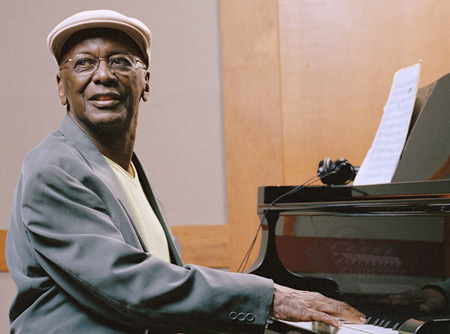
Andrew Hill, a name that resonates with profound depth and innovation in the world of jazz, remains one of the most enigmatic and influential pianists and composers of the 20th century. Born ninety-three years ago today on June 30, 1931, in Chicago, Illinois, Hill’s unique approach to jazz has left an indelible mark on the genre. His contributions, characterized by complex harmonies, unconventional rhythms, and an adventurous spirit, have earned him a revered place in jazz history. This blog post delves into Hill’s life, his musical journey, and the lasting impact of his work.
Early Life and Influences:
Andrew Hill’s early life was steeped in the rich musical culture of Chicago. Raised in the vibrant South Side, he was exposed to a diverse array of musical styles, from blues and gospel to classical and bebop. Hill began playing piano at the age of thirteen, showing a natural aptitude for the instrument. His early influences included pianists such as Earl Hines, Thelonious Monk, and Bud Powell, whose innovative approaches to harmony and rhythm would profoundly shape Hill’s own musical style.
Help yourself to some live jazz, and help the artists and clubs fulfill their dreams. Sign up to Oh! Jazz to watch live and on-demand performances. 25% of your subscription goes back to the artists and 10% to the clubs.
Learn more about Oh! Jazz here.
As a child, Andrew Hill attended the University of Chicago’s Experimental School, where his prodigious talent for music quickly became evident. Jazz composer Bill Russo recognized Hill’s potential and referred him to renowned composer Paul Hindemith, with whom Hill studied informally until 1952. During his teenage years, Hill showcased his versatility by performing in rhythm and blues bands and playing with prominent touring jazz musicians, including legends such as Charlie Parker and Miles Davis. These formative experiences significantly shaped Hill’s distinctive musical voice.
The Blue Note Years:
Andrew Hill’s career took a significant leap forward in the early 1960s when he signed with Blue Note Records, a label renowned for its innovative and boundary-pushing artists. Hill’s association with Blue Note would prove to be one of the most fruitful periods of his career, producing a series of albums that are now considered classics.
- “Black Fire” (1964): Hill’s debut album for Blue Note, “Black Fire,” released in 1964, immediately established him as a formidable force in jazz. The album featured an outstanding quartet, including saxophonist Joe Henderson, bassist Richard Davis, and drummer Roy Haynes. “Black Fire” showcased Hill’s unique compositional style, characterized by intricate harmonies, asymmetric rhythms, and a sense of controlled chaos. Tracks like “Pumpkin” and “Subterfuge” highlighted Hill’s ability to blend complex structures with emotional depth.
- “Point of Departure” (1965): Arguably Hill’s most celebrated work, “Point of Departure” is a masterpiece that solidified his reputation as a visionary artist. The album featured a stellar lineup, including Eric Dolphy, Joe Henderson, Kenny Dorham, Richard Davis, and Tony Williams. Each musician brought their distinctive voice to Hill’s challenging compositions, creating a rich tapestry of sound. Tracks like “Refuge” and “Flight 19” are prime examples of Hill’s genius, with their intricate arrangements and dynamic interplay.
- “Compulsion” (1967): “Compulsion” further explored Hill’s avant-garde tendencies, incorporating elements of free jazz and world music. The album featured a diverse ensemble, including trumpeter Freddie Hubbard, bassist Cecil McBee, drummer Joe Chambers, and percussionists Nadi Qamar and Renaud Simmons. The title track, “Compulsion,” is a tour de force of rhythmic complexity and sonic experimentation, showcasing Hill’s willingness to push the boundaries of jazz.
Musical Style and Innovations:
Andrew Hill’s music is often described as complex, challenging, and ahead of its time. His compositions are known for their unconventional structures, blending elements of bebop, post-bop, and avant-garde jazz. Hill’s use of harmony is particularly distinctive, often employing dissonant intervals and unexpected chord progressions that create a sense of tension and release.
Melodic Freedom:
Despite the complexity of his compositions, Hill’s music always retained a strong melodic core. His melodies, often angular and fragmented, were imbued with a lyrical quality that balanced the abstract nature of his harmonies and rhythms. This melodic freedom allowed for expressive improvisation, enabling his collaborators to explore new sonic territories.
Later Career and Legacy:
After his prolific period with Blue Note, Hill continued to explore new musical horizons throughout the 1970s and beyond. He recorded for various labels, including Artists House, SteepleChase, and Soul Note, producing albums that further showcased his versatility and creativity.
- “Dance with Death” (1968): Recorded in 1968 but not released until 1980, “Dance with Death” is a testament to Hill’s enduring vision. The album features a quintet with Charles Tolliver on trumpet, Joe Farrell on saxophone, Victor Sproles on bass, and Billy Higgins on drums. Tracks like “Fish ‘N Rice” and “Yellow Violet” highlight Hill’s ability to create compelling music that defies categorization.
- “Hommage” (1975): “Hommage” is a solo piano album recorded in 1975 and originally released on the Japanese East Wind label. The album showcases Hill’s unique artistry through six of his original compositions, along with a distinctive interpretation of a Duke Ellington tune. This collection highlights Hill’s innovative approach to jazz piano and his ability to infuse each piece with emotional depth and technical brilliance.
- “Dusk” (2000): Hill’s resurgence in the late 1990s and early 2000s brought renewed attention to his work. The album “Dusk,” released in 2000, was widely acclaimed and won the DownBeat Critics Poll for Jazz Album of the Year. Featuring a talented ensemble, including saxophonists Marty Ehrlich and Greg Tardy, trumpeter Ron Horton, bassist Scott Colley, and drummer Billy Drummond, “Dusk” is a mature and introspective work that reflects Hill’s enduring creativity and relevance.
Educator and Mentor
In addition to his illustrious career as a performer, Andrew Hill was a dedicated educator who made significant contributions to jazz education. He taught in California and held a tenure-track faculty position at Portland State University from 1989 to 1996. While at PSU, Hill established the Summer Jazz Intensive program, providing aspiring musicians with an immersive learning experience. Beyond his work at PSU, Hill conducted workshops, performed, and participated in residencies at numerous prestigious institutions, including Wesleyan University, the University of Michigan, the University of Toronto, Harvard University, and Bennington College. His commitment to education extended his influence beyond performance, shaping the next generation of jazz musicians.
Recognition and Awards:
Andrew Hill’s contributions to jazz were recognized with numerous prestigious accolades. In 2003, he was honored with the Jazzpar Prize, a testament to his influential work and innovation in the genre. In May 2007, Hill was posthumously awarded an honorary doctorate from Berklee College of Music, marking the first time the institution had conferred such an honor on someone after their passing. These awards highlight Hill’s enduring impact on the jazz world and his legacy as a groundbreaking musician and educator.
Andrew Hill’s music continues to captivate and challenge listeners, offering a unique blend of complexity, beauty, and innovation. His ability to push the boundaries of jazz while remaining deeply rooted in its traditions has earned him a lasting place in the pantheon of jazz greats. As we reflect on Hill’s life and work, we are reminded of the transformative power of music and the enduring legacy of one of jazz’s true visionaries.
Hill’s recordings, from “Black Fire” and “Point of Departure” to “Dusk,” remain essential listening for anyone seeking to understand the depth and breadth of jazz as an art form. His compositions, marked by their harmonic daring, rhythmic ingenuity, and melodic richness, continue to inspire and challenge musicians and audiences alike.
In celebrating Andrew Hill, we celebrate not only a remarkable musician but also the boundless possibilities of jazz itself. His legacy is a testament to the power of creativity, the importance of innovation, and the enduring beauty of music that speaks to the human experience in all its complexity.
References:
- Cook, R. & Morton, B. (2008). The Penguin Guide to Jazz Recordings. Penguin Books.
- Yanow, S. (2003). Jazz on Record – The First Sixty Years. Backbeat Books.
- Williams, M. (1993). The Jazz Tradition. Oxford University Press.
- Andrew Hill picture. Retrieved from https://en.wikipedia.org/wiki/File:Andrew_Hill.jpg

Leave a Reply