Introduction:
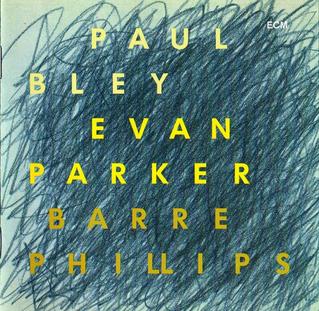
In avant-garde jazz, where spontaneity and improvisation reign supreme, “Time Will Tell” stands as a testament to the collaborative genius of three titans in experimental jazz – Paul Bley, Evan Parker, and Barre Phillips. Released in January 1995 under the ECM label, this album is not just a collection of tracks; it’s a sonic journey that captures the essence of free jazz and free improvisation.
The Collaborative Alchemy:
The trio, comprised of Canadian jazz pianist Paul Bley, British saxophonist Evan Parker, and American bassist Barre Phillips, came together in January 1994 at the Rainbow Studio in Oslo, Norway, to weave their musical magic. The choice of these musicians wasn’t arbitrary; each brought a unique sonic language to the table. Bley’s avant-garde piano stylings, Parker’s innovative approach to the saxophone, and Phillips’ experimental bass techniques promised a sonic alchemy that would redefine the boundaries of improvisational jazz.
Help yourself to some live jazz, and help the artists and clubs fulfill their dreams. Sign up to Oh! Jazz to watch live and on-demand performances. 25% of your subscription goes back to the artists and 10% to the clubs.
Learn more about Oh! Jazz here.
Reception and Critical Acclaim:
The critical reception of “Time Will Tell” echoes the album’s experimental nature. The Penguin Guide to Jazz, recognizing its significance, included it in its Core Collection. Scott Yanow’s review on AllMusic praises the trio’s ability to engage in “thoughtful free improvisations.” Yanow notes that “the music never fails to hold on to one’s interest as the three musicians continually think and evolve together.”
The Sonic Odyssey:
The album embarks on a sonic odyssey with each track offering a unique landscape of sounds. The opening track, “Poetic Justice,” a sprawling 17-minute exploration, sets the stage for what follows. Bley’s piano, Parker’s saxophones, and Phillips’ bass engage in a musical conversation that is both intricate and intuitive. The title track, “Time Will Tell,” a concise piece at 4:25, showcases the trio’s ability to distill complexity into succinct musical statements.
The thoughtfulness of the musicians is evident in tracks like “Above the Tree Line,” “You Will, Oscar, You Will,” and “Marsh Tides.” The interplay between Bley’s piano and Parker’s saxophones is both delicate and daring, while Phillips’ bass provides a foundational yet adventurous undercurrent.
Notable is “Vine Laces,” a collaborative effort between Parker and Phillips. The saxophone-bass duet adds a layer of intimacy to the album, revealing the chemistry between the musicians. “Clawback,” a duet between Bley and Parker, demonstrates their virtuosity and mutual understanding, showcasing the beauty of stripped-down musical dialogues.
Personnel and Instrumentation:
The trio’s instrumentation is sparse yet rich in sonic possibilities. Paul Bley’s mastery of the piano, Evan Parker’s proficiency on both tenor and soprano saxophones, and Barre Phillips’ exploratory approach to the bass create a musical tapestry that is both intricate and expansive.
- Paul Bley – piano
- Evan Parker – tenor saxophone, soprano saxophone
- Barre Phillips – bass
Legacy and Impact:
“Time Will Tell” is not just an album; it’s a moment frozen in the annals of jazz history. Beyond its immediate reception, the album’s legacy is imprinted on the trajectory of avant-garde jazz. It served as a testament to the endless possibilities of improvisation and free jazz exploration.
The influence of “Time Will Tell” extends beyond its release. The trio’s meeting was not just a moment in time but a catalyst for future experiments in jazz. Each musician continued to contribute significantly to the genre, and their collective work influenced subsequent generations of jazz artists.
“Time Will Tell” remains a sonic journey through uncharted musical territories. The collaborative synergy between Paul Bley, Evan Parker, and Barre Phillips resulted in an album that defies conventions, challenges the listener, and enriches the legacy of avant-garde jazz. As the title suggests, time has indeed told a tale of innovation and daring exploration through the notes and improvisations encapsulated in this exceptional recording.
References:
- Cook, R. & Morton, B. (2008). The Penguin Guide to Jazz Recordings. Penguin Books.
- “Time Will Tell” album cover art. Retrieved from https://en.wikipedia.org/wiki/File:Time_Will_Tell_(Paul_Bley_album).jpg
.jpg)
Leave a Reply