Introduction:
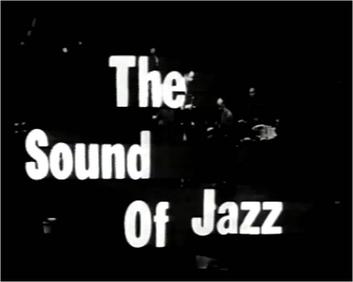
On December 8, 1957, a groundbreaking moment in jazz history aired on American network television. “The Sound of Jazz,” a CBS production, became a cultural milestone, capturing the spirit of an art form that thrives on improvisation, collaboration, and raw emotional expression. This one-hour episode of the Seven Lively Arts series remains a classic, bringing together legendary musicians from across generations and styles for an unforgettable evening.
With an impressive roster of performers, innovative production techniques, and a poignant sense of historical importance, “The Sound of Jazz” is more than just a television broadcast or an album—it is a celebration of jazz as both a musical genre and an art form.
A Bold Vision for Jazz on Television:
Help yourself to some live jazz, and help the artists and clubs fulfill their dreams. Sign up to Oh! Jazz to watch live and on-demand performances. 25% of your subscription goes back to the artists and 10% to the clubs.
Learn more about Oh! Jazz here.
In 1957, jazz was a dominant force in American culture, yet it was seldom given a spotlight on network television. “The Sound of Jazz” broke that mold, presenting a program where the artistry of jazz was front and center. Produced by Robert Herridge and directed by Jack Smight, the show was hosted by media critic John Crosby and shaped by jazz writers Nat Hentoff and Whitney Balliett. Their goal was to highlight the authenticity of jazz performance, steering clear of overly commercialized depictions.
Broadcast live from CBS Studio 58 in New York City, “The Sound of Jazz” was a bold attempt to blend television’s visual language with the spontaneity of jazz. As critic Jack Gould observed in The New York Times, the show’s approach was “the art of video improvisation wedded to the art of musical improvisation,” a union that resulted in “an hour of enormously creative and fresh TV.”
A Gathering of Legends:
The program’s lineup read like a who’s who of jazz history. From the swing era, icons like Count Basie, Billie Holiday, Lester Young, Coleman Hawkins, and Jo Jones took the stage, joined by Chicago-style players like Henry “Red” Allen and Pee Wee Russell. Representing modern jazz were trailblazers such as Thelonious Monk, Gerry Mulligan, and Jimmy Giuffre.
One of the show’s most poignant moments came during Billie Holiday’s performance of her blues classic, “Fine and Mellow.” This song reunited her with tenor saxophonist Lester Young, her longtime friend and musical partner. According to Nat Hentoff, the two had grown distant by this point, and during rehearsals, they stayed on opposite sides of the room. Young was in frail health, and his performance was uncertain. But when the cameras rolled, magic happened.
During “Fine and Mellow,” Young delivered what Hentoff described as “the purest blues I have ever heard.” Holiday, her eyes interlocked with his, half-smiled as they seemingly revisited memories of their past. In the control room, the crew was moved to tears. Tragically, this would be one of the last times the two legends performed together; both would pass away within two years.
The Album: Capturing the Moment
The album version of “The Sound of Jazz,” released by Columbia Records in 1958, was not a direct recording of the telecast but instead derived from a rehearsal session held four days prior at Columbia’s 30th Street Studio. While the album captured the same spirit as the broadcast, some notable differences emerged. Gerry Mulligan declined to participate in the album recording due to payment disputes, and other players, such as bassist Walter Page, featured on the album but not the telecast.
Despite these changes, the album remains a classic, featuring timeless tracks like:
- “Wild Man Blues” (Louis Armstrong, Jelly Roll Morton): A spirited collaboration featuring Pee Wee Russell and Coleman Hawkins.
- “Fine and Mellow” (Billie Holiday): The centerpiece of both the broadcast and the album, this performance embodies raw emotion and artistic mastery.
- “The Train and the River” (Jimmy Giuffre): A standout piece showcasing Giuffre’s trio’s interplay.
Each track underscores the diversity of jazz styles and the brilliance of the musicians involved.
Production and Innovation:
“The Sound of Jazz” was a technical and artistic triumph. Using a multi-camera setup, the production avoided gimmicky camera angles or overly staged visuals, instead treating the cameras as “reportorial tools” that captured the musicians in their element. The intimacy of the broadcast allowed viewers to experience the immediacy of the performances as if they were in the room with the artists.
The decision to let the musicians perform with minimal interference was a testament to the producers’ respect for jazz as an art form. This approach contrasted sharply with other music programs of the era, which often prioritized spectacle over substance.
The Legacy of “The Sound of Jazz:”
More than six decades later, “The Sound of Jazz” endures as a landmark moment in jazz history. It offered a rare opportunity for audiences to witness legends from different eras and styles collaborating on live television. Beyond the music, the program captured the humanity of its performers, from Lester Young’s fragile brilliance to Billie Holiday’s haunting presence.
Critically, “The Sound of Jazz” also reinforced the idea that jazz could be presented as serious art, worthy of the same respect as classical music or theater. This was a bold statement at a time when jazz was often dismissed as mere entertainment.
The broadcast and its accompanying album remain cherished by jazz enthusiasts and historians, serving as both a time capsule and a touchstone for the genre’s enduring power.
“The Sound of Jazz” stands as a remarkable tribute to an art form defined by improvisation, individuality, and emotion. By bringing together a cast of legends, respecting the integrity of their performances, and presenting it all to a national audience, the program cemented its place in cultural history.
Whether through the haunting strains of “Fine and Mellow,” the lively interplay of “Wild Man Blues,” or the dynamic experimentation of Jimmy Giuffre’s trio, “The Sound of Jazz” offers an experience that remains as vital and moving today as it was in 1957. For anyone seeking to understand the heart of jazz, this program is an essential watch—and listen.
References:
- Ward, G.C. & Burns, K. (2002). Jazz: A History of America’s Music. Knopf.
- “The Sound of Jazz” title card. Retrieved from https://en.wikipedia.org/wiki/File:The_sound_of_jazz.jpg

Leave a Reply