Introduction:
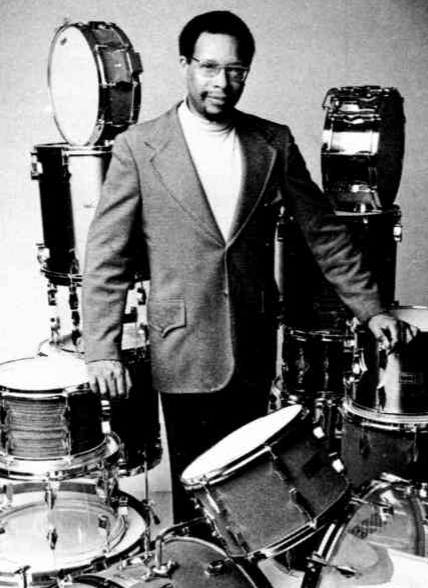
The world of jazz drumming is filled with numerous influential figures, each contributing uniquely to the evolution of the genre. Among these legends, Alan Dawson stands out not only for his extraordinary skill and versatility as a drummer but also for his profound impact as an educator. His ability to blend technical proficiency with deep musicality made him a sought-after performer, while his innovative teaching methods helped shape the careers of countless drummers. This blog post explores the life, career, and lasting legacy of Alan Dawson, highlighting his contributions to jazz and music education.
Early Life and Musical Beginnings:
Alan Dawson was born ninety-five years ago today, on July 14, 1929, in Marietta, Pennsylvania, but grew up in Roxbury, Massachusetts. During his service in the U.S. Army during the Korean War, he played with the Army Dance Band while stationed at Fort Dix from 1951 to 1953. This period allowed him to hone his skills and explore the post-bop era by performing with pianist Sabby Lewis. After being discharged from the army, Dawson toured Europe with Lionel Hampton, further solidifying his reputation as a versatile and skilled drummer.
Help yourself to some live jazz, and help the artists and clubs fulfill their dreams. Sign up to Oh! Jazz to watch live and on-demand performances. 25% of your subscription goes back to the artists and 10% to the clubs.
Learn more about Oh! Jazz here.
Professional Career and Musical Contributions:
Dawson served as the house drummer for Lennie’s on the Turnpike in Peabody, Massachusetts, from 1963 to 1970. This key position allowed him to collaborate with a wide range of jazz musicians, enhancing his skill and adaptability. During the 1960s, Dawson primarily recorded with saxophonist Booker Ervin for Prestige Records, forming a notable musical partnership. In 1968, he took over from Joe Morello in the Dave Brubeck Quartet, continuing in this role until 1972, which further boosted his reputation in the jazz community. Dawson’s extensive performance credits also include working with Bill Evans, Sonny Rollins, Jaki Byard, Sonny Stitt, Dexter Gordon, Lee Konitz, Quincy Jones, Charles Mingus, and Tal Farlow.
Educational Legacy:
While Alan Dawson’s contributions as a performer are noteworthy, his impact as an educator is arguably his most enduring legacy. In 1957, he began teaching at the Berklee School of Music (now Berklee College of Music) in Boston. Over the next two decades, Dawson developed a comprehensive and innovative approach to drum instruction that influenced generations of drummers.
Dawson’s teaching methods were rooted in a deep understanding of both jazz and classical techniques. He emphasized the importance of technical proficiency, musicality, and versatility. One of his most famous instructional tools was the “Rudimental Ritual,” a series of exercises combining rudiments and foot patterns designed to develop coordination, endurance, and control. This ritual became a cornerstone of Dawson’s teaching and has been adopted by countless drummers around the world.
Among Dawson’s many students were some of the most influential drummers in modern jazz, including Tony Williams, who revolutionized jazz drumming with his work in the Miles Davis Quintet, and Vinnie Colaiuta, known for his work with Frank Zappa and Sting. Dawson’s ability to nurture talent and inspire excellence made him a beloved figure in the drumming community.
The Rudimental Ritual: A Cornerstone of Drum Education
The Rudimental Ritual stands out as one of Dawson’s most significant educational contributions. This extensive exercise routine integrates the Standard 26 American Drum Rudiments, several Swiss rudiments, and Dawson’s unique “Innovations,” crafting them into a cohesive, flowing sequence. Accompanied by a foot ostinato, the entire routine takes approximately twenty minutes to complete when played continuously. Designed to be performed on a practice pad or snare drum, with the feet maintaining a consistent ostinato pattern on the bass drum and hi-hat, the ritual demands both coordination and endurance. Its challenging nature makes it an immensely rewarding practice tool for drummers seeking to enhance their skills.
Dawson’s Rudimental Ritual helps drummers develop the technical facility and control necessary to navigate complex rhythms and maintain a steady groove. The ritual also fosters a deep sense of time and internal pulse, which are crucial for any drummer. Many of Dawson’s students credit the Rudimental Ritual with transforming their playing and providing a solid foundation for their musical careers.
Influence on Modern Drumming:
Alan Dawson’s influence on modern drumming is evident in the playing of many contemporary drummers. His emphasis on technical mastery, musicality, and versatility set a standard for jazz drummers and beyond. Drummers like Terri Lyne Carrington, Kenwood Dennard, and Joe Farnsworth have all cited Dawson as a significant influence on their development.
Dawson’s approach to drumming transcended stylistic boundaries. While he was deeply rooted in jazz, his technical proficiency and musical sensibility allowed him to excel in various genres. This versatility is a hallmark of many modern drummers, who are expected to navigate a wide range of musical styles with ease.
Notable Recordings and Performances:
Throughout his career, Alan Dawson contributed to numerous recordings that showcase his exceptional drumming. Some of his most notable recordings include:
- Booker Ervin – “The Freedom Book” (1964): Dawson’s powerful and driving drumming on this album highlights his ability to support and elevate the music.
- Dave Brubeck – “The Last Set at Newport” (1972): Dawson’s versatility shines throughout this recording, as the musicians continually push each other’s boundaries.
In addition to these recordings, Dawson’s live performances were a testament to his skill and musicality. His tenure at Lennie’s on the Turnpike allowed him to collaborate with some of the greatest jazz musicians of his time, further cementing his reputation as a top-tier drummer.
Personal Life and Challenges:
Despite his professional success, Alan Dawson faced personal challenges throughout his life. Like many musicians, he struggled with health issues, including a serious back injury that temporarily sidelined his career in the late 1970s. However, his resilience and dedication to music saw him return to performing and teaching.
Dawson was known for his humility and generosity. He was deeply committed to his students and took great pride in their successes. His approachable demeanor and willingness to share his knowledge endeared him to many in the music community.
Legacy and Recognition:
Alan Dawson passed away on February 23, 1996, but his legacy lives on through his recordings, his students, and his contributions to drum education. Dawson’s approach to drumming and teaching continues to influence drummers today. His Rudimental Ritual is still a staple in drum education, and his emphasis on musicality and versatility remains a guiding principle for aspiring drummers. Many of his former students have gone on to become influential educators themselves, passing on Dawson’s teachings to new generations.
Alan Dawson was a true master of his craft, whose contributions to jazz drumming and music education have left an indelible mark on the world of music. His technical prowess, combined with his deep musicality and innovative teaching methods, set a standard for drummers everywhere. As a performer, he brought a unique voice to the ensembles he played with, and as an educator, he inspired countless drummers to achieve their full potential.
Dawson’s legacy is a testament to the power of dedication, resilience, and a lifelong commitment to excellence in music. His influence can be heard in the playing of drummers around the world, and his teachings continue to shape the future of drumming. As we celebrate his life and work, we are reminded of the profound impact that one individual can have on an entire field, leaving a legacy that endures long after they are gone.
References:
- Larkin, C. (1992). The Guinness Who’s Who of Jazz. Guinness Publishing.
- Alan Dawson picture. Retrieved from https://en.wikipedia.org/wiki/File:Alan_Dawson.jpg

Leave a Reply