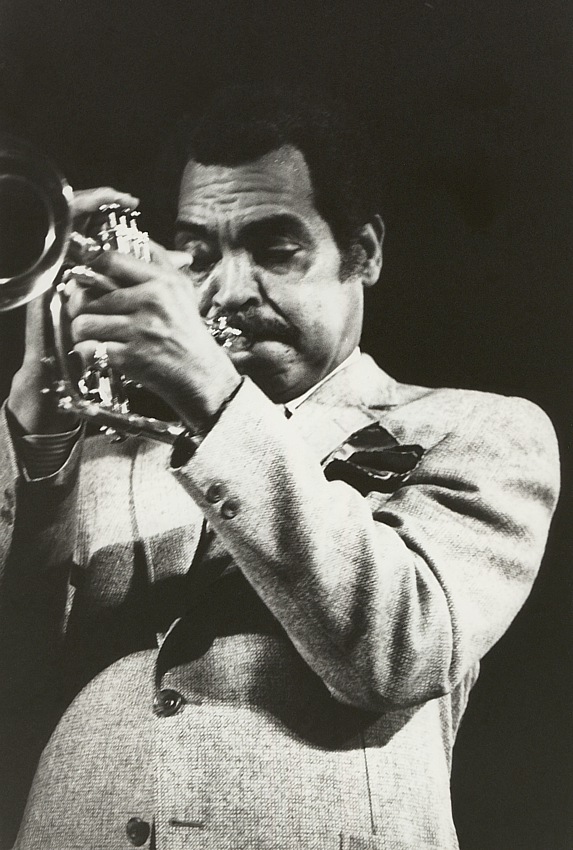
Introduction:
Art Farmer, born ninety-six years ago today on August 21, 1928, in Council Bluffs, Iowa, and raised in Phoenix, Arizona, was one of the most versatile and innovative jazz trumpeters of the 20th century. Known for his warm, lyrical style, Farmer carved out a unique niche in the jazz world, not only as a trumpet player but also as a flugelhornist and, later in his career, as a pioneer of the flumpet, a hybrid of the two instruments. Over the course of his career, which spanned more than five decades, Farmer collaborated with some of the biggest names in jazz and left an indelible mark on the genre. This blog post delves into the life, music, and legacy of Art Farmer, highlighting his contributions to the world of jazz.
Early Life and Musical Beginnings:
Art Farmer was born into a musical family, with his mother playing piano and his twin brother, Addison Farmer, taking up the bass. The Farmer twins were deeply influenced by the music they heard growing up, particularly the sounds of big-band jazz that dominated the radio during the 1930s and 1940s. Art Farmer initially started on the piano but switched to the violin before finally settling on the trumpet as his instrument of choice.
Help yourself to some live jazz, and help the artists and clubs fulfill their dreams. Sign up to Oh! Jazz to watch live and on-demand performances. 25% of your subscription goes back to the artists and 10% to the clubs.
Learn more about Oh! Jazz here.
When Art was four years old, his family moved to Phoenix, Arizona. The city’s schools were segregated, and the music education offered at his school was inadequate. Determined to pursue his passion, Farmer took it upon himself to learn how to read music. At thirteen, he began playing the trumpet, quickly making it his primary instrument. His early musical influences included the groundbreaking styles of Dizzy Gillespie, Miles Davis, and Fats Navarro, all of whom played a crucial role in shaping his emerging voice as a jazz musician.
In 1945, Farmer and his brother relocated to Los Angeles, where they enrolled in the music-focused Jefferson High School. This environment provided them with valuable music instruction and the opportunity to connect with other budding musicians like Sonny Criss, Ernie Andrews, Big Jay McNeely, and Ed Thigpen. To support themselves, the brothers took jobs in a cold-storage warehouse while also earning money by playing music professionally. Art began his professional trumpet career at just 16, performing with prominent bands led by Horace Henderson, Jimmy Mundy, and Floyd Ray, among others.
The Birth of a Unique Sound:
Art Farmer’s early career was characterized by his relentless pursuit of a distinctive voice on the trumpet. His playing style is often celebrated for its lyricism and the warmth of his tone. Farmer’s approach was defined by a sweet, lyrical quality and a melodic sense of phrasing, yet this did not detract from his ability to deliver rhythmically engaging and swinging lines.
In 1956, Farmer released his first significant recording as a leader with the album “The Art Farmer Septet.” The album, which featured arrangements by Quincy Jones and Gigi Gryce, showcased Farmer’s lyrical approach to the trumpet and established him as a rising star in the jazz world. His playing on the album was marked by a refined sense of melody and a deep emotional expressiveness, qualities that would become hallmarks of his style.
Throughout the 1950s, Farmer continued to evolve as a musician, experimenting with different musical contexts and instruments. In 1952, he joined Lionel Hampton’s big band, which provided him with the opportunity to tour Europe for the first time. This experience broadened his musical horizons and deepened his appreciation for the international jazz scene.
The Jazztet and Beyond:
One of the most significant collaborations of Art Farmer’s career came in 1959 when he co-founded The Jazztet with tenor saxophonist Benny Golson. The Jazztet was a sextet that combined elements of hard bop and cool jazz, and it quickly gained a reputation as one of the most innovative and exciting groups of the era. The ensemble’s blend of sophisticated arrangements and improvisational brilliance was a perfect fit for Farmer’s lyrical trumpet style.
The Jazztet’s debut album, “Meet the Jazztet,” released in 1960, was a critical and commercial success. The album featured some of Farmer’s most memorable playing, particularly on tracks like “Killer Joe” and “I Remember Clifford,” the latter a tribute to the late trumpeter Clifford Brown. Farmer’s tone on these recordings was warm and expressive, and his solos demonstrated a perfect balance between technical proficiency and emotional depth.
The Jazztet continued to record and perform throughout the early 1960s, producing several more acclaimed albums, including “Big City Sounds” and “Here and Now.” However, despite the group’s success, Farmer and Golson decided to disband the Jazztet in 1962, each pursuing individual projects.
The Move to Europe:
In 1968, Art Farmer relocated to Europe, eventually making Vienna, Austria, his home. The decision was influenced by the more stable and appreciative jazz scene in Europe, as well as Farmer’s aspiration to explore new musical avenues. During this period, his recordings highlight not only his mastery of the flugelhorn but also his remarkable ability to convey profound emotion through his playing.
In addition to the flugelhorn, in 1989 Farmer also began experimenting with a hybrid instrument called the flumpet, which combined the qualities of both the trumpet and the flugelhorn. The flumpet allowed Farmer to achieve a wider range of tonal colors and further refined his signature sound.
Legacy and Influence:
Art Farmer’s contributions to jazz extended far beyond his technical proficiency on the trumpet and flugelhorn. He was a musician of great sensitivity and emotional depth, whose playing resonated with audiences around the world. His ability to convey a wide range of emotions through his instrument made him a favorite among both jazz aficionados and casual listeners.
Throughout his career, Farmer collaborated with some of the most significant figures in jazz, including Gerry Mulligan, Jim Hall, Quincy Jones, and Horace Silver. His versatility as a musician allowed him to adapt to a wide variety of musical settings, from small combos to big bands, and his playing was always marked by a keen sense of melody and a deep respect for the jazz tradition.
Art Farmer continued to perform and record well into the 1990s, leaving behind a rich legacy of recordings that continue to inspire musicians and listeners alike. His influence can be heard in the playing of countless trumpet and flugelhorn players who have followed in his footsteps, and his contributions to the development of jazz as an art form are undeniable.
Art Farmer was a true pioneer of jazz trumpet, whose warm, lyrical playing and innovative use of the flugelhorn and flumpet set him apart as one of the most distinctive voices in jazz history. His career was marked by a relentless pursuit of beauty and expressiveness in music, and his legacy continues to resonate with musicians and audiences around the world. As we look back on the life and music of Art Farmer, we are reminded of the profound impact that one artist can have on the world of jazz and beyond.
References:
- Yanow, S. (2003). Jazz on Record – The First Sixty Years. Backbeat Books.
- Gioia, T. (2021). The History of Jazz. Oxford University Press.
- Art Farmer picture. Retrieved from https://en.wikipedia.org/wiki/File:Art_Farmer.jpg

Leave a Reply