Introduction:
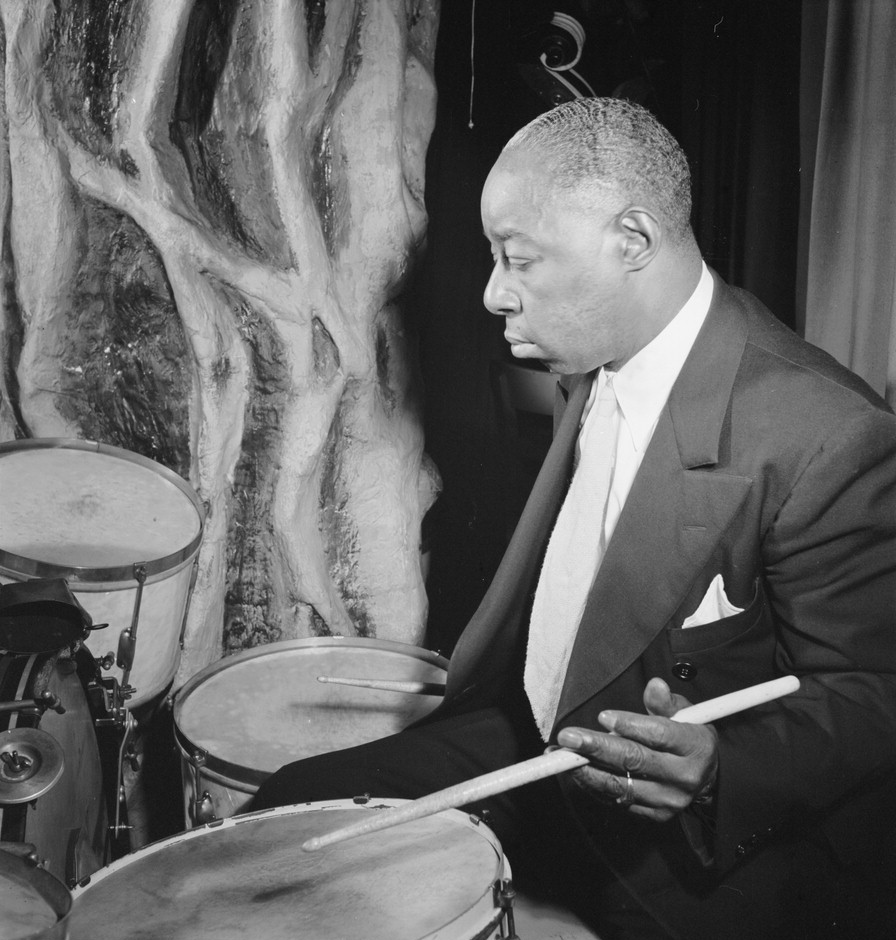
When discussing the evolution of jazz, few names hold as much significance in the realm of drumming as Warren “Baby” Dodds. Born one hundred and twenty-six years ago today on December 24, 1898, in New Orleans, Louisiana, Dodds was a visionary percussionist who forever changed the role of drums in jazz music. From his early beginnings in New Orleans to his pivotal contributions in Chicago and beyond, Dodds left a legacy that shaped not only jazz drumming but the art of percussion as a whole.
Early Life and Musical Beginnings:
Growing up in New Orleans, Baby Dodds was immersed in the vibrant musical culture of the city. His older brother, clarinetist Johnny Dodds, was already an established figure in the local jazz scene, providing Baby with early exposure to the genre. He learned drumming through a combination of formal lessons and self-teaching, developing his skills on homemade instruments before acquiring a proper drum kit. His rhythmic intuition and sensitivity to the ensemble set him apart from other drummers of the time, and by his teenage years, he was playing professionally.
Help yourself to some live jazz, and help the artists and clubs fulfill their dreams. Sign up to Oh! Jazz to watch live and on-demand performances. 25% of your subscription goes back to the artists and 10% to the clubs.
Learn more about Oh! Jazz here.
In the early 1910s, Dodds joined Bunk Johnson’s band, one of the leading groups in New Orleans. His work with Johnson sharpened his ability to play with clarity and drive, qualities that would later define his style.
Innovating the Role of the Drummer:
In the early days of jazz, drums were primarily seen as a tool for keeping time. However, Baby Dodds envisioned the drummer as an equal contributor to the musical conversation. His use of dynamic accents, subtle changes in texture, and a wide range of rhythmic expressions brought new dimensions to jazz drumming.
Dodds was among the first drummers to integrate cymbals creatively into his playing. The incorporation of the “ride” cymbal to maintain a steady pulse and the “crash” cymbal to accentuate climactic moments became staples of his style. He also innovated with press rolls, rimshots, and syncopated rhythms that broke away from the rigid patterns of early jazz drumming.
The Chicago Years:
In the 1920s, Dodds followed the Great Migration of jazz musicians to Chicago, where he became a pivotal figure in the city’s burgeoning jazz scene. He joined King Oliver’s Creole Jazz Band, which featured a young Louis Armstrong. Dodds’ drumming was an integral part of the band’s tight, swinging sound, complementing Armstrong’s groundbreaking trumpet playing.
Dodds also performed and recorded extensively with his brother Johnny Dodds, as well as other leading figures of the era, including Jelly Roll Morton and Kid Ory.
Defining the “Second Line” Groove:
Dodds’ New Orleans roots were evident in his incorporation of the “second line” groove, a rhythmic feel derived from the city’s brass band tradition. This groove, characterized by syncopation and a marching band influence, became a hallmark of early jazz and later styles like funk and R&B. Dodds’ ability to blend the syncopated rhythms of New Orleans with the swing feel of Chicago was one of his most enduring contributions.
Recording Legacy:
Although Baby Dodds’ career peaked before the advent of modern recording technology, his artistry is immortalized in several influential recordings. Notable among these are his 1946 solo drum recordings, often referred to as the “Baby Dodds Talking and Drum Solos” sessions. These recordings are some of the earliest examples of a drummer explaining their technique and philosophy while performing.
In these sessions, Dodds demonstrated a range of techniques, including variations in rolls, syncopations, and tempo changes. His explanations revealed the thoughtfulness behind his playing and offered a glimpse into the mind of one of jazz’s earliest innovators.
Later Life and Legacy:
As swing and bebop rose to prominence in the 1930s and 1940s, Dodds’ New Orleans-style drumming began to fall out of fashion. Nevertheless, he continued to perform and record, becoming a key figure in the traditional jazz revival of the 1940s and 1950s.
Dodds’ influence can be traced through generations of drummers, from Gene Krupa to Max Roach and beyond. His emphasis on musicality, improvisation, and the drummer’s role as a dynamic force within the ensemble set the stage for the modern approach to jazz drumming.
Dodds passed away on February 14, 1959, but his contributions to jazz remain timeless. His innovations laid the groundwork for drummers to explore the full expressive potential of their instrument, elevating the drum kit from a background role to a central voice in jazz.
Baby Dodds’ groundbreaking contributions to jazz drumming remind us of the power of innovation and the enduring spirit of the music born in New Orleans. His legacy continues to inspire drummers and musicians worldwide, proving that rhythm is at the heart of jazz.
References:
- Chilton, J. (1989). Who’s Who of Jazz. Macmillan.
- Gara, L. (2003). The Baby Dodds Story: As Told to Larry Gara. Rebeats.
- Gioia, T. (2021). The History of Jazz. Oxford University Press.
- Keepnews, O. & Grauer, B. (1962). A Pictorial History of Jazz: People & Places from New Orleans to Modern Jazz. Crown Publishers.
- Baby Dodds picture. Retrieved from https://en.wikipedia.org/wiki/File:Baby_Dodds_(Gottlieb_02051).jpg
.jpg)
Leave a Reply