Introduction:
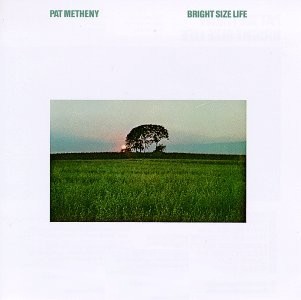
Pat Metheny’s debut album, “Bright Size Life,” released in March 1976, is widely regarded as a groundbreaking work in modern jazz. This album, recorded when Metheny was just 21 years old, introduced the world to his distinctive sound, which would come to define his illustrious career. “Bright Size Life” not only announced the arrival of a fresh guitar voice but also showcased the virtuosic talents of bassist Jaco Pastorius and drummer Bob Moses, creating a trio whose synergy reshaped the landscape of jazz guitar and fusion.
Background and Recording:
The songs on “Bright Size Life” were written during a period of growth and introspection for Metheny. While living in Boston and teaching at the Berklee School of Music, he developed his unique approach to composition and guitar. One of the most influential figures in Metheny’s development was vibraphonist Gary Burton, under whom he studied and played. Though Burton did not officially receive credit for producing the album, his mentorship and guidance were instrumental in shaping Metheny’s approach to this project. Metheny himself has acknowledged Burton’s significant role in helping him arrange the album’s material.
Help yourself to some live jazz, and help the artists and clubs fulfill their dreams. Sign up to Oh! Jazz to watch live and on-demand performances. 25% of your subscription goes back to the artists and 10% to the clubs.
Learn more about Oh! Jazz here.
In December 1975, Metheny, Pastorius, and Moses traveled to Tonstudio Bauer in Ludwigsburg, West Germany, to record what would become “Bright Size Life.” The session was produced by ECM Records’ founder, Manfred Eicher, known for his minimalist, spacious production techniques that suited Metheny’s atmospheric compositions.
When “Bright Size Life” was first released, its impact was modest, with the album selling around 900 copies. However, as Metheny’s career blossomed and he gained greater recognition, the album took on legendary status. In the years that followed, it became a key reference point for guitarists and jazz enthusiasts alike.
The Trio: Chemistry in Innovation
One of the most remarkable aspects of “Bright Size Life” is the interplay between Metheny, Pastorius, and Moses. Each member of the trio brought a distinctive voice to the recording, contributing to its eclectic and innovative sound.
- Pat Metheny – Metheny’s guitar playing on the album is characterized by its warm, slightly muted tone and intricate phrasing. His approach combined the harmonic sensibilities of jazz with the open, pastoral soundscapes of his Midwestern roots. He employed both six- and twelve-string guitars, adding a textural richness to the album’s sound. Songs like “Midwestern Nights Dream” and “Missouri Uncompromised” are prime examples of his ability to create melodic narratives through intricate lines and harmonies. His tone was cottony, expressive, and introspective—already mature for a musician of his age.
- Jaco Pastorius – “Bright Size Life” also features one of the earliest recorded performances of Jaco Pastorius, who would go on to become one of the most celebrated electric bass players in jazz history. Even at this early stage in his career, Pastorius was a fully formed virtuoso, employing techniques that had rarely been heard on electric bass up until that point. His playing is agile, melodic, and often contrapuntal, serving as both a rhythmic and harmonic foundation for Metheny’s guitar work. The balance between Pastorius and Metheny on the album is seamless, with Pastorius content to leave the spotlight to Metheny while adding complexity and depth to the music.
- Bob Moses – Drummer Bob Moses brought a rhythmic dynamism to the trio, drawing on his experience playing with Metheny in the Gary Burton Quintet. His drumming on “Bright Size Life” is both fluid and propulsive, complementing the guitar and bass without overwhelming them. Moses’ ability to shift between subtle, textured patterns and more driving rhythms allowed the trio to explore a wide range of dynamics and moods.
Together, Metheny, Pastorius, and Moses created a sound that was innovative not only for its technical virtuosity but for the emotional depth and spaciousness it conveyed. This was a jazz record, but it felt expansive and genre-defying, incorporating elements of folk, Americana, and rock while retaining the improvisational spirit of jazz.
The Songs: A Journey Through Soundscapes
“Bright Size Life” contains eight tracks, each offering a distinct perspective on Metheny’s emerging voice as a composer and guitarist. The album’s compositions reflect both the influence of his Midwestern upbringing and his immersion in the jazz world.
- “Bright Size Life” – The title track opens the album with a buoyant, uplifting melody that feels reflective of Metheny’s optimism and creativity at this point in his career. The song’s relaxed tempo and melodic phrasing invite the listener into the sound world of the trio, where Pastorius’ basslines weave intricately around Metheny’s guitar.
- “Sirabhorn” – A more introspective piece, “Sirabhorn” showcases Metheny’s ability to craft lyrical, emotive lines on the guitar. The song has a dreamy, contemplative quality, with Pastorius and Moses providing a gentle, supportive backdrop.
- “Unity Village” – This track features Metheny exploring rhythmic ideas in a compact, engaging form. At just over three minutes long, “Unity Village” is one of the shorter pieces on the album, but it demonstrates Metheny’s gift for developing ideas in a concise, effective manner.
- “Missouri Uncompromised” – An ode to Metheny’s Midwestern roots, this piece has a more driving, rhythmic feel. The title reflects the sense of place that informs much of Metheny’s music, with its references to the wide-open landscapes of his home state.
- “Midwestern Nights Dream” – One of the most evocative tracks on the album, “Midwestern Nights Dream” is an atmospheric, melancholic composition that seems to capture the stillness and beauty of a quiet night in the Midwest. Metheny’s use of space and dynamics here is masterful, allowing the music to breathe and evolve organically.
- “Unquity Road” – This track introduces a more upbeat, rhythmic energy to the album, with Moses’ drumming driving the piece forward. Metheny and Pastorius engage in intricate, syncopated interplay, creating a vibrant, complex sound.
- “Omaha Celebration” – With its celebratory, uplifting melody, “Omaha Celebration” feels like a triumphant moment on the album. Metheny’s guitar work is bright and joyous, while Pastorius and Moses provide a solid, rhythmic foundation.
- “Round Trip/Broadway Blues” – The final track on the album is a loose, adventurous take on Ornette Coleman’s composition, blending avant-garde sensibilities with Metheny’s unique melodic approach. This track hints at the more radical directions Metheny would explore in future projects, including his later collaboration with Coleman on “Song X.”
Reception and Legacy:
Although “Bright Size Life” was not an immediate commercial success, its impact on the jazz world has only grown with time. The album’s blend of jazz, Americana, and folk influences was innovative, and Metheny’s distinct guitar tone and phrasing would influence countless guitarists in the years to come. Over a decade after its release, the album began to receive broader recognition, eventually earning a place in the pantheon of essential jazz guitar recordings.
In 2005, the title track was included on the “Progressions: 100 Years of Jazz Guitar” compilation, cementing its status as a milestone in the development of the instrument. The album was also featured in “Jazz: The Smithsonian Anthology” and included in Jazzwise’s list of “100 Jazz Albums That Shook the World.” In 2020, “Bright Size Life” was added to the Library of Congress’ National Recording Registry, a testament to its enduring cultural, historical, and aesthetic significance.
“Bright Size Life” remains one of the most influential jazz guitar albums of all time. With this record, Pat Metheny introduced a new voice to the world of jazz—one that was lyrical, melodic, and unafraid to explore new sonic territories. The album’s trio format allowed for a remarkable level of interplay and communication between Metheny, Pastorius, and Moses, creating a dynamic, evolving sound that continues to inspire musicians and listeners alike. More than just a debut, “Bright Size Life” is a timeless work that reshaped the possibilities of jazz guitar and established Pat Metheny as one of the genre’s most innovative figures.
References:
- Swenson, J. (1985). Rolling Stone Jazz Record Guide. Random House.
- Larkin, C. (2006). The Encyclopedia of Popular Music. Oxford University Press.
- Cook, R. & Morton, B. (2008). The Penguin Guide to Jazz Recordings. Penguin Books.
- “Bright Size Life” album cover art. Retrieved from https://en.wikipedia.org/wiki/File:Pat_Metheny_-_Bright_Size_Life.jpg

Leave a Reply