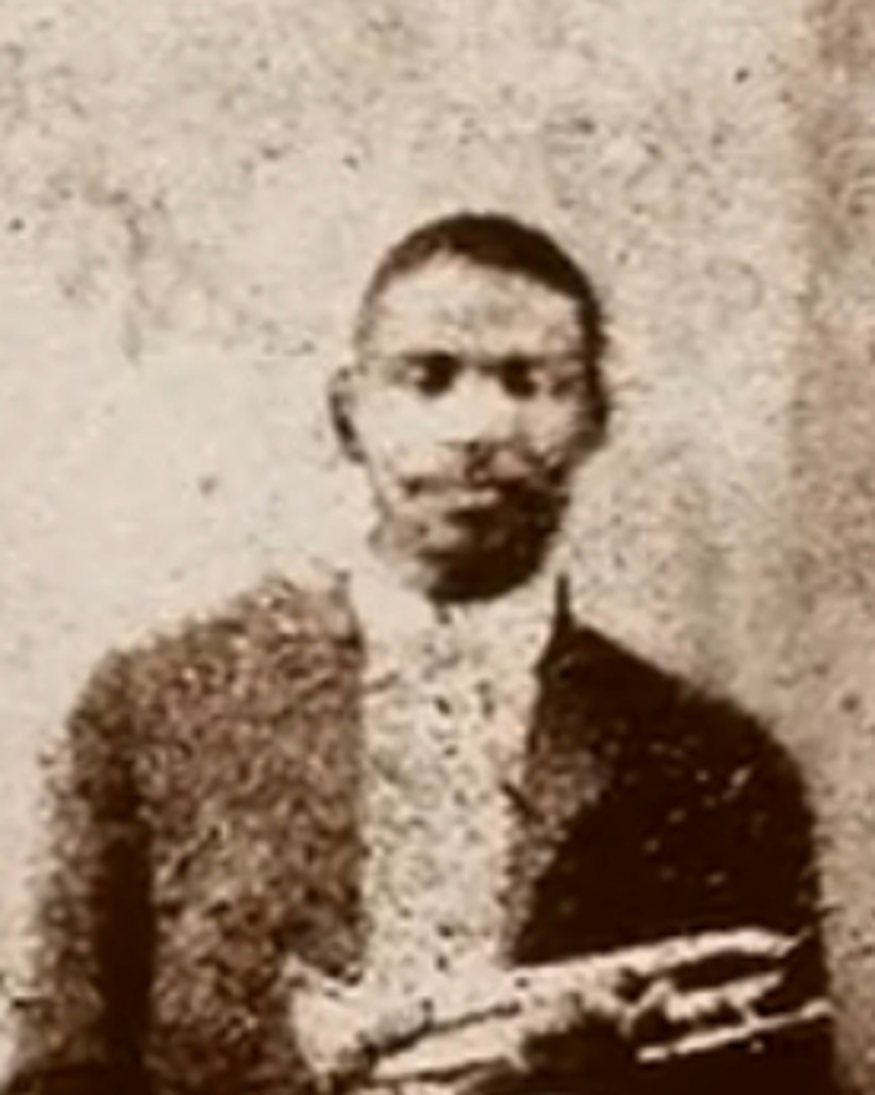
Introduction:
The birth of jazz, with its complex rhythms, soulful melodies, and rich cultural roots, is a tale filled with mystery and innovation. Among the many figures credited with shaping this uniquely American genre, one name often stands out: Charles Joseph “Buddy” Bolden. Often shrouded in legend and myth, Bolden’s contributions to the development of jazz remain a subject of both scholarly interest and popular imagination. Born one hundred and forty-seven years ago today on September 6, 1877, in New Orleans, Louisiana, Buddy Bolden is often hailed as a foundational figure in the evolution of jazz, despite the scarcity of recordings or detailed accounts of his life.
Early Life and Musical Beginnings:
Buddy Bolden’s early life was marked by both challenges and musical discovery. Born into a working-class African American family in New Orleans, his upbringing was steeped in the cultural vibrancy of the city, which was a melting pot of French, Spanish, African, and Caribbean influences. His father, Westmore Bolden, worked as a driver and passed away when Buddy was just six years old. This loss left young Buddy to be raised primarily by his mother, Alice Harris Bolden, and other family members.
Help yourself to some live jazz, and help the artists and clubs fulfill their dreams. Sign up to Oh! Jazz to watch live and on-demand performances. 25% of your subscription goes back to the artists and 10% to the clubs.
Learn more about Oh! Jazz here.
New Orleans in the late 19th century was a city buzzing with music, and Bolden was naturally drawn to it. He likely attended Fisk School, though records from that period are sparse, and his musical education was largely self-directed. The cornet would become his voice, and by the time he reached adulthood, Bolden had begun to make a name for himself in the local music scene.
Rise to Prominence: King Bolden and the Birth of Jazz
By the turn of the 20th century, Buddy Bolden had become a dominant figure in New Orleans’ vibrant music culture. Known affectionately as “King Bolden,” he led one of the most popular bands in the city, performing in dance halls, street parades, and at numerous social gatherings. His music was a fusion of ragtime, blues, gospel, and brass band traditions—a blend that would come to define early jazz.
Bolden’s style was characterized by its loud, powerful sound and its improvisational nature. Unlike other musicians of his time who adhered strictly to written music, Bolden played “by ear,” allowing for spontaneous creativity that set his performances apart. This approach resonated deeply with audiences and influenced many younger musicians who would later become jazz legends in their own right, such as Joe “King” Oliver, Freddie Keppard, and Bunk Johnson.
One of Bolden’s most significant contributions to jazz was his role in developing the “Big Four” beat. This rhythmic innovation departed from the rigid on-the-beat patterns of traditional marching band music, introducing a syncopated bass drum pattern that created more space for improvisation. As Wynton Marsalis notes, the Big Four was the first such rhythm to deviate from standard march time, paving the way for the rhythmic complexity that would come to characterize jazz.
Bolden’s band was also among the first to incorporate the blues into their repertoire, a significant departure from the more formal ragtime that dominated the era. This incorporation of blues elements—characterized by its expressive, often melancholic tone—added emotional depth to the music and laid the groundwork for future jazz developments.
The Myth and Mystery of Buddy Bolden:
Despite his influence and popularity, much of Buddy Bolden’s life remains cloaked in mystery. Stories about him have often blurred the lines between fact and fiction, contributing to his mythic status in jazz history. For instance, some accounts suggest that Bolden was also a barber by trade or that he published a scandal sheet called “The Cricket.” However, these claims have been largely debunked by scholars like Donald M. Marquis, who have worked to separate the man from the legend.
One of the most enduring myths surrounding Bolden is that he made phonograph cylinder recordings with his band—a claim supported by the testimonies of some of his contemporaries, such as trombonist Willie Cornish. Unfortunately, if such recordings ever existed, they have been lost to history, leaving us with no direct auditory evidence of Bolden’s playing.
What remains, however, are the stories and the influence he had on those who followed him. Bolden’s most famous composition, “Funky Butt” (later known as “Buddy Bolden’s Blues”), is one of the earliest pieces of music to be associated with the concept of funk, showcasing his ability to blend different musical traditions into something wholly new and exciting.
Decline and Tragic End:
Bolden’s career, while impactful, was tragically short-lived. By 1907, at the age of 30, he began to experience severe mental health issues, likely exacerbated by his heavy drinking. He suffered an episode of what was then diagnosed as acute alcoholic psychosis, and he was eventually committed to the Louisiana State Insane Asylum in Jackson. Today, some researchers speculate that Bolden may have suffered from pellagra, a vitamin deficiency that was common among poor communities in the southern United States at the time.
Bolden spent the last 24 years of his life in the asylum, a sad and quiet end for a man who had once been the “King” of New Orleans’ music scene. He died on November 4, 1931, of cerebral arteriosclerosis, according to his death certificate. Despite his relatively brief career, Bolden’s impact on the world of music is undeniable, and his legacy continues to be felt in the rhythms and improvisations of jazz musicians today.
Legacy and Cultural Impact:
Buddy Bolden’s influence on jazz cannot be overstated. Although he left behind no known recordings, his innovative style and approach to music were passed down through generations of musicians. Figures like Joe “King” Oliver, Louis Armstrong, and many others carried forward the techniques and spirit of improvisation that Bolden pioneered.
Bolden’s life has also been a source of inspiration for numerous works of fiction, music, and film. Michael Ondaatje’s novel “Coming Through Slaughter” offers a fictionalized account of Bolden’s life, blending fact and myth in a narrative that captures the chaotic energy of New Orleans at the dawn of the jazz age. In 2019, the biopic “Bolden!,” directed by Dan Pritzker, sought to bring Bolden’s story to the screen, though it too embraced a more mythical portrayal of the musician.
Musically, Bolden has been immortalized in compositions such as Duke Ellington’s suite “A Drum Is a Woman,” which pays tribute to Bolden’s contributions to jazz. The tune “Funky Butt” continues to be performed and recorded by artists across the globe, from Dr. John to Hugh Laurie, each version a testament to Bolden’s enduring influence.
Buddy Bolden’s story is one of brilliance, innovation, and tragedy. As one of the earliest pioneers of jazz, his contributions helped shape a genre that would go on to become one of America’s greatest cultural exports. While much about Bolden remains shrouded in mystery, his legacy lives on in the music and the stories he left behind. His ability to blend different musical traditions, his pioneering improvisations, and his powerful, emotive cornet playing have earned him a place in history as the “father of jazz.” Though his life ended in silence, the echoes of Buddy Bolden’s music continue to resonate through the halls of jazz history.
References:
- Marquis, D.M. (2005). In Search of Buddy Bolden: First Man of Jazz. LSU Press.
- Gioia, T. (2021). The History of Jazz. Oxford University Press.
- Ward, G.C. & Burns, K. (2002). Jazz: A History of America’s Music. Knopf.
- Hardie, D. (2000). The Loudest Trumpet: Buddy Bolden and the Early History of Jazz. iUniverse.
- Buddy Bolden picture. Retrieved from https://en.wikipedia.org/wiki/File:Buddy_Bolden_001.png


Leave a Reply to Tom HenshawCancel reply