Introduction:
In the annals of jazz history, few names resonate as profoundly as Cannonball Adderley. A virtuoso saxophonist and bandleader, Adderley’s contributions to the world of music transcend mere technique; they embody the essence of soul and innovation. This blog post delves into the life, legacy, and musical genius of the man whose horn spoke a language of its own.
The Early Years:
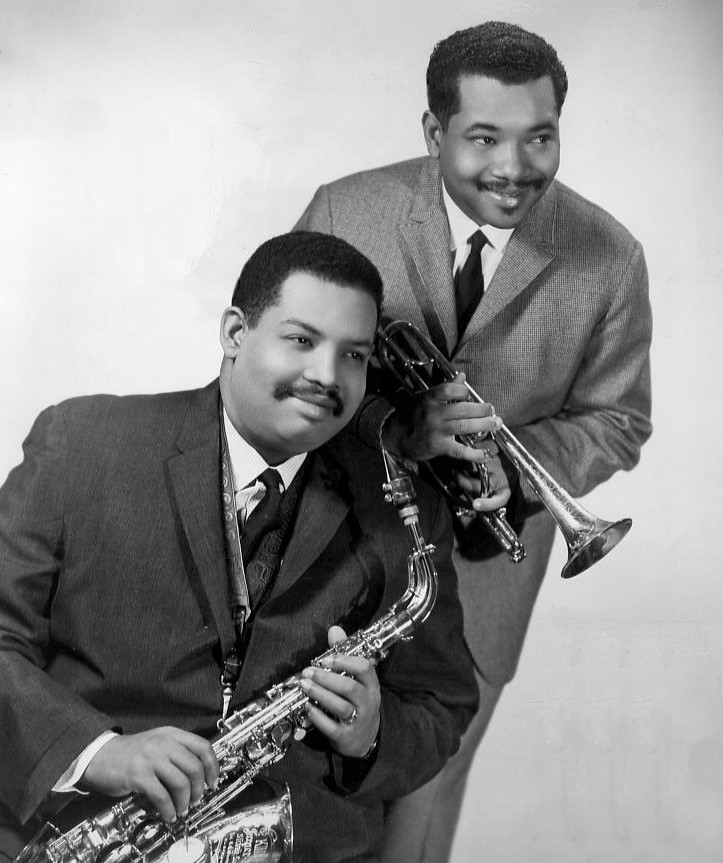
Julian Edwin Adderley was born ninety-five years ago today on September 15, 1928, in Tampa, Florida. “Cannonball” was a nickname he earned in high school. Friends initially referred to him as “Cannibal” because of his voracious appetite, but due to numerous mispronunciations, it eventually became “Cannonball.” Cannonball and his brother Nat, who would later become a noted cornet and trumpet player, were raised in a musical family and were schooled in the rich traditions of gospel, blues, and jazz.
Help yourself to some live jazz, and help the artists and clubs fulfill their dreams. Sign up to Oh! Jazz to watch live and on-demand performances. 25% of your subscription goes back to the artists and 10% to the clubs.
Learn more about Oh! Jazz here.
A Musical Odyssey:
Cannonball’s journey through the musical landscape was characterized by an insatiable appetite for exploration. After honing his craft in the fertile grounds of Florida, he ventured to New York City, the epicenter of the jazz universe. His meteoric rise within the jazz community was propelled by an uncanny ability to bridge the gap between tradition and innovation.
The Quintet That Redefined Cool:
One of Cannonball’s most significant contributions to jazz was the formation of the Cannonball Adderley Quintet. Comprising stellar musicians like his brother Nat Adderley, pianist Hank Jones, bassist Paul Chambers, and drummer Kenny Clarke, the quintet’s music exuded an infectious groove and bluesy authenticity that resonated deeply with audiences.
Soulful Revolution: “Mercy, Mercy, Mercy!”
In 1967, the Cannonball Adderley Quintet released the groundbreaking album “Mercy, Mercy, Mercy! Live at ‘The Club’”. The eponymous track, composed by Joe Zawinul, became an overnight sensation, crossing over to the pop charts and solidifying the group’s status as a revolutionary force in jazz. The tune’s soulful, gospel-tinged melody captured the hearts of listeners, cementing its place as a timeless jazz classic.
Exploring New Horizons:
Cannonball Adderley’s insatiable musical curiosity led him to collaborate with a diverse array of artists. From working with Miles Davis on the seminal album “Kind of Blue” to exploring the influence of electric jazz by the end of the 1960s, Cannonball’s willingness to push boundaries showcased his artistic fearlessness.
Legacy Beyond the Stage:
Cannonball Adderley’s impact extends far beyond the notes he played. As an educator, he mentored a generation of young musicians, instilling in them the values of discipline, passion, and a deep respect for the tradition of jazz. His contributions as a jazz ambassador continue to inspire budding artists around the world.
Cannonball Adderley’s musical legacy lives on as a tribute to the force of invention and jazz’s limitless possibilities. His ability to put soul and emotion into every note transcends time and continues to enchant listeners of all ages. Cannonball’s music is living proof that jazz is more than just a genre; it is a real, breathing representation of the human experience.
References:
- Gioia, T. (2021). The History of Jazz. Oxford University Press.
- Owens, T. (1996). Bebop: The Music and Its Players. Oxford University Press.
- Cannonball & Nat Adderley picture. Retrieved from https://en.wikipedia.org/wiki/File:Julian_and_Nat_Adderley_1966.JPG

Leave a Reply