Introduction:
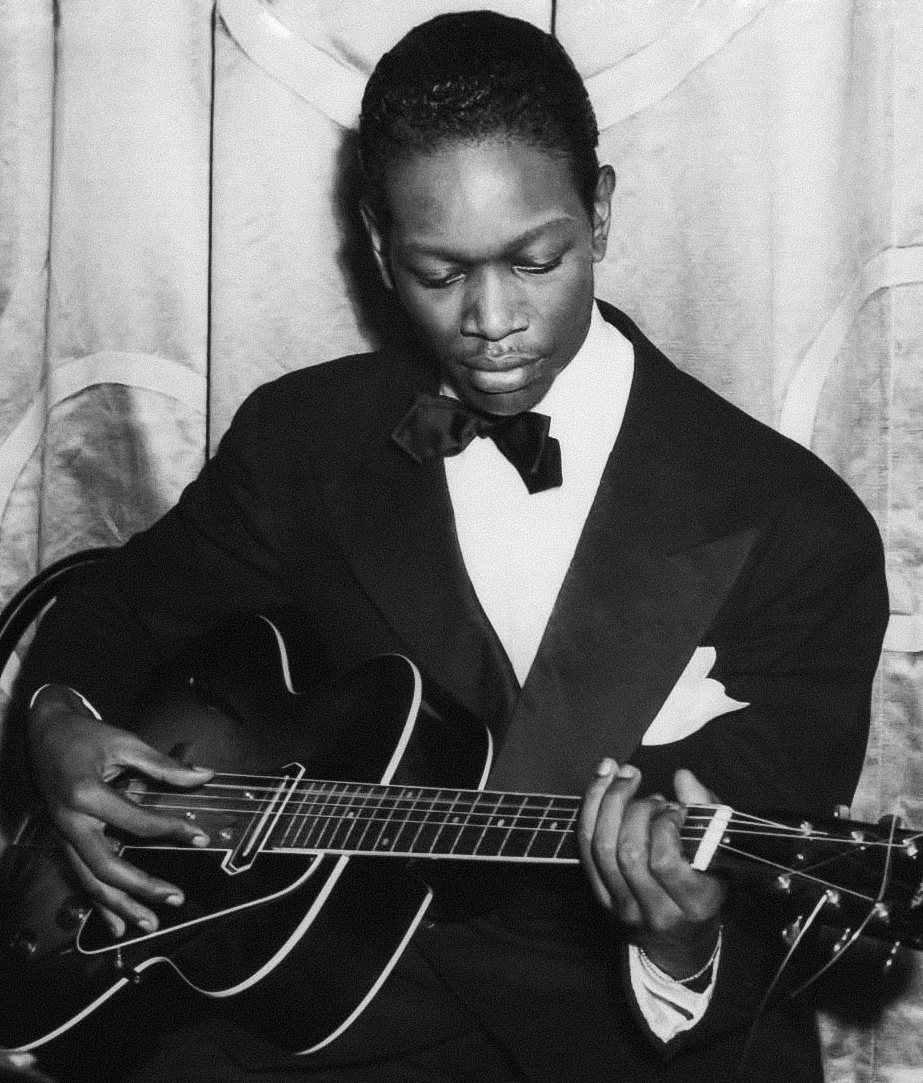
In the annals of jazz history, few figures have left as indelible a mark as Charlie Christian. Despite his tragically short life, Christian’s mastery of the guitar and pioneering approach to jazz improvisation made an everlasting impact on the genre. In this blog post, we delve into the extraordinary life and musical contributions of Charlie Christian, exploring his innovative style, his collaborations with jazz legends, and his enduring influence on guitarists and jazz musicians.
Early Life and Musical Journey:
Charlie Christian was born on July 29, 1916, in Bonham, Texas. Growing up in a musical family, he developed a passion for music from an early age. Christian’s love for the guitar led him to explore various genres, including blues and swing. It was during his formative years that he first encountered the electric guitar, which would later become his signature instrument.
Help yourself to some live jazz, and help the artists and clubs fulfill their dreams. Sign up to Oh! Jazz to watch live and on-demand performances. 25% of your subscription goes back to the artists and 10% to the clubs.
Learn more about Oh! Jazz here.
Christian’s breakthrough came when he joined the Benny Goodman Orchestra in 1939, marking a pivotal moment in his career. Goodman, recognizing Christian’s prodigious talent, provided him with a platform to showcase his groundbreaking style and introduce the world to the possibilities of the electric guitar in jazz.
Revolutionizing Jazz Guitar:
Charlie Christian’s impact on jazz guitar cannot be overstated. Prior to his emergence, the guitar was predominantly used as a rhythm instrument in jazz ensembles. Christian changed the game by demonstrating the guitar’s potential as a soloing instrument, showcasing its melodic capabilities and technical virtuosity.
Christian’s melodic approach, fluid phrasing, and intricate improvisations became the blueprint for future jazz guitarists. His ability to seamlessly integrate complex harmonies and bluesy phrases into his playing set new standards for jazz improvisation. Christian’s contributions to the development of single-note soloing and his innovative use of amplified sound laid the foundation for modern jazz guitar vocabulary.
Collaborations and Legacy:
Charlie Christian’s collaborations with other jazz luminaries further solidified his status as a groundbreaking musician. His recordings with Benny Goodman, including “Solo Flight” and “Seven Come Eleven,” showcased his inventive improvisations and established him as a leading voice in the genre.
Christian’s tragically short life, cut short by tuberculosis in 1942 at the age of 25, left behind a limited but highly influential body of work. However, his impact on jazz guitar continued to reverberate through subsequent generations. His innovative style inspired countless guitarists, including Django Reinhardt, Wes Montgomery, and Jimi Hendrix, whom all drew inspiration from his inventive use of the instrument.
Christian’s influence extends beyond the realm of jazz guitar. His groundbreaking approach to improvisation and his ability to merge different musical styles, such as swing, blues, and bebop, continue to shape the language of jazz. His contributions paved the way for the fusion of diverse genres and the exploration of new musical frontiers.
Conclusion:
Charlie Christian’s legacy as a jazz guitarist and innovator is undeniable. His groundbreaking approach to jazz improvisation and his mastery of the electric guitar revolutionized the instrument’s role in the genre. Though his career was tragically cut short, his contributions continue to inspire and influence generations of musicians.
Charlie Christian’s impact on jazz guitar, as well as his collaborations with Benny Goodman and other jazz icons, cemented his place in the pantheon of jazz greats. His innovative style, melodic sensibility, and technical prowess set new standards for jazz improvisation and expanded the possibilities of the guitar as a solo instrument.
As we reflect on the extraordinary talent and lasting impact of Charlie Christian, let us celebrate his contributions to jazz music and recognize his enduring influence on guitarists and musicians worldwide.
References:
- Givan, B. (2012). “The Music of Django Reinhardt: “Solo Transcriptions and Performing Artist Master Class DVD.” Mel Bay Publications.
- Gitler, I. (1987). “Swing to Bop: An Oral History of the Transition in Jazz in the 1940s.” Oxford University Press.
- Kernfeld, B. (2002). “The New Grove Dictionary of Jazz.” Oxford University Press.
- Priestley, B. (2007). “Chasin’ the Bird: The Life and Legacy of Charlie Parker.” Oxford University Press.
- Charlie Christian picture. Retrieved from https://en.wikipedia.org/wiki/File:Charlie_Christian_(1939-10_Waldorf-Astoria_portrait).jpg
.jpg)
Leave a Reply