Introduction:
In the pantheon of jazz saxophonists, the name Chu Berry might not be as instantly recognizable as that of Charlie Parker or John Coltrane, but his contributions to the art form are no less significant. In his short life, Berry helped define the role of the tenor saxophone in swing and bebop, influencing a generation of musicians who followed in his footsteps. Despite his premature death, his work with some of jazz’s greatest bands, including those of Fletcher Henderson and Cab Calloway, left an indelible mark on the evolution of jazz.
Early Life and Beginnings:
Leon “Chu” Berry was born one hundred and sixteen years ago today on September 13, 1908, in Wheeling, West Virginia. Musicians gave him the nickname “Chu,” with some claiming it came from his habit of chewing on his saxophone mouthpiece, while others attribute it to his signature Fu Manchu-style mustache. Berry initially began his musical journey on the alto saxophone, but after hearing the pioneering work of Coleman Hawkins, he switched to the tenor sax. This instrument would become his lifelong passion and the vehicle through which he made his most significant contributions to jazz.
Help yourself to some live jazz, and help the artists and clubs fulfill their dreams. Sign up to Oh! Jazz to watch live and on-demand performances. 25% of your subscription goes back to the artists and 10% to the clubs.
Learn more about Oh! Jazz here.
Though Berry attended West Virginia State College, it was clear that his future lay in music. Like many jazz musicians of his time, he left school to pursue a music career, joining local bands before working his way up to larger ensembles. His big break came when he joined Sammy Stewart’s band, a stint that helped hone his skills and set the foundation for his professional career.
The Fletcher Henderson Years:
In 1935, Berry joined Fletcher Henderson’s orchestra, one of the most respected big bands of the time. The Henderson band had already made significant contributions to the early development of swing, and Berry’s arrival only solidified its importance. His robust, smooth tenor sound was a perfect complement to the band’s horn section, and he quickly became one of the standout soloists in the ensemble.
Berry’s time with Henderson was pivotal not only for his personal growth as a musician but also for the advancement of the tenor saxophone as a lead instrument in jazz. Before Berry and contemporaries like Coleman Hawkins, the saxophone had largely played a supporting role in jazz orchestras. Berry’s fluid technique, bold improvisations, and ability to play both ballads and up-tempo numbers helped elevate the instrument’s stature in the jazz world.
One of Berry’s most notable recordings from this period is his performance on “Christopher Columbus,” a 1936 piece that became one of Henderson’s most celebrated hits. Berry’s solo on this track remains a testament to his technical prowess and innovative approach to phrasing.
Influencing and Competing with Coleman Hawkins:
When discussing Chu Berry, it’s impossible not to mention Coleman Hawkins, one of the most dominant tenor saxophonists of the era. While Hawkins had established himself as the preeminent tenor player, Berry’s style began to challenge that supremacy. Berry’s tone was lighter and more lyrical than Hawkins’ robust, husky sound, offering a fresh alternative that began to turn heads.
Although comparisons between Berry and Hawkins were inevitable, the two saxophonists shared a mutual respect. Berry’s style was sometimes seen as a bridge between Hawkins’ more traditional approach and the bebop innovations that would come later with players like Charlie Parker. While Hawkins was a pioneer, Berry’s melodic sensibility and dexterous playing pointed toward the future of jazz.
Berry’s work with Henderson laid the groundwork for a brief but impactful tenure in the swing era, and his innovative style influenced future tenor players who appreciated his combination of technical mastery and lyrical phrasing.
The Cab Calloway Orchestra and Stardom:
After leaving Fletcher Henderson’s band, Berry joined Cab Calloway’s orchestra in 1937, where he played until his untimely death in 1941. This period with Calloway’s band represented the height of Berry’s fame. The Calloway band was one of the most popular and widely traveled orchestras of the time, giving Berry significant exposure. His solos became the highlights of Calloway’s performances, and audiences came to expect Berry’s thrilling improvisations as much as they did Calloway’s own charismatic performances.
One of Berry’s standout recordings with Calloway is “Ghost of a Chance,” where his lush, emotive playing displayed a depth that few other tenor saxophonists could match at the time. The song remains one of the great ballad performances in jazz history.
In addition to his work with Calloway, Berry was also a sought-after session musician. He recorded with a variety of jazz legends, including Billie Holiday and Lionel Hampton, further cementing his reputation as one of the most versatile saxophonists of his day. His ability to play in a wide range of settings, from swing to early bebop, made him a key figure in the transition between the two eras.
Bebop Pioneer:
While Berry was primarily a swing musician, his contributions to the burgeoning bebop movement cannot be overlooked. He was one of the few swing-era saxophonists who successfully navigated the shift toward bebop, a testament to his technical abilities and open-mindedness as a musician.
In many ways, Berry’s influence on bebop was as much about what he represented as what he played. His mastery of the tenor saxophone demonstrated the instrument’s potential for both lyrical beauty and technical complexity, paving the way for future bebop saxophonists like Dexter Gordon and Sonny Rollins to explore new possibilities.
Tragic Death and Legacy:
Tragically, Chu Berry’s career was cut short on October 30, 1941, when he died from injuries sustained in a car accident at the age of 33. His death shocked the jazz world, which was left wondering what further contributions Berry might have made had he lived longer. His untimely demise also left a significant gap in Cab Calloway’s band, as no other saxophonist was able to fill Berry’s shoes with the same flair and versatility.
Despite his short life, Berry’s legacy is far-reaching. His influence on both swing and bebop is still acknowledged by saxophonists today. Many jazz historians credit Berry with expanding the role of the tenor saxophone in jazz and for his forward-looking approach that hinted at the complexities of bebop.
Chu Berry was more than just a remarkable tenor saxophonist—he was a trailblazer whose work helped bridge the gap between swing and bebop. His fluidity, lyrical tone, and technical mastery have made him a role model for generations of saxophonists, and his recordings remain a vital part of the jazz canon. Though his life was tragically short, Berry’s influence lives on in the music of those he inspired and in the evolution of jazz itself.
While Chu Berry may not always receive the recognition he deserves, his impact on the development of the tenor saxophone and on jazz as a whole is undeniable. As the jazz world continues to evolve, his contributions remind us of the importance of innovation, adaptability, and the pursuit of musical excellence.
References:
- DeVeaux, S. (1999). The Birth of Bebop: A Social and Musical History. University of California Press.
- Feather, L. (1984). The Encyclopedia Of Jazz. Da Capo Press.
- Yanow, S. (2003). Jazz on Record – The First Sixty Years. Backbeat Books.
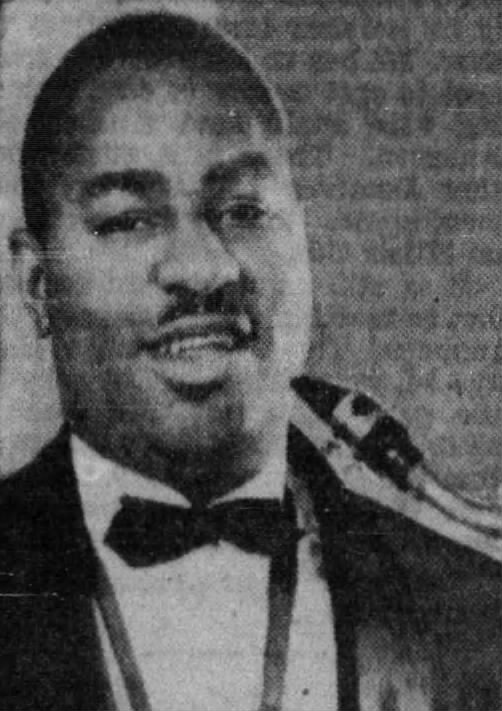
- Chu Berry picture. Retrieved from https://en.wikipedia.org/wiki/File:ChuBerry.jpg

Leave a Reply