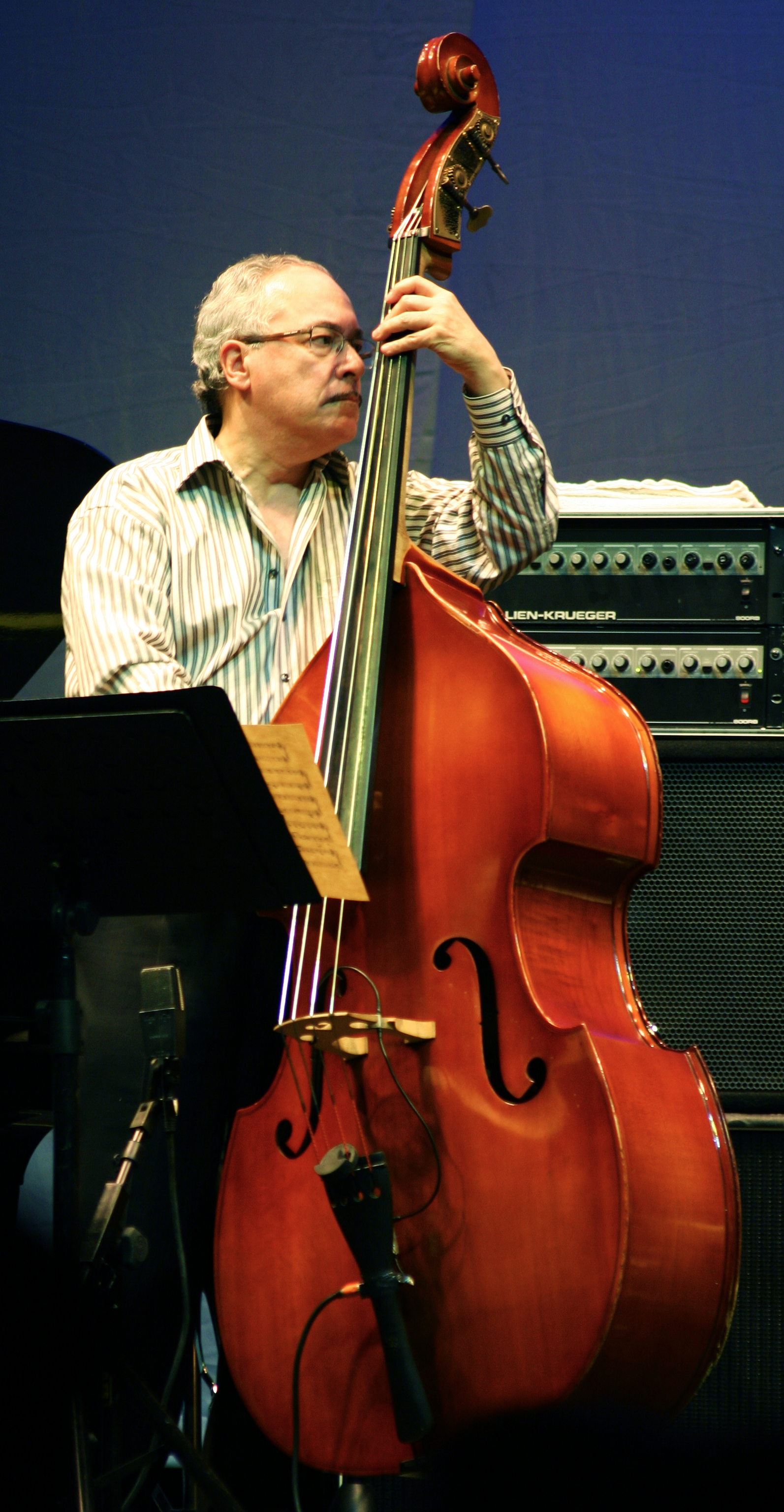
Introduction:
Eddie Gómez, one of the most revered double bass players in modern jazz, has spent over six decades shaping the sound and direction of the genre. Known for his virtuosic technique, profound musical sensitivity, and adaptability across a wide range of styles, Gómez has collaborated with some of the most iconic figures in jazz, including Bill Evans and Chick Corea. His career, while rooted in the classic jazz tradition, reflects an artist continually evolving, pushing the boundaries of what’s possible on the double bass. This post explores Gómez’s remarkable career, his innovations on the instrument, and his lasting influence on jazz and beyond.
Early Life and Musical Beginnings:
Born in Santurce, Puerto Rico, eighty years ago today on October 4, 1944, Eddie Gómez moved with his family to New York City at a young age. Growing up in the culturally rich environment of the city, he was exposed to a wide variety of musical traditions, ranging from the classical symphonic world to the burgeoning bebop scene. His early training began at the prestigious Juilliard School, where he studied classical double bass. This formal education gave Gómez a strong technical foundation and an appreciation for the intricacies of music theory and performance, but it was in jazz that he found his true calling.
Help yourself to some live jazz, and help the artists and clubs fulfill their dreams. Sign up to Oh! Jazz to watch live and on-demand performances. 25% of your subscription goes back to the artists and 10% to the clubs.
Learn more about Oh! Jazz here.
As a teenager in New York, Gómez became immersed in the city’s vibrant jazz scene, absorbing the music of artists like Charles Mingus, John Coltrane, and Scott LaFaro. By the age of 21, his prodigious talent on the bass had already started to attract attention, and he was invited to play with legendary figures such as Gerry Mulligan and Marian McPartland.
The Bill Evans Trio: A Defining Period
While Gómez’s early experiences as a sideman were significant, it was his work with pianist Bill Evans that cemented his place in the jazz pantheon. In 1966, at the age of 22, Gómez joined Evans’ trio, a position he would hold for over 11 years. This was a crucial turning point in Gómez’s career, as it allowed him to develop his voice within one of the most revered piano trios in jazz history.
Bill Evans, whose trio had previously featured another legendary bassist, Scott LaFaro, was known for his introspective, lyrical style, which often blurred the lines between composition and improvisation. Gómez’s role in the trio went far beyond simply providing rhythmic support; he became an integral part of the trio’s musical dialogue, contributing melodic counterpoints and engaging in sophisticated harmonic interplay with Evans and the various drummers who passed through the group, including Jack DeJohnette, Marty Morell, and Eliot Zigmund.
One of the key innovations Gómez brought to the trio was his ability to make the double bass sing as a melodic instrument. While his technical prowess was impressive, it was his expressiveness that set him apart. His playing demonstrated not only a mastery of the instrument but also a deep emotional connection to the music. Gómez’s lyrical approach to the bass gave the trio’s music an added dimension, and his partnership with Evans is often regarded as one of the highlights of the pianist’s career.
Post-Evans Career: A Versatile Collaborator
After leaving the Bill Evans Trio in 1977, Gómez embarked on a prolific career as both a bandleader and a sought-after sideman. His post-Evans years would see him work with a wide variety of artists, spanning multiple genres. His versatility on the bass allowed him to seamlessly transition between straight-ahead jazz, fusion, Latin music, and beyond.
One of Gómez’s most significant partnerships during this period was with pianist Chick Corea. Gómez would go on to play on several of Corea’s recordings. Corea’s fusion of jazz with elements of classical music, Latin rhythms, and experimental improvisation aligned perfectly with Gómez’s multifaceted approach to the bass.
Throughout the 1980s and ’90s, Gómez maintained a busy recording and touring schedule, collaborating with a wide array of artists including guitarist John Abercrombie and trumpeter Freddie Hubbard. His contributions to these projects were always marked by a deep sense of musicality, an understanding of form, and a willingness to push boundaries.
Leadership and Solo Projects:
While Gómez is perhaps best known for his work as a sideman, he has also made significant contributions as a bandleader. His first solo album, “Down Stretch,” was released in 1976 and featured his unique blend of jazz and Latin influences. Over the years, he would release several more albums as a leader, including “Power Play” (1988), “Next Future” (1993), and “Dedication” (1998), each showcasing his virtuosic playing and adventurous spirit.
As a leader, Gómez demonstrated a keen interest in exploring the intersections of jazz and Latin music, particularly through his use of Afro-Caribbean rhythms and harmonies. His ability to fuse these elements with modern jazz idioms helped him carve out a distinctive voice in the jazz world.
A Legacy of Innovation:
In May 2013, Eddie Gómez was honored with an Honorary Doctorate of Music from Berklee College of Music at its Valencia, Spain campus. This marked a significant milestone as it was the first time the prestigious institution awarded such an accolade at its newly established international campus, further solidifying Gómez’s profound influence on both the jazz world and the broader musical community.
Impact on the Double Bass and Jazz:
Eddie Gómez’s influence on the double bass in jazz cannot be overstated. He has expanded the role of the instrument beyond its traditional functions, demonstrating that the bass can be as expressive and dynamic as any other instrument in the ensemble. While Gómez’s technical mastery is widely acknowledged, what truly sets him apart is his ability to balance that virtuosity with deep emotional resonance. Whether he’s playing a complex solo or simply laying down a groove, Gómez brings a sense of humanity and warmth to everything he plays. This balance between intellect and emotion is at the heart of his music, and it’s what has made him one of the most beloved bassists in jazz.
Eddie Gómez’s career is a testament to the power of versatility, innovation, and collaboration in jazz. From his groundbreaking work with Bill Evans to his collaborations with some of the most forward-thinking musicians of the past half-century, Gómez has consistently pushed the boundaries of what’s possible on the double bass. His ability to move between different musical worlds—whether it’s bebop, fusion, or Latin jazz—speaks to his deep understanding of music as a universal language.
Gómez has left an indelible mark on the world of jazz. His influence can be heard in the playing of countless bassists who have followed in his footsteps, and his recordings continue to inspire listeners around the world. As he enters the later stages of his career, Gómez’s contributions to music remain as vital and innovative as ever, ensuring that his legacy will endure for generations to come.
References:
- Feather, L. & Gitler, I. (2007). The Biographical Encyclopedia of Jazz. Oxford University Press.
- Eddie Gómez picture. Retrieved from https://en.wikipedia.org/wiki/File:Eddie1.png

Leave a Reply