Introduction:
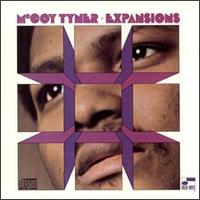
Released in June 1970, “Expansions” stands as one of McCoy Tyner’s most celebrated works and a defining statement in post-bop and modal jazz. Recorded in 1968 at Van Gelder Studio in Englewood Cliffs, NJ, this album represents a period of intense creativity for Tyner, showcasing his unique approach to composition and improvisation, which pushed the boundaries of jazz during that era. “Expansions” was Tyner’s tenth album and his fourth release under the prestigious Blue Note label, solidifying his position as a leading figure in modern jazz.
The Creative Force Behind “Expansions”:
McCoy Tyner, renowned for his work with the John Coltrane Quartet, had already established himself as a pianist of extraordinary skill and vision by the time he recorded “Expansions.” His playing style, characterized by powerful left-hand chords and intricate right-hand melodies, became a defining feature of the modal jazz movement. Tyner’s exploration of harmonies and his ability to blend traditional jazz elements with more avant-garde approaches are at the heart of “Expansions.”
Help yourself to some live jazz, and help the artists and clubs fulfill their dreams. Sign up to Oh! Jazz to watch live and on-demand performances. 25% of your subscription goes back to the artists and 10% to the clubs.
Learn more about Oh! Jazz here.
A Stellar Line-Up of Innovators:
The album features an impressive lineup of musicians, each contributing to the album’s rich and textured sound:
- Woody Shaw (Trumpet): Shaw’s playing on “Expansions” is a testament to his ability to navigate complex harmonies and contribute to the album’s adventurous spirit.
- Gary Bartz (Alto Saxophone, Wooden Flute): Bartz brings a distinct voice to the album, his alto saxophone lines adding depth and intensity, while his wooden flute on “Song of Happiness” introduces a unique timbre.
- Wayne Shorter (Tenor Saxophone, Clarinet): A key figure in the post-bop movement, Shorter’s contributions on tenor saxophone and clarinet add a layer of sophistication and nuance to the compositions.
- Ron Carter (Cello): Typically known as a bassist, Carter’s work on the cello here is particularly noteworthy, adding a deep, resonant layer to the music that enhances the album’s modal explorations.
- Herbie Lewis (Bass): Lewis’ solid basslines provide the foundation over which Tyner and the other soloists can soar.
- Freddie Waits (Drums): Waits’ drumming is both responsive and driving, perfectly complementing Tyner’s complex compositions.
Track listing:
All compositions by McCoy Tyner, except as indicated.
- “Vision” – 12:18
- “Song of Happiness” – 12:00
- “Smitty’s Place” – 5:21
- “Peresina” – 10:21
- “I Thought I’d Let You Know” (Cal Massey) – 6:25
The Album’s Impact and Legacy:
“Expansions” received high praise from critics and is considered a significant contribution to the jazz canon. The AllMusic review by Scott Yanow describes the album as “the most definitive” of Tyner’s Blue Note recordings from the 1967-1970 period. Yanow highlights the album’s balance between advanced hard bop and the avant-garde, noting how the music “pushes and pulls at the boundaries of modern mainstream jazz.”
What sets “Expansions” apart is its ability to challenge the listener while remaining deeply accessible. Tyner’s compositions are complex, yet they possess an inherent beauty and elegance that invite repeated listening. The album is a prime example of how Tyner was able to take the foundational elements of jazz and expand them into new, uncharted territories.
The musicians on “Expansions” also deserve credit for their role in shaping the album’s sound. Their contributions, coupled with Tyner’s visionary leadership, resulted in a cohesive and groundbreaking work that continues to influence jazz musicians today.
“Expansions” remains a landmark album in McCoy Tyner’s illustrious career. It encapsulates the spirit of innovation that defined jazz in the late 1960s and early 1970s, serving as a bridge between the hard bop traditions of the past and the more exploratory, avant-garde approaches that were emerging. For listeners and jazz enthusiasts, “Expansions” offers a profound and rewarding musical experience that stands the test of time.
References:
- Swenson, J. (1985). Rolling Stone Jazz Record Guide. Random House.
- “Expansions” album cover art. Retrieved from https://en.wikipedia.org/wiki/File:Expansions_(album).jpg
.jpg)
Leave a Reply