Introduction:
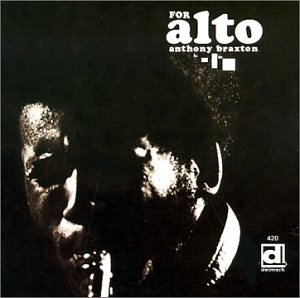
In the realm of avant-garde jazz, few albums have left as indelible a mark as Anthony Braxton’s “For Alto.” Released in 1971, this audacious double LP stands as a testament to Braxton’s fearless pursuit of musical innovation. This blog post delves into the revolutionary nature of “For Alto,” its creation, reception, and enduring legacy.
Pioneering Solo Saxophone Innovation:
“For Alto” stands as a groundbreaking work, not only in its execution but also in its conception. Recorded in 1969 and released by Delmark Records in 1971, it is a double LP entirely dedicated to the solo alto saxophone. This unprecedented venture marked the first jazz album composed solely of solo saxophone music.
Help yourself to some live jazz, and help the artists and clubs fulfill their dreams. Sign up to Oh! Jazz to watch live and on-demand performances. 25% of your subscription goes back to the artists and 10% to the clubs.
Learn more about Oh! Jazz here.
Inception and “Language Music”:
Braxton’s inspiration for “For Alto” came from his admiration of solo piano music by luminaries such as Arnold Schoenberg, Fats Waller, and Karlheinz Stockhausen. While initially drawn to the idea of solo piano, Braxton redirected his focus towards developing a distinct saxophone language. He recounted a pivotal moment during a 1967 solo saxophone concert, which drove him to catalog specific musical elements for use as creative springboards. This concept, known as “Language Music,” underpins the radical innovation of “For Alto.”
Recording in the Basement:
Braxton’s “For Alto” recording process was as unconventional as the album itself. He recalls laying down the music in the basement of the Parkway Community Center in Chicago. He later humorously summarized this process as essentially giving the recording to Delmark Records. The liner notes, consisting solely of a series of diagrams, reflect Braxton’s unique artistic approach.
Diverse Reactions and Influences:
Initial reactions to “For Alto” were diverse, reflecting the polarizing nature of avant-garde music. Some hailed it as revolutionary, recognizing its transformative potential in the realm of jazz. However, others expressed skepticism, deeming it an audacious ego trip. Over time, the album gained recognition as a landmark of free jazz and improvised music, influencing generations of musicians.
Enduring Legacy:
“For Alto” continues to be celebrated as one of the most significant solo saxophone records ever created. Thom Jurek of AllMusic lauded it as “one of the greatest recordings ever issued, period.” The Penguin Guide to Jazz awarded it a perfect score and described it as “one of the genuinely important American recordings,” attesting to its enduring power.
Influence on Future Generations:
The impact of “For Alto” resonates through the corridors of musical history. It inspired a generation of saxophonists, including Joe McPhee, Evan Parker, and Steve Lacy, to explore the uncharted territory of solo saxophone recordings. Braxton’s bold foray into unaccompanied improvisation set a new standard, liberating musicians to push the boundaries of creative expression.
Anthony Braxton’s “For Alto” remains a touchstone for those seeking to push the boundaries of musical expression. Its audacious spirit and uncompromising creativity continue to inspire artists, reminding us of the boundless potential within the realm of sonic exploration. As we revisit this seminal work, we are invited to embark on a journey of discovery, much like Braxton did when he first picked up his alto saxophone.
References:
- Lock, G. (2018). Forces in Motion: Anthony Braxton and the Meta-reality of Creative Music. Dover Publications.
- Cook, R. & Morton, B. (2008). The Penguin Guide to Jazz Recordings. Penguin Books.
- Moon, T. (2008). 1,000 Recordings to Hear Before You Die. Workman Publishing Company.
- “For Alto” album cover art. Retrieved from https://en.wikipedia.org/wiki/File:For_Alto_(Anthony_Braxton_album_-_cover_art).jpg
.jpg)
Leave a Reply