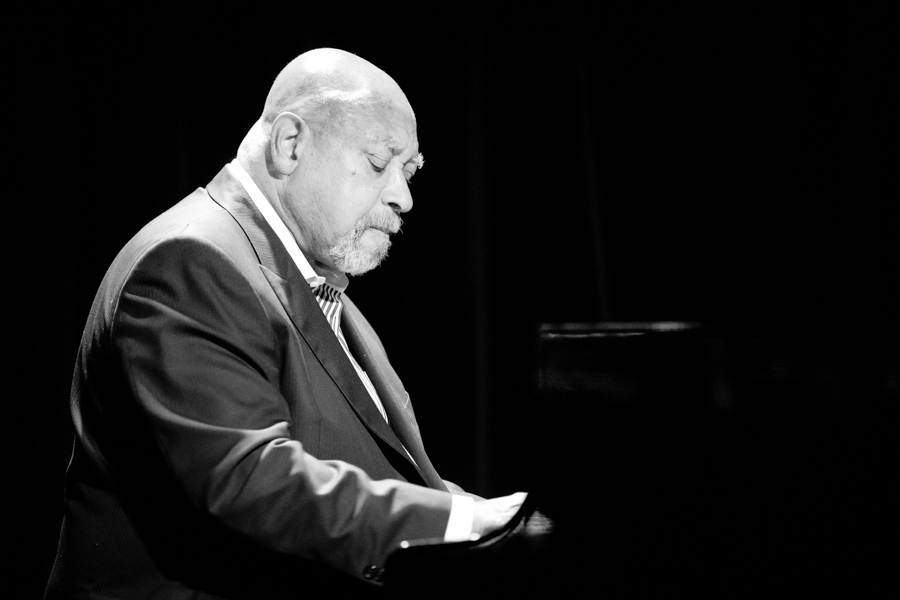
Introduction:
Kenny Barron stands as one of the most influential and respected jazz pianists of our time. With a career spanning over five decades, Barron’s artistry, versatility, and dedication to the craft have earned him a place among the jazz greats. From his early days with Dizzy Gillespie to his acclaimed solo projects, Barron has consistently demonstrated a deep understanding of the jazz tradition while pushing the boundaries of the genre.
Early Life and Musical Beginnings:
Born eighty-one years ago today on June 9, 1943, in Philadelphia, Pennsylvania, Kenny Barron grew up in a musically rich environment. His older brother, Bill Barron, was a prominent tenor saxophonist, and their household was filled with the sounds of jazz. Kenny’s early exposure to such an enriching musical environment laid the foundation for his future career.
Help yourself to some live jazz, and help the artists and clubs fulfill their dreams. Sign up to Oh! Jazz to watch live and on-demand performances. 25% of your subscription goes back to the artists and 10% to the clubs.
Learn more about Oh! Jazz here.
By the age of 15, Barron was already performing with Mel Melvin’s orchestra, showcasing his burgeoning talent. In 1959, while still in school, he secured local gigs with the esteemed saxophonist Jimmy Heath. Demonstrating his versatility and skill, Barron also played with Yusef Lateef two months before graduating high school, further cementing his path toward becoming a jazz luminary.
The Dizzy Gillespie Years:
Kenny Barron’s big break came in 1962 when he joined Dizzy Gillespie’s band at the age of 19. Gillespie, renowned for his keen eye for talent, recognized Barron’s potential and played a pivotal role in shaping his early career. During his tenure with Gillespie, Barron quickly established himself as a versatile and reliable pianist. His remarkable ability to adapt to various musical contexts, whether it was bebop, Latin jazz, or ballads, set him apart. This versatility would become a hallmark of his career, allowing him to collaborate with a wide range of artists and participate in diverse musical projects.
The 1970s: A Time of Growth
The 1970s marked a period of significant growth for Kenny Barron. During this decade, he became a highly sought-after sideman, collaborating with an impressive array of musicians, including Freddie Hubbard and Yusef Lateef. This era also saw Barron begin to establish himself as a formidable bandleader and composer, demonstrating his versatility and deepening his influence in the jazz world.
Academic Pursuits and Mentorship:
While maintaining a busy schedule of performing and recording, Kenny Barron also devoted a significant portion of his career to education. For over 25 years, Barron taught piano and keyboard harmony at Rutgers University in New Jersey. Currently, he shares his expertise at the Juilliard School of Music. Among his notable piano students are Earl MacDonald, Harry Pickens, Jon Regen, and Aaron Parks, who have all benefitted from Barron’s deep knowledge and experience in jazz.
The 1980s and 1990s: Continued Success
The 1980s and 1990s saw Kenny Barron continue to build on his already impressive career. He released a series of critically acclaimed albums as a leader, including “Green Chimneys” (1984), “What If?” (1986), and “Live at Maybeck Recital Hall” (1991). These recordings showcased his impeccable technique, lyrical phrasing, and deep understanding of the jazz tradition.
Barron’s collaboration with bassist Charlie Haden in the 1990s was particularly noteworthy. The duo recorded “Night and the City” (1998), a live recording that received widespread praise. Their musical chemistry was evident, and their performances were characterized by a profound sense of communication and mutual respect.
The Modern Era: Awards and Honors
In the new millennium, Kenny Barron has continued to be a vital presence in the jazz world. Barron’s recent recordings have continued to receive critical acclaim. Albums such as “The Art of Conversation” (2014) with Dave Holland and “Book of Intuition” (2016) have been celebrated for their creativity and sophistication. Barron remains an active performer, captivating audiences with his elegant touch and profound musicality.
Legacy and Influence:
Kenny Barron’s influence on the jazz world is immeasurable. As a performer, composer, and educator, he has left an indelible mark on the art form. His dedication to preserving and advancing the jazz tradition has inspired countless musicians and listeners alike.
Barron’s ability to bridge the gap between tradition and innovation is one of his most significant contributions. He has consistently demonstrated that jazz is a living, evolving art form, capable of embracing new ideas while honoring its roots. This balance between respect for the past and a forward-looking vision is a defining characteristic of his music.
As an educator, Barron has played a crucial role in nurturing the next generation of jazz musicians. His commitment to teaching and mentorship has ensured that his knowledge and experience are passed on, helping to sustain the vitality of the jazz community.
Kenny Barron’s career is a testament to the power of dedication, versatility, and artistic integrity. His contributions to jazz as a pianist, composer, and educator have solidified his place among the greats. As he continues to perform and inspire, Barron’s legacy remains a vital part of the jazz tradition, ensuring that his influence will be felt for generations to come.
References:
- Cook, R. & Morton, B. (2008). The Penguin Guide to Jazz Recordings. Penguin Books.
- Yanow, S. (2003). Jazz on Record – The First Sixty Years. Backbeat Books.
- Kenny Barron picture. Retrieved from https://en.wikipedia.org/wiki/File:Kenny_Barron_Oslo_Jazzfestival_2018_(221007).jpg
.jpg)
Leave a Reply