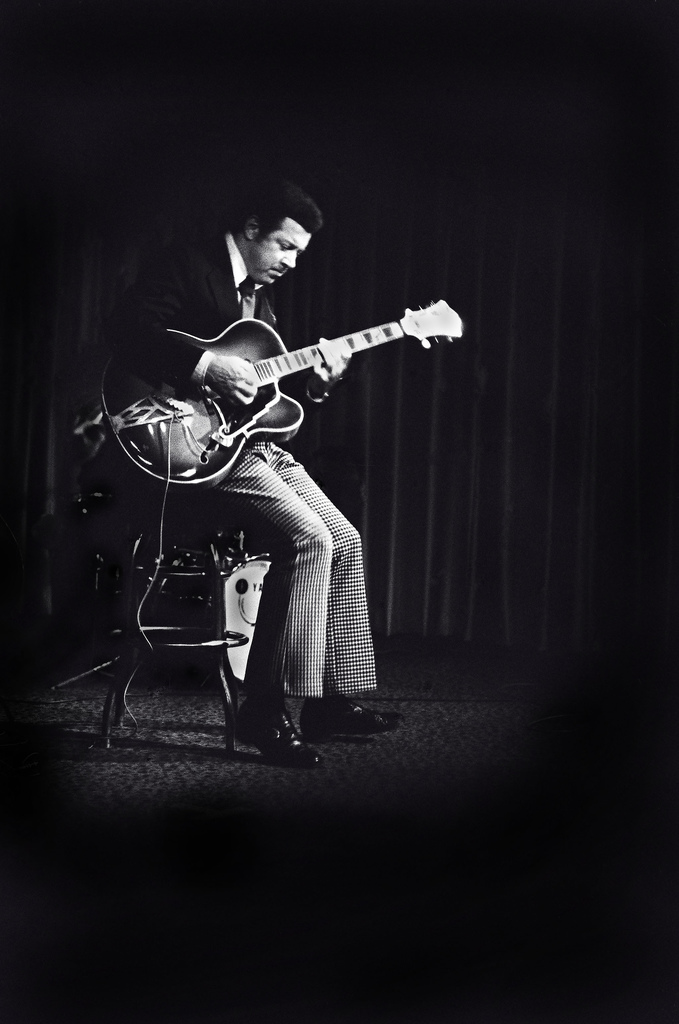
Introduction:
Few names are as well-known in the jazz guitar world as Kenny Burrell. With a career spanning more than seven decades, Burrell has established himself as an icon of the genre and made an irreplaceable contribution to jazz history. His fluid, expressive approach, flawless technique, and intuitive musicianship have won him accolades from both fans and his fellow musicians. We’ll go into the legendary Kenny Burrell’s life, career, and musical accomplishments in this blog post.
Early Life and Musical Beginnings:
Kenny Burrell was born on July 31, 1931, in Detroit, Michigan, 92 years ago today. Growing up in a musical family, he was exposed to a variety of genres from a young age, including blues, gospel, and jazz. Burrell acquired a fascination for the guitar as a child, and he rapidly demonstrated an extraordinary aptitude for the instrument. Burrell became interested in jazz guitar after hearing Charlie Christian and Django Reinhardt play. He studied at Wayne State University, where he sharpened his musical abilities and expanded his knowledge of jazz theory.
Help yourself to some live jazz, and help the artists and clubs fulfill their dreams. Sign up to Oh! Jazz to watch live and on-demand performances. 25% of your subscription goes back to the artists and 10% to the clubs.
Learn more about Oh! Jazz here.
The Blue Note Years:
Burrell undertook a series of recording sessions for Blue Note Records in the late 1950s and early 1960s that would establish his reputation as a jazz guitar master. In 1956, he produced his first album, “Introducing Kenny Burrell,” which featured his distinct fusion of fluid phrasing and soulful blues elements. This album served as a glimpse of the greatness that would follow in his subsequent recordings.
Burrell worked alongside other jazz greats including Donald Byrd and Art Blakey during his tenure at Blue Note, contributing to some of the label’s most acclaimed records. “Blue Lights” (1958) and “Midnight Blue” (1963), which is still one of his most recognizable albums, were notable releases during this time.
The Sublime Sound of “Midnight Blue”:
Among the many exceptional albums by Burrell, “Midnight Blue” is a genuine masterpiece. The 1963 recording demonstrates Burrell’s unmatched ability to combine blues, bebop, and soul-jazz influences into a seamless and entrancing musical experience. The title track, “Midnight Blue,” encapsulates the essence of late-night jazz, with Burrell’s guitar emitting a velvety, warm tone that has mesmerized listeners for decades.
Versatility and Collaborations:
Kenny Burrell’s musical adaptability is one of his most impressive qualities. From hard bop to cool jazz, he moves fluidly between them, showing a chameleon-like ability to change his playing style to meet any musical setting. Due to his versatility, he has worked with many legendary jazz musicians, including Jimmy Smith, Billie Holiday, and Dizzy Gillespie.
Notably, Burrell’s collaborations with organist Jimmy Smith produced some of the most influential and beloved jazz recordings, solidifying his reputation as an essential jazz guitarist. Their album “Organ Grinder Swing” (1965) remains a timeless classic that exemplifies the artistry and chemistry between the two musicians.
The Legacy of Kenny Burrell:
As his illustrious career progressed, Kenny Burrell won numerous honors and distinctions, including Grammy nominations and awards. In addition to his performance accomplishments, Burrell committed his life to mentoring the next generation of jazz artists. He educated budding musicians by serving as a professor and the director of jazz studies at the University of California, Los Angeles (UCLA).
More than just his own records and performances remain as part of Burrell’s legacy. His impact on guitarists and musicians, in general, is enormous, and his playing style serves as a benchmark for aspiring jazz guitarists who want to master the genre. He has a distinguished place in the pantheon of jazz greats thanks to his commitment to preserving and growing jazz as an art form.
Finally, Kenny Burrell’s influence on jazz and guitar playing cannot be overstated. His timeless recordings, brilliant playing, and unwavering commitment to jazz have left an everlasting imprint on the genre. Burrell’s soulful sound and expressive phrasing continue to inspire and enchant listeners across the world, ensuring that his musical legacy lives on for future generations.
References:
- Gioia, T. (2021). The History of Jazz. Oxford University Press.
- Kenny Burrell picture. Retrieved from https://en.wikipedia.org/wiki/File:Kenny_Burrell,_1977.jpg

Leave a Reply