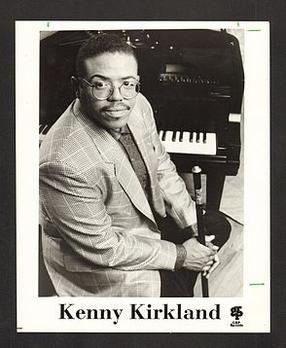
Introduction:
In the realm of modern jazz, few pianists left as indelible a mark as Kenny Kirkland. A virtuoso with an uncanny ability to blend technical prowess with profound musicality, Kirkland’s contributions continue to resonate through the annals of jazz history. This article delves into this extraordinary musician’s life, music, and enduring legacy.
Early Days:
Kenny Kirkland was born on September 28, 1955, sixty-eight years ago today in Brooklyn, New York. He showed an early aptitude for the piano. Being a part of New York City’s thriving music culture exposed him to a wide spectrum of influences, from the intricacies of modern jazz to gospel and R&B. At the age of six, Kirkland took his first lessons at a piano keyboard. Kirkland attended the Manhattan School of Music to study composition, classical theory, and piano performance after attending Catholic schools for several years.
Help yourself to some live jazz, and help the artists and clubs fulfill their dreams. Sign up to Oh! Jazz to watch live and on-demand performances. 25% of your subscription goes back to the artists and 10% to the clubs.
Learn more about Oh! Jazz here.
Early Career:
In 1977, Kirkland embarked on a European tour with Polish fusion violinist Michal Urbaniak, marking his first professional engagement. His next well-known performance was with Miroslav Vitous, another jazz émigré from Eastern Europe. Kirkland is featured on Vitous’ ECM recordings First Meeting and Miroslav Vitous Group.
The Collaborations:
Kirkland’s meteoric rise in the jazz world saw him collaborate with some of the most influential musicians of his time. His tenure with Wynton Marsalis and Branford Marsalis in Wynton Marsalis’ renowned group solidified his reputation as a pianist of exceptional caliber. Kirkland’s contributions to albums like “Think of One, ” “Hot House Flowers, ” and “Black Codes (From the Underground)” stand as testaments to his ability to elevate the musical conversations of the ensembles he graced.
Innovations in Fusion:
Kenny Kirkland’s versatility as a pianist was not confined to the realms of straight-ahead jazz. In 1985 Kirkland (alongside Branford Marsalis) joined the Blue Turtles, the jazz-pop studio-and-touring backing band put together by Sting to perform the latter’s post-Police solo work which can be heard on his first two solo releases The Dream of the Blue Turtles and Bring on the Night.
The Solo Artistry:
While Kenny Kirkland’s contributions as a sideman were undeniably profound, his solo endeavors showcased the depth of his artistry. His debut album, “Kenny Kirkland,” released in 1991, revealed a pianist capable of crafting intricate compositions that resonated with emotional authenticity. Kirkland’s solo work remains a testament to his ability to command attention with the sheer force of his musical expression.
Legacy and Influence:
Tragically, Kenny Kirkland’s life was cut short in 1998. However, his impact on the world of jazz endures. His recordings, marked by their inventive harmonies and soulful interpretations, continue to inspire aspiring pianists and musicians worldwide. Kirkland’s ability to infuse every note with passion and purpose serves as a reminder of the transformative power of music.
Kenny Kirkland’s legacy is a tribute to the endless possibilities of artistic expression, and it is forever carved in the annals of jazz history. His work transcends time and serves as a constant source of motivation for upcoming generations of jazz performers and fans. We are reminded of the timeless genius of one of modern jazz’s real giants as we immerse ourselves in Kenny Kirkland’s mastery.
References:
- Gioia, T. (2021). The History of Jazz. Oxford University Press.
- Kenny Kirkland picture. Retrieved from https://en.wikipedia.org/wiki/File:Kenny_Kirkland.jpg

Leave a Reply