Introduction:
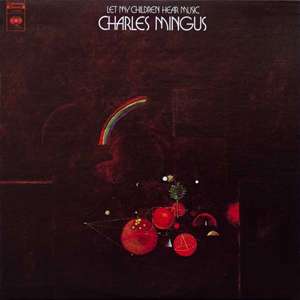
Charles Mingus, one of the most innovative and influential composers in jazz history, produced an immense body of work over his career that spanned bebop, hard bop, and avant-garde styles. Yet, of all his creations, “Let My Children Hear Music,” released in 1972, stands out as a monumental testament to his genius. Described by Mingus himself as “the best album I have ever made,” this record is a deeply personal, ambitious, and expansive work, blending the traditions of jazz and classical music in a way that few have ever dared to attempt.
The album is a blend of avant-garde jazz and third stream—a genre that merges classical music with jazz. Produced by Teo Macero, the same man behind Miles Davis’ Bitches Brew, it was recorded over several months in late 1971. The album stands out not only for its complexity but for the richness of the orchestration, involving a large jazz orchestra. Mingus collaborated with several arrangers, including Sy Johnson and Alan Raph, to bring these compositions to life. Despite its intricate production and the challenges Mingus faced during its creation, “Let My Children Hear Music” remains one of the most celebrated works of his career.
A Long Time in the Making:
Help yourself to some live jazz, and help the artists and clubs fulfill their dreams. Sign up to Oh! Jazz to watch live and on-demand performances. 25% of your subscription goes back to the artists and 10% to the clubs.
Learn more about Oh! Jazz here.
While Mingus’ music has always been deeply introspective and personal, much of the material on “Let My Children Hear Music” had been developing over several decades. Some pieces date as far back as 1939. These compositions had seen scattered performances, but it wasn’t until this album that Mingus had the resources to present them in their fully realized forms, with a large, well-rehearsed orchestra. The pieces are grand, filled with intricate orchestration, and often take on a cinematic quality.
Mingus was known for his small-group work, but “Let My Children Hear Music” is the work of a composer thinking in much larger terms. It was an opportunity for Mingus to push beyond the confines of standard jazz instrumentation and move toward something more orchestral and sweeping. Drawing from the legacies of Duke Ellington, Igor Stravinsky, and George Gershwin, Mingus brought together the world of classical music and jazz with a level of mastery that is rarely matched.
The Tracks: A Masterclass in Composition
The album opens with “The Shoes of the Fisherman’s Wife Are Some Jiveass Slippers,” a 9-minute odyssey that combines wild, fast-swinging passages with intricate, angular melodies. The piece is both playful and complex, filled with Mingus’ trademark combination of humor and gravitas. The large ensemble’s swirling sounds and Mingus’ unconventional structures establish the tone for the album: this is music that challenges the listener but rewards them for their attention.
Another standout track, “Adagio Ma Non Troppo,” is based on a piano improvisation that Mingus recorded for his album “Mingus Plays Piano” in 1964. The title, an Italian musical term meaning “slow, but not too slow,” captures the delicate balance of the piece—its measured, thoughtful pace contrasts with moments of sheer, crystalline beauty. It’s remarkable that the track was originally an improvisation, as its intricate structure and playful, yet logical, progression would be impressive even if fully composed in advance.
“Hobo Ho,” which Mingus conceived with a sense of social commentary in mind, is a driving and powerful piece, showcasing the tenor saxophone of James Moody. The composition reaches a fever pitch as the brass and woodwind sections volley riffs back and forth, creating a sense of both chaos and order. The sheer energy and passion in “Hobo Ho” make it one of the most memorable pieces on the album.
“The I of Hurricane Sue” is another tour de force. The title, a play on the word “eye” and a reference to Mingus’ wife, Sue, delivers on its turbulent name. The track is filled with swirling arrangements, complex rhythmic structures, and some of the most aggressive playing on the album.
Other compositions, such as “The Chill of Death” and “Don’t Be Afraid, the Clown’s Afraid Too,” blend Mingus’ penchant for emotional depth with his interest in darker themes. These tracks exemplify Mingus’ ability to use music to explore the full range of human emotions, from joy to fear to sadness.
The Recording Process: A Testament to Mingus’ Vision
The recording process for “Let My Children Hear Music” was fraught with challenges. The exact personnel on the album is difficult to pin down due to contractual issues and Mingus’ use of various arrangers and conductors to help realize his vision. Teo Macero, who also produced some of Miles Davis’ most iconic works, played a significant role in the album’s creation, though he, like Mingus, faced challenges in keeping the project cohesive. As with many of Macero’s collaborations, editing played a major role in shaping the final product, with entire sections spliced together after the fact.
Despite these obstacles, the final product is nothing short of stunning. The large orchestra gives Mingus’ compositions a weight and grandeur that had been missing in previous recordings. From the lush, full-bodied horn section to the delicate interplay of woodwinds and strings, the album’s sound is rich and multilayered, full of intricate textures that reveal themselves with each subsequent listen.
Critical Reception and Legacy:
Upon its release in early 1972, “Let My Children Hear Music” received widespread critical acclaim. Mingus was even nominated for a Grammy Award for Best Album Notes (Non-Classical) for his work on the album, though he ultimately lost to country singer Tom T. Hall. Despite this, Mingus’ pride in the album never wavered. From his deathbed in 1979, he sent a message to Sy Johnson, one of the arrangers, declaring that “Let My Children Hear Music” was his favorite recording of all time.
In the years since its release, the album has come to be recognized as one of Mingus’ crowning achievements. Although his small-group recordings like “Mingus Ah Um” and “The Black Saint and the Sinner Lady” are often more widely celebrated, “Let My Children Hear Music” stands as a testament to his versatility as a composer and his willingness to push the boundaries of what jazz could be. The album’s use of orchestration, the complexity of its arrangements, and the sheer emotional depth of the compositions have made it a touchstone for jazz fans and musicians alike.
“Let My Children Hear Music” remains a towering achievement, not only in the world of jazz but in the broader context of 20th-century music. It is an album that defies easy categorization, blending the improvisational spirit of jazz with the compositional rigor of classical music. For Mingus, it represented the culmination of decades of work, the realization of ideas that had been simmering in his mind for years.
Though Charles Mingus passed away in 1979, his legacy continues to live on, and “Let My Children Hear Music” stands as a shining example of his genius. For anyone interested in exploring the full breadth of what jazz can be, this album is an essential listen—an artistic triumph that remains as powerful today as it was upon its release.
References:
- Swenson, J. (1985). Rolling Stone Jazz Record Guide. Random House.
- “Let My Children Hear Music” album cover art. Retrieved from https://en.wikipedia.org/wiki/File:CharlesMingusLetMyChildrenHearMusic.jpg

Leave a Reply