Introduction:
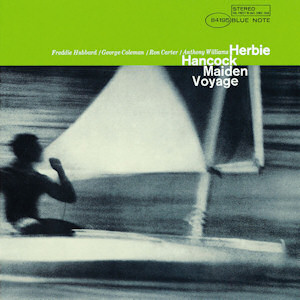
In the realm of jazz, certain albums stand as timeless masterpieces, weaving narratives of musical innovation and creative brilliance. “Maiden Voyage,” an iconic album by Herbie Hancock, is one such gem that transcends time and genre, leaving an indelible mark on the landscape of jazz. Released in 1965, this album represents a pivotal moment in Hancock’s career and a significant contribution to the evolution of modern jazz.
Setting Sail: The Birth of “Maiden Voyage”
As the 1960s dawned, Herbie Hancock was already gaining recognition as a pianist and composer, having worked alongside jazz luminaries such as Miles Davis and Donald Byrd. “Maiden Voyage” emerged because of his artistic maturation, capturing his distinctive voice as a bandleader and visionary composer. Recorded for the Blue Note label, the album became a sonic voyage that pushed boundaries while retaining an air of elegance.
Help yourself to some live jazz, and help the artists and clubs fulfill their dreams. Sign up to Oh! Jazz to watch live and on-demand performances. 25% of your subscription goes back to the artists and 10% to the clubs.
Learn more about Oh! Jazz here.
The Artistic Crew: A Stellar Lineup
“Maiden Voyage” gathered a constellation of talented musicians who enriched the album’s sonic tapestry. Joining Hancock were Freddie Hubbard on trumpet, George Coleman on tenor saxophone, Ron Carter on bass, and Tony Williams on drums. This ensemble not only represented a convergence of virtuosity but also an alchemical fusion of individual styles, contributing to the album’s timeless allure.
Freddie Hubbard’s trumpet is an integral part of the album’s sonic tapestry. His virtuosity and lyrical approach infuse each note with emotion and depth. Hubbard’s ability to alternate between soulful melodic lines and fiery improvisations adds layers of complexity to tracks like “Maiden Voyage” and “The Eye of the Hurricane.” His interplay with the other instruments creates a dynamic dialogue that resonates with listeners.
George Coleman’s tenor saxophone brings a warm and expressive quality to “Maiden Voyage.” His velvety tone and melodic phrasing provide a counterpoint to Hubbard’s trumpet, contributing to the album’s harmonious balance. Coleman’s solos are marked by a sense of storytelling, weaving narratives through the music that draw the audience into the heart of the composition.
The basslines of Ron Carter serve as the foundation upon which the album rests. Carter’s impeccable technique and melodic sensibility provide a steady anchor for the ensemble’s explorations. His interactions with Hancock’s piano create a rhythmic pulse that guides the music, while his solos demonstrate his prowess as a soloist and collaborator.
Tony Williams’ drumming infuses “Maiden Voyage” with rhythmic vitality and intricate textures. His ability to shift between various rhythms and patterns adds a dynamic layer to the album’s sound. Williams’ use of cymbals, snare, and toms creates an immersive sonic environment, enhancing the album’s atmospheric quality.
At the heart of the ensemble is Herbie Hancock, the visionary composer and pianist whose compositions and arrangements shape the album’s narrative. Hancock’s playing transcends virtuosity, revealing a deep emotional connection to the music. His ability to seamlessly blend various elements, from modal harmonies to innovative improvisations, showcases his unparalleled artistry.
The incredible chemistry between the ensemble members of “Maiden Voyage” is what makes it so successful. Each performer contributes their distinct voice and sensibility to the music, resulting in a unified whole that appeals to audiences of all ages. The group’s comradery and deep musical knowledge are demonstrated by their ability to communicate and react to each other’s musical signals.
The group in “Maiden Voyage” is a perfect example of how effective jazz teamwork can be. Their combined efforts contributed to the album’s continuing appeal and influence, leaving a permanent imprint on its history. In “Maiden Voyage,” listeners are invited to experience the enchantment of musicians who, through their individual artistry, produced a seamless whole that never fails to enthrall and inspire.
Navigating the Tracks: A Musical Odyssey
The album opens with the eponymous “Maiden Voyage,” an ethereal composition that immediately immerses the listener in Hancock’s atmospheric soundscapes. The intertwining melodies of Hubbard and Coleman mirror the ebb and flow of waves, while Hancock’s piano dances like sunlight on water. The journey continues with “The Eye of the Hurricane,” a composition marked by its rhythmic intricacy and moments of improvisational brilliance.
A Brush with Timelessness: The Legacy of “Maiden Voyage”
“Maiden Voyage” is more than just an album; it’s a demonstration of Hancock’s talent for using sound to create feelings. His works transcend the limitations of space and genre, producing an audible sensation that is just as captivating now as it was when it was first performed. The album’s enduring popularity stems from its capacity to connect with listeners across generations and inspire them to set out on their own journeys of reflection and fantasy.
References:
- Cook, R. & Morton, B. (2008). The Penguin Guide to Jazz Recordings. Penguin Books.
- Swenson, J. (1985). Rolling Stone Jazz Record Guide. Random House.
- Wendell, E. (2018). Experiencing Herbie Hancock: A Listener’s Companion. Rowman & Littlefield Publishers.
- “Maiden Voyage” album cover art. Retrieved from https://en.wikipedia.org/wiki/File:Maiden_Voyage_(Hancock).jpg
.jpg)
Leave a Reply