Introduction:
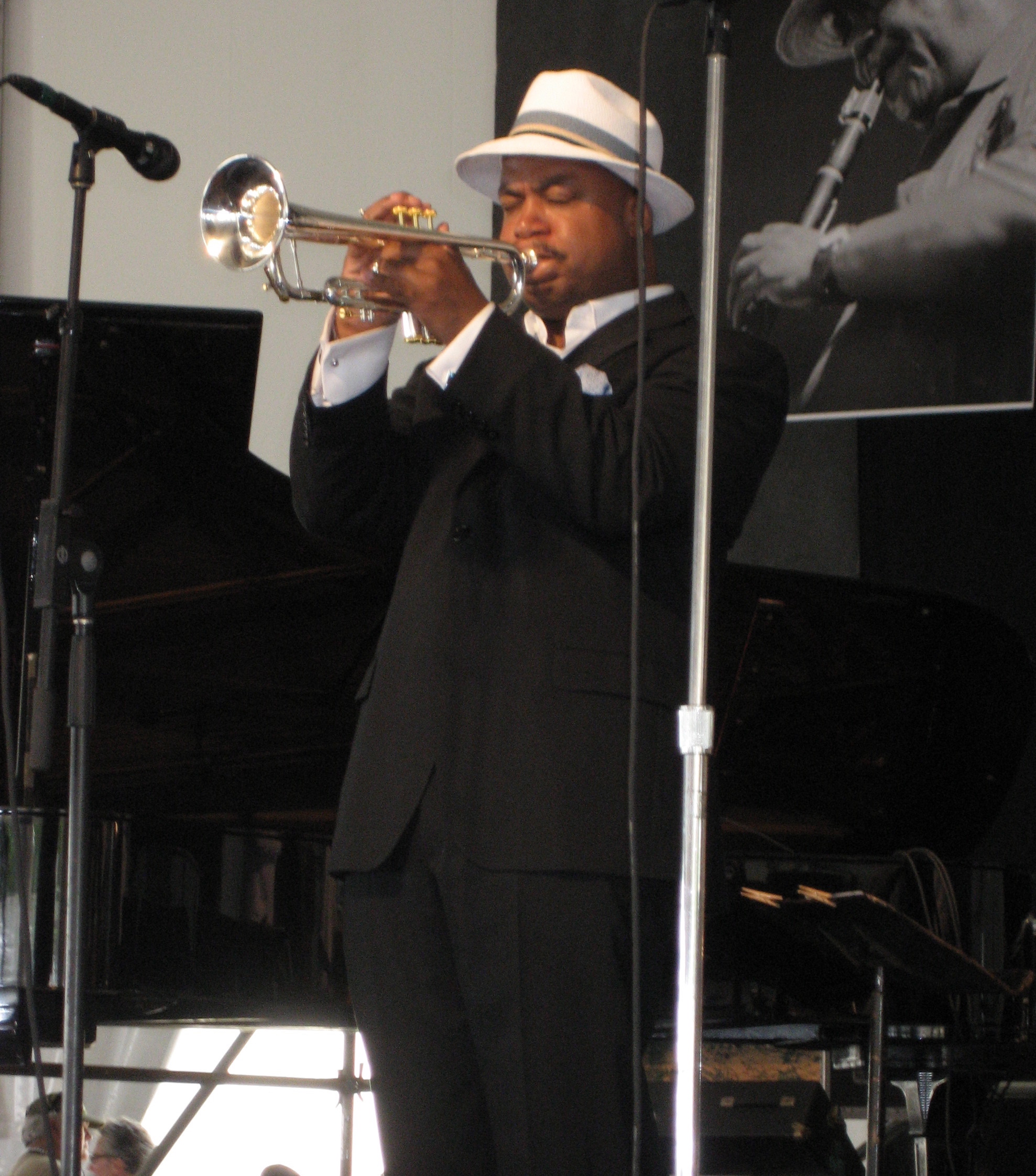
Nicholas Payton, a virtuoso trumpeter, composer, and bandleader, has firmly established himself as one of the most innovative and controversial voices in contemporary jazz. Known for his exceptional technical prowess and his fierce dedication to evolving the art form, Payton has redefined what it means to be a jazz musician in the modern era. His wide-ranging artistic vision and refusal to conform to traditional jazz tropes have made him a revered yet polarizing figure in the world of music. Whether it’s through his genre-blending compositions, his outspoken views on the state of jazz, or his masterful performances, Payton has consistently pushed the boundaries of the art form, ensuring its relevance for future generations.
Early Life and Musical Roots:
Born fifty-one years ago today on September 26, 1973, in New Orleans, Louisiana, Nicholas Payton was raised in one of the most culturally and musically rich cities in the world. New Orleans, often referred to as the birthplace of jazz, provided Payton with a fertile environment to develop his talents. He was introduced to music at a very young age, thanks in large part to his father, Walter Payton, a renowned bassist and sousaphonist who played with iconic figures like Professor Longhair and Lee Dorsey.
Help yourself to some live jazz, and help the artists and clubs fulfill their dreams. Sign up to Oh! Jazz to watch live and on-demand performances. 25% of your subscription goes back to the artists and 10% to the clubs.
Learn more about Oh! Jazz here.
By the age of four, Nicholas had already begun playing the trumpet, an instrument he would go on to master with astonishing proficiency. His early exposure to traditional New Orleans jazz deeply influenced his approach to the instrument and music in general. By his teenage years, he was already performing with local bands and participating in jazz workshops, honing his craft under the guidance of seasoned musicians.
Payton attended the New Orleans Center for Creative Arts (NOCCA), a renowned institution that has produced several notable musicians, including Wynton Marsalis and Harry Connick Jr. From there, he pursued formal studies at the University of New Orleans, where he had the opportunity to learn from Ellis Marsalis, one of the patriarchs of the Marsalis musical dynasty.
Rise to Fame and Early Career:
Nicholas Payton’s professional career took off in the early 1990s when he began touring with the legendary drummer Elvin Jones, best known for his work with John Coltrane. This experience gave Payton invaluable exposure to the global jazz scene and introduced him to a wider audience. However, it was his 1995 debut album, “From This Moment,” that truly announced his arrival as a formidable force in jazz.
Released on the esteemed Verve label, “From This Moment” highlighted Payton’s deep understanding of jazz tradition while hinting at the creative directions he would explore in the future. His playing on the album was both technically flawless and emotionally expressive, drawing comparisons to trumpet greats like Miles Davis, Clifford Brown, and Lee Morgan. With each subsequent release, Payton continued to build on this foundation, displaying his versatility as both a composer and a bandleader.
In 1996, Payton released “Gumbo Nouveau,” an album that paid homage to his New Orleans roots while simultaneously updating the traditional sounds of the city for a modern audience. Featuring reimagined versions of classic New Orleans tunes, the album earned widespread critical acclaim. Payton’s ability to bridge the past and present of jazz was becoming increasingly evident, and he quickly became one of the most sought-after trumpeters of his generation.
Grammy Recognition and Collaborations:
One of the most significant moments in Payton’s early career came in 1997 when he won a Grammy Award for his collaboration with renowned trumpeter Doc Cheatham on the album “Doc Cheatham & Nicholas Payton.” Cheatham, a jazz veteran who had worked with legends like Louis Armstrong and Cab Calloway, was in his nineties when the album was recorded, while Payton was in his mid-twenties. The intergenerational collaboration beautifully exemplified the continuity of jazz tradition, with Payton and Cheatham’s effortless interplay demonstrating both respect for the past and a desire to push the music forward.
Following this success, Payton continued to collaborate with an array of musicians across various genres, including Herbie Hancock, Roy Haynes, Joe Henderson, and Trey Anastasio. He became known not just for his virtuosic trumpet playing but also for his adaptability, able to move seamlessly between hard bop, post-bop, and even more experimental forms of jazz.
The Post-Jazz Era: Defining Black American Music (BAM)
As Payton’s career progressed, he began to distance himself from the term “jazz,” feeling that it no longer adequately described the scope and cultural origins of his music. In 2011, he famously declared that “jazz died in 1959” and introduced the term “Black American Music” (BAM) as a way to more accurately represent the contributions of African Americans to the development of modern music. This stance was controversial within the jazz community, with some praising his commitment to cultural integrity and others criticizing what they saw as a rejection of jazz tradition.
Payton’s decision to embrace BAM reflected his broader artistic vision, one that emphasized the interconnectedness of all forms of Black music, from jazz and blues to funk, hip-hop, and beyond. For Payton, the term “jazz” had become too narrowly associated with a particular set of stylistic conventions and commercial interests that did not reflect the broader historical and cultural significance of the music.
This shift in perspective was not just theoretical; it also influenced Payton’s compositional approach. Albums like “Bitches” (2011) and “Numbers” (2014) explored more electronic and fusion-based sounds, incorporating elements of R&B, funk, and even hip-hop into his music. Bitches in particular, which featured Payton playing multiple instruments and experimenting with vocal arrangements, represented a bold departure from his earlier, more traditional jazz recordings. Though it polarized some critics, the album showcased Payton’s refusal to be confined by genre labels.
A Multifaceted Artist: Composer, Multi-Instrumentalist, and Innovator
In addition to his extraordinary trumpet playing, Nicholas Payton has also established himself as a skilled multi-instrumentalist, arranger, and composer. Throughout his career, he has increasingly taken on more responsibilities in the studio, often playing piano, keyboards, and bass on his recordings. His 2017 album “Afro-Caribbean Mixtape” is a prime example of his ability to blend a wide range of influences into a cohesive and groundbreaking musical statement.
“Afro-Caribbean Mixtape” brought together elements of jazz, Caribbean rhythms, hip-hop, and spoken word to create a richly textured sonic landscape. The album was a deeply personal exploration of Payton’s identity as an African American artist, and it received widespread acclaim for its ambition and execution.
Legacy and Influence:
As Nicholas Payton continues to push the boundaries of music, his influence on the next generation of musicians is undeniable. His insistence on creative freedom, coupled with his deep respect for the historical and cultural roots of Black American music, has inspired many young artists to explore new directions in jazz and beyond. Payton’s advocacy for BAM has also sparked important conversations about race, identity, and artistic integrity within the broader music community.
Despite his controversial views, Payton’s contributions to the world of jazz—or Black American Music—are indisputable. His fearless approach to music-making, combined with his prodigious talent, has cemented his status as one of the most important figures in contemporary jazz. Whether he’s performing standards from the Great American Songbook, exploring the outer reaches of electronic fusion, or challenging the conventional wisdom of the music industry, Nicholas Payton remains a vital and visionary force in modern music.
Nicholas Payton’s career is a testament to the power of artistic evolution and the importance of cultural authenticity. In redefining the boundaries of jazz and championing the concept of Black American Music, he has carved out a unique and lasting place in the history of contemporary music. With each new project, Payton continues to explore uncharted territory, reminding us that the spirit of jazz—or whatever we choose to call it—remains as vibrant and relevant as ever.
References:
- Cook, R. & Morton, B. (2008). The Penguin Guide to Jazz Recordings. Penguin Books.
- Nicholson, S. (1990). Jazz: The Modern Resurgence. Simon & Schuster Ltd.
- Yanow, S. (2001). Trumpet Kings: The Players Who Shaped the Sound of Jazz Trumpet. Backbeat Books.
- Gioia, T. (2021). The History of Jazz. Oxford University Press.
- Nicholas Payton picture. Retrieved from https://en.wikipedia.org/wiki/File:NicholasPayton5deMayo07Playing.jpg

Leave a Reply