Introduction:
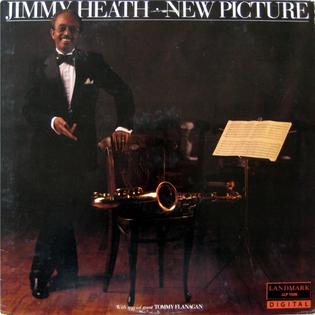
In the world of jazz, the name Jimmy Heath carries significant weight. A saxophonist, composer, and arranger, Heath has been a pivotal figure in the genre for decades. His 1985 album, “New Picture,” marked a triumphant return to the recording studio after a ten-year hiatus. Released on the Landmark label and recorded at the renowned Van Gelder Studio in Englewood Cliffs, New Jersey, “New Picture” is a testament to Heath’s enduring talent and his ability to blend tradition with innovation. This blog post delves into the album’s background, tracks, musicianship, and lasting impact.
Historical Context:
Jimmy Heath’s “New Picture” was recorded on June 18 and 20, 1985, and released the same year. The album came ten years after his previous release, “Picture of Heath,” which highlighted Heath’s distinctive style and compositional prowess. Produced by Jimmy Heath and Orrin Keepnews, “New Picture” showcases Heath’s versatility and his ability to adapt to the evolving jazz landscape while maintaining his unique voice.
Help yourself to some live jazz, and help the artists and clubs fulfill their dreams. Sign up to Oh! Jazz to watch live and on-demand performances. 25% of your subscription goes back to the artists and 10% to the clubs.
Learn more about Oh! Jazz here.
The mid-1980s were a period of significant change in jazz, with the rise of neo-bop and a renewed interest in traditional forms. “New Picture” fits into this context as a blend of modern and classic elements, reflecting Heath’s deep roots in bebop and hard bop while hinting at more contemporary influences.
Track-by-Track Analysis:
- “New Picture” – 5:00: The title track, “New Picture,” opens the album with a vibrant and energetic statement. Composed by Heath, the piece features his tenor saxophone prominently, delivering a performance that is both technically proficient and emotionally expressive. The track sets the tone for the album, combining a strong melodic sense with intricate harmonic and rhythmic structures.
- “Lush Life” (Billy Strayhorn) – 8:06: Billy Strayhorn’s “Lush Life” is a jazz standard that has been interpreted by countless artists. Heath’s rendition is both respectful of the original and uniquely his own. The inclusion of French horns and a tuba adds a rich, orchestral texture to the arrangement. Heath’s soprano saxophone weaves through the lush harmonies, bringing a sense of intimacy and depth to the piece.
- “Changes” – 5:59: “Changes” is another original composition by Heath, characterized by its complex chord progressions and dynamic interplay between the musicians. Tommy Flanagan’s Rhodes piano adds a modern touch to the track, blending seamlessly with Heath’s saxophone. The piece showcases Heath’s ability to write challenging yet accessible music, full of unexpected twists and turns.
- “Keep Love Alive” – 5:21: “Keep Love Alive” features a more laid-back, soulful groove, highlighting Heath’s versatility as a composer. The track includes French horns, a trombone, and a tuba, adding a warm, full-bodied sound to the arrangement. The interplay between Heath’s tenor saxophone and the rhythm section, particularly Al Foster’s drums, creates a relaxed yet engaging atmosphere.
- “Dewey Square” (Charlie Parker) – 4:05: Charlie Parker’s “Dewey Square” is a bebop classic, and Heath’s interpretation pays homage to Parker’s legacy while infusing it with his own style. The track is a high-energy romp, featuring tight ensemble playing and impressive solos. Heath’s soprano saxophone takes the lead, delivering a performance that is both technically dazzling and deeply rooted in the bebop tradition.
- “Sophisticated Lady” (Duke Ellington, Irving Mills, Mitchell Parish) – 6:44: Duke Ellington’s “Sophisticated Lady” is another jazz standard that Heath tackles with aplomb. The arrangement is lush and sophisticated, featuring French horns and a tuba to add depth and color. Heath’s tenor saxophone exudes warmth and elegance, capturing the essence of Ellington’s composition while adding his personal touch.
- “Togetherness” – 5:10: The album closes with “Togetherness,” an original composition by Heath that embodies the spirit of collaboration and unity. The track features tight ensemble playing and strong individual performances, highlighting the chemistry between the musicians. The piece is a fitting conclusion to the album, encapsulating the themes of connection and shared musical exploration.
Musicianship and Arrangements:
One of the standout features of “New Picture” is the exceptional musicianship displayed by Heath and his ensemble. The album features a stellar lineup of musicians, including:
- Jimmy Heath – Tenor saxophone, soprano saxophone
- John Clark – French horn (tracks 2, 4 & 6)
- Bobby Routch – French horn (tracks 2, 4 & 6)
- Benny Powell – Trombone (tracks 2, 4 & 6)
- Howard Johnson – Tuba (tracks 2, 4 & 6)
- Tony Purrone – Guitar
- Tommy Flanagan – Rhodes piano (tracks 3 & 4)
- Rufus Reid – Bass
- Al Foster – Drums
The addition of French horns, trombone, and tuba on select tracks adds a unique orchestral dimension to the music, enriching the arrangements and providing a broader sonic palette. Heath’s arrangements are masterful, balancing complexity and accessibility, and allowing each musician to shine.
Reception and Legacy:
“New Picture” received positive reviews upon its release, with critics praising Heath’s performance and the album’s overall cohesion. Scott Yanow of Allmusic noted, “Ten years after his most recent set as a leader, Jimmy Heath (heard here on tenor and soprano) finally had another opportunity to lead an album of his own… A tasteful and swinging effort”. This sentiment captures the essence of “New Picture” – an album that blends tastefulness with swing, and tradition with innovation.
The album’s release on CD has ensured its continued availability and appreciation by jazz enthusiasts. “New Picture” stands as a testament to Jimmy Heath’s enduring talent and his ability to remain relevant and innovative in a rapidly changing musical landscape.
“New Picture” is a landmark album in Jimmy Heath’s discography, marking his return to the recording studio after a decade-long hiatus. The album’s blend of original compositions and jazz standards, coupled with exceptional musicianship and innovative arrangements, makes it a standout recording in the jazz canon. Heath’s ability to bridge the gap between tradition and modernity, while maintaining his unique voice, is evident throughout the album.
For anyone interested in the evolution of jazz and the work of one of its most respected figures, “New Picture” is an essential listen. The album not only reaffirms Jimmy Heath’s place in the pantheon of jazz greats but also serves as a reminder of the timeless appeal of well-crafted, passionately performed music.
References:
- Heath, J. & McLaren, J. (2010). I Walked With Giants: The Autobiography of Jimmy Heath. Temple University Press.
- “New Picture” album cover art. Retrieved from https://en.wikipedia.org/wiki/File:New_Picture_Heath.jpg

Leave a Reply