Introduction:
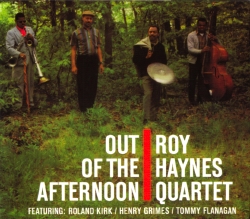
Roy Haynes, a luminary in the world of jazz percussion, bestowed upon the musical cosmos an enchanting auditory gem in the summer of 1962 — “Out of the Afternoon.” This studio album, released under the prestigious banner of Impulse! Records, transcends temporal confines, resonating with the timeless allure of post-bop and modal jazz. Assembled with a quartet that included the multi-instrumental virtuosity of Roland Kirk, this masterpiece stands as a testament to the rhythmic ingenuity of its creator and the collaborative synergy that defined an era.
The Artistic Alchemy of “Out of the Afternoon”
Recorded on May 16 and 23, 1962, at the hallowed Van Gelder Studio in Englewood Cliffs, New Jersey, “Out of the Afternoon” encapsulates the artistic prowess of Roy Haynes and his quartet. The ensemble, comprising Tommy Flanagan on piano, Henry Grimes on bass, and the polymorphic Roland Kirk on tenor saxophone, manzello, stritch, C flute, and even the nose flute, delivered a performance that transcends the boundaries of conventional jazz.
Help yourself to some live jazz, and help the artists and clubs fulfill their dreams. Sign up to Oh! Jazz to watch live and on-demand performances. 25% of your subscription goes back to the artists and 10% to the clubs.
Learn more about Oh! Jazz here.
The album’s repertoire is a tapestry of sonic diversity, with each track weaving a unique narrative. “Moon Ray,” an exploration of Artie Shaw’s composition, sets the stage with its celestial melodies, showcasing Kirk’s mastery over many instruments. The ethereal rendition of “Fly Me to the Moon (In Other Words)” by Bart Howard follows, with each note resonating like a lunar whisper.
Not content with the conventional, Haynes introduces his own composition, “Raoul,” a sonic exploration that reveals the quartet’s experimental edge. The track serves as a canvas for the rhythmic interplay between the instruments, and Grimes’ bowed bass solo during “Raoul” emerges as a testament to the album’s innovative spirit.
“Snap Crackle,” a composition by Haynes, brings forth a rhythmic intensity that is nothing short of a percussive marvel. Featured in the soundtrack of Grand Theft Auto IV, this track not only found a place in the jazz aficionado’s collection but also resonated with a new generation through the virtual streets of Liberty City.
The quartet’s rendition of “If I Should Lose You” is a poignant exploration of the classic by Leo Robin and Ralph Rainger. The emotional depth conveyed through Kirk’s saxophone and Haynes’ drumming reveals the quartet’s ability to infuse timeless compositions with contemporary vibrancy.
“Long Wharf” is a sonic odyssey that pays homage to the maritime heritage, while “Some Other Spring” is a delicate musical blossom, interpreting the composition of Arthur Herzog Jr. and Irene Kitchings.
Critical Acclaim and Enduring Legacy:
“Out of the Afternoon” received widespread acclaim, with reviewers acknowledging its exceptional qualities. In his review, Steven McDonald lauds the quartet’s performance as “a delightful mix of techniques in arrangement and performance,” noting the exceptional contributions of each musician. Haynes’ drumming, described as “absolutely wonderful,” dances harmoniously with Flanagan’s delicate piano, Grimes’ outstanding bass work, and Kirk’s unparalleled sax and flute artistry.
The album’s enduring legacy is reflected in its inclusion in various jazz record guides, with critics highlighting its significance in the evolution of post-bop and modal jazz. The nuanced exploration of rhythm, melody, and improvisation showcased in “Out of the Afternoon” continues to inspire generations of musicians and enthusiasts alike.
“Out of the Afternoon” stands as a testament to Roy Haynes’ rhythmic alchemy and the collaborative brilliance of his quartet. The album, a harmonious blend of tradition and innovation, invites listeners on a journey through the realms of post-bop and modal jazz. Each track is a brushstroke on a canvas of sonic exploration, painting a vivid portrait of a musical era marked by creativity and experimentation. As the notes of “Out of the Afternoon” continue to reverberate through the corridors of jazz history, they affirm the album’s status as a timeless sonic tapestry, forever resonating with the heartbeat of artistic expression.
References:
- Swenson, J. (1985). Rolling Stone Jazz Record Guide. Random House.
- Cook, R. & Morton, B. (2008). The Penguin Guide to Jazz Recordings. Penguin Books.
- “Out of the Afternoon” album cover art. Retrieved from https://en.wikipedia.org/wiki/File:Out_of_the_Afternoon.jpg

Leave a Reply