Introduction:
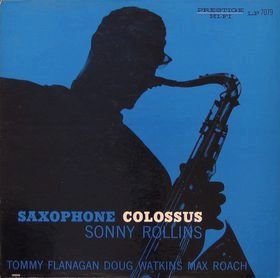
Jazz is a genre that has seen some of the greatest musicians in history. From Duke Ellington to John Coltrane, jazz has produced iconic figures who have left their indelible mark on the music world. One such figure is Sonny Rollins, whose album “Saxophone Colossus” is regarded as one of the greatest jazz recordings of all time. Released in 1956, the album features Rollins at the peak of his powers, showcasing his virtuosic saxophone playing and inventive improvisation. In this blog post, we will explore the significance of “Saxophone Colossus” and the impact it has had on the jazz genre.
The Significance of “Saxophone Colossus”:
“Saxophone Colossus” is an album that is widely regarded as a masterpiece in the jazz world. It features Rollins’ signature sound and style, which was characterized by his unique phrasing and use of motifs. The album is perhaps best known for its opening track, “St. Thomas,” which has become a jazz standard and is still played by musicians today. The track features Rollins’ trademark Caribbean-inspired melody, with a catchy riff that is instantly recognizable.
Help yourself to some live jazz, and help the artists and clubs fulfill their dreams. Sign up to Oh! Jazz to watch live and on-demand performances. 25% of your subscription goes back to the artists and 10% to the clubs.
Learn more about Oh! Jazz here.
But “Saxophone Colossus” is much more than just one track. The album features four other compositions, each one showcasing Rollins’ virtuosic saxophone playing and his ability to create memorable and inventive improvisations. The album also features a stellar backing band, including pianist Tommy Flanagan, bassist Doug Watkins, and drummer Max Roach, who provide the perfect accompaniment to Rollins’ playing.
Blue 7:
Sonny Rollins’ solo on “Blue 7” is widely regarded as one of the greatest saxophone solos in jazz history. “Blue 7” is a 12-bar blues track, and Rollins’ solo on the song is a masterclass in blues phrasing and improvisation. He takes a simple melodic theme and develops it in a way that is both harmonically and rhythmically complex, yet still accessible and deeply expressive.
The solo begins with a series of short, staccato phrases that build into longer, more fluid lines. Rollins uses a combination of arpeggios, chromatic runs, and bluesy bends to create a dynamic and varied solo that never feels repetitive or formulaic.
One of the most striking aspects of Rollins’ solo is his use of space and silence. He often pauses briefly between phrases, allowing the listener to fully absorb each idea before moving on to the next. This creates a sense of tension and release that gives the solo a natural ebb and flow.
Rollins’ tone and phrasing are also noteworthy. He plays with a rich, full-bodied sound that is both powerful and nuanced. His phrasing is elastic and fluid, with a strong sense of swing that propels the solo forward.
The Impact of “Saxophone Colossus”:
“Saxophone Colossus” had a significant impact on the jazz world when it was released, and its influence can still be heard today. The album showcased Rollins’ innovative and unique approach to the saxophone, inspiring generations of saxophonists to come. It also helped to popularize the jazz style known as “hard bop,” which was characterized by a more straightforward, bluesy sound than the bebop style that preceded it.
But “Saxophone Colossus” also had a wider cultural impact. The album was released at a time when the civil rights movement was gaining momentum, and jazz was seen as a symbol of African American culture and identity. Rollins, along with other jazz musicians of the time, became a cultural ambassador for African American music and helped to break down racial barriers through their music.
Conclusion:
In conclusion, “Saxophone Colossus” is a landmark album in the history of jazz. It features Sonny Rollins at the height of his powers, showcasing his virtuosic saxophone playing and inventive improvisation. The album has had a significant impact on the jazz genre, inspiring generations of musicians and popularizing the “hard bop” style. But it has also had a wider cultural impact, as Rollins and other jazz musicians of the time helped to break down racial barriers through their music. “Saxophone Colossus” is a timeless masterpiece that will continue to inspire and influence musicians for generations to come.
References:
- Gioia, Ted. The History of Jazz. Oxford University Press, 2021.
- Levy, Aidan. Saxophone Colossus: The Life and Music of Sonny Rollins. Hachette Books, 2023.
- Yanow, Scott. Jazz on Record: The First Sixty Years. Backbeat Books, 2003.
- “Saxophone Colossus” album cover art. Retrieved from https://en.wikipedia.org/wiki/File:Saxophone_Colossus_-_Sonny_Rollins.jpg

Leave a Reply