Introduction:
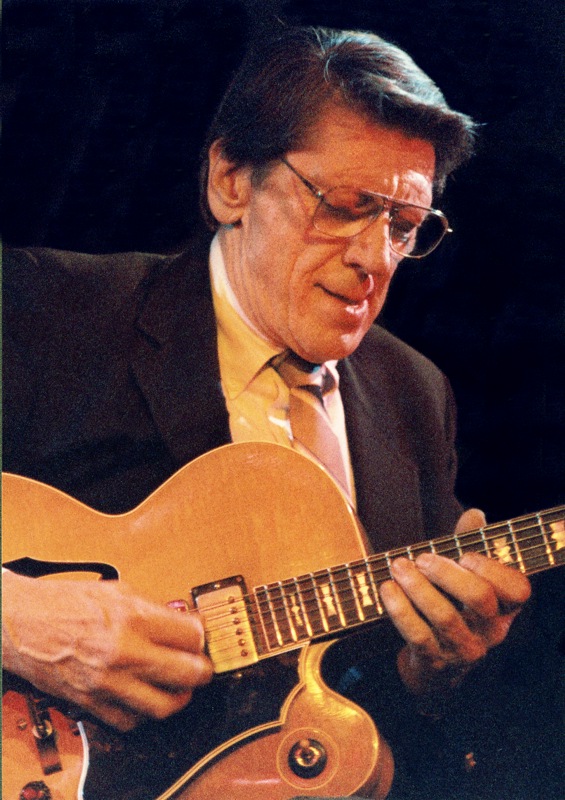
When discussing the pantheon of jazz guitarists, the name Tal Farlow often surfaces as one of the most influential and virtuosic players of the 20th century. Known for his impeccable technique, innovative approach, and melodic sensibility, Farlow carved a niche for himself in the jazz world that remains unchallenged. His journey from a small-town boy to a celebrated jazz icon is as inspiring as his music, marked by dedication, creativity, and an unwavering passion for the art form.
Early Life and Musical Beginnings:
Talmage Holt Farlow was born one hundred and three years ago today on June 7, 1921, in Greensboro, North Carolina. Remarkably, Farlow was a self-taught guitarist who only began playing at the age of 22. He developed his skills by learning chord melodies on a mandolin tuned like a ukulele. Farlow credited this unconventional approach for his unique playing style, using the higher four strings of the guitar for melody and chord structure while employing the two bottom strings for bass counterpoint, which he played with his thumb.
Help yourself to some live jazz, and help the artists and clubs fulfill their dreams. Sign up to Oh! Jazz to watch live and on-demand performances. 25% of your subscription goes back to the artists and 10% to the clubs.
Learn more about Oh! Jazz here.
Tal drew inspiration from the records of Charlie Christian, the pioneering electric guitarist who played with Benny Goodman. Farlow’s keen ear and rapid learning curve enabled him to decode Christian’s solos and integrate them into his playing, setting the stage for his future in jazz.
Rise to Prominence:
Tal’s big break came in 1949 when he joined the Red Norvo Trio, a pioneering group that also featured bassist Charles Mingus. This trio was groundbreaking for its unconventional setup, lacking a traditional rhythm section and instead relying on the intricate interplay between vibes, guitar, and bass.
Working with Norvo and Mingus, Farlow developed a highly sophisticated and fluid playing style characterized by rapid single-note runs, complex chord voicings, and an ability to seamlessly weave through bebop’s fast tempos and intricate harmonies. His contribution to the trio helped redefine the role of the guitar in jazz, demonstrating its potential as a lead instrument in small group settings.
Signature Style and Techniques:
Tal Farlow’s guitar playing is distinguished by several unique features:
- Speed and Precision: Farlow was renowned for his speed, earning the nickname “Octopus” for his large hands and the seemingly effortless way he covered the fretboard. His ability to play rapid, precise lines made him a standout in the bebop era.
- Chordal Innovations: Farlow’s chord work was revolutionary. He often used extended voicings and substitutions, adding a rich harmonic palette to his solos and comping. His use of block chords, a technique where he played chords in rapid succession to create a melody line, was particularly influential.
- Melodic Approach: Despite his technical prowess, Farlow never sacrificed melody for speed. His solos were lyrical and thoughtfully constructed, often weaving in and out of the harmonic structure with a natural, singing quality.
Key Recordings:
Throughout his career, Tal Farlow recorded numerous albums that showcased his extraordinary talent. Some of the most notable include:
- “Tal Farlow Quartet” (1954): This album features Farlow in a quartet setting, highlighting his virtuosity and melodic sensibility.
- “The Artistry of Tal Farlow” (1954): A quintessential recording that captures the essence of Farlow’s playing. It includes tracks like “Cherokee” and “Have You Meet Miss Jones?” which have become standards in the jazz guitar repertoire.
- “Tal” (1956): Another significant release, this album features Farlow in a trio setting, allowing his guitar work to take center stage.
- “The Swinging Guitar of Tal Farlow” (1957): Known for its upbeat and accessible tracks, this album showcases Farlow’s ability to blend swing with bebop influences seamlessly.
Semi-Retirement and Later Years:
Despite his success, Farlow chose to step back from the limelight in the late 1950s. He moved to Sea Bright, New Jersey, where he focused on his career as a sign painter. This decision was partly driven by his desire for a quieter life and a break from the demanding New York jazz scene. However, he never abandoned music entirely, continuing to play in local clubs and occasionally touring and recording.
Farlow’s semi-retirement only added to his mystique. When he did emerge for performances or recordings, it was always an event. His sporadic appearances and the continued excellence of his playing reinforced his status as a living legend.
In the 1970s and 1980s, Farlow experienced a resurgence in popularity. He recorded several albums, including “Tal Farlow 78” and “The Return of Tal Farlow”, which received critical acclaim and introduced his music to a new generation of jazz enthusiasts.
Legacy and Influence:
Tal Farlow’s influence on jazz guitar is profound and enduring. His innovative techniques and distinctive style have inspired countless guitarists. Farlow’s work remains a touchstone for anyone studying jazz guitar, offering a masterclass in melodic improvisation, harmonic sophistication, and technical prowess.
Moreover, Farlow’s approach to the guitar has had a lasting impact on the instrument’s role in jazz. By elevating the guitar from a rhythm section instrument to a lead voice capable of complex improvisation and harmonic depth, Farlow paved the way for future generations of jazz guitarists.
Tal Farlow’s journey from a self-taught guitarist in North Carolina to a revered jazz icon is a testament to his extraordinary talent, dedication, and innovation. His contributions to the world of jazz guitar are immeasurable, and his legacy continues to inspire and influence musicians around the globe. Whether through his groundbreaking recordings, his distinctive style, or his role in reshaping the guitar’s place in jazz, Tal Farlow remains a towering figure in the history of jazz.
References:
- Gitler, I. (1985). Swing to Bop: An Oral History of the Transition in Jazz in the 1940s. Oxford University Press.
- Yanow, S. (2013). The Great Jazz Guitarists: The Ultimate Guide. Backbeat.
- Feather, L. & Gitler, I. (2007). The Biographical Encyclopedia of Jazz. Oxford University Press.
- Tal Farlow picture. Retrieved from https://en.wikipedia.org/wiki/File:Tal_Farlow_5.jpg


Leave a Reply