Introduction:
In the vast realm of jazz history, certain moments stand out as defining milestones. One such moment occurred during the recording session for the song “Tenor Madness,” where two titans of the tenor saxophone, Sonny Rollins and John Coltrane, came together to create a legendary musical encounter. This rare meeting of musical giants produced a captivating and influential recording that still reverberates in the annals of jazz history. In this blog post, we will delve into the significance of the recording session for “Tenor Madness,” exploring the context, collaboration, and lasting impact of this historic musical event.
Setting the Stage: A Meeting of Masters
The year was 1956, and the jazz world was abuzz with excitement over the emerging talents of Sonny Rollins and John Coltrane. Both saxophonists were on the cusp of their creative peaks, poised to make significant contributions to the jazz lexicon. The opportunity for them to collaborate on a recording session was a rare and highly anticipated event.
Help yourself to some live jazz, and help the artists and clubs fulfill their dreams. Sign up to Oh! Jazz to watch live and on-demand performances. 25% of your subscription goes back to the artists and 10% to the clubs.
Learn more about Oh! Jazz here.
The Composition: “Tenor Madness”
At the center of this historic encounter was the composition that would become the eponymous title of the recording session: “Tenor Madness.” Composed by Sonny Rollins, the tune served as the canvas on which these two musical giants would paint their sonic masterpieces. The composition itself embodied the spirit of collaboration and improvisation, offering ample space for Rollins and Coltrane to showcase their individual voices while engaging in a musical dialogue.
The Recording Session: A Meeting of Minds
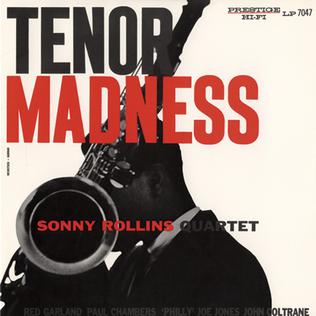
Sixty-seven years ago today, on May 24, 1956, the recording session for “Tenor Madness” took place at the legendary Van Gelder Studio in Hackensack, New Jersey. Alongside Sonny Rollins and John Coltrane was a stellar rhythm section comprised of pianist Red Garland, bassist Paul Chambers, and drummer Philly Joe Jones. The chemistry and camaraderie among the musicians were palpable as they embarked on this unique musical journey.
The Musical Dialogue: Conversations of Genius
The recording of “Tenor Madness” showcased the distinct yet complementary styles of Rollins and Coltrane. Sonny Rollins’ muscular and inventive approach to improvisation contrasted with John Coltrane’s unparalleled technique and spiritual depth. The intertwining of their voices on the track created a musical conversation that was both exhilarating and enlightening. The saxophonists pushed each other to new heights, inspiring one another to explore uncharted territories of harmony, rhythm, and expression.
The interplay between Sonny Rollins and John Coltrane in the recording session for “Tenor Madness” was nothing short of mesmerizing. As two of the most influential and innovative tenor saxophonists of their time, their musical dialogue created an electric and captivating atmosphere.
On “Tenor Madness,” Rollins and Coltrane engaged in a musical conversation that showcased their distinct voices and approaches to improvisation. Their interplay was characterized by a combination of seamless harmony, thrilling call-and-response exchanges, and shared melodic motifs.
In their improvisations, Rollins and Coltrane exhibited a deep understanding and respect for each other’s playing. They listened intently, responding to each other’s ideas with nuance and creativity. Their solos alternated between moments of intense competition, where each saxophonist pushed the boundaries of their technical abilities, and moments of camaraderie, where they harmonized and complemented each other’s phrases.
The contrast in their styles added a further dimension to their interplay. Rollins’ playing was marked by his bold and muscular tone, his use of intricate rhythmic patterns, and his ability to develop melodic ideas with great fluency. Coltrane, on the other hand, possessed a commanding and spiritual approach, with his rapid-fire runs, expressive use of extended techniques, and a deep emotional connection to his music.
The result of their interplay was a rich tapestry of sound, where their individual voices merged and intertwined in a harmonious and cohesive manner. They created a musical landscape that was at once exhilarating, thought-provoking, and deeply expressive.
The interplay between Rollins and Coltrane on “Tenor Madness” served as a testament to their immense talent, their mutual respect, and their unwavering dedication to the craft of improvisation. It was a meeting of musical minds that left an indelible mark on jazz history, inspiring generations of saxophonists to explore the possibilities of the instrument and the power of musical dialogue.
Their interplay on “Tenor Madness” continues to captivate and inspire listeners, reminding us of the extraordinary heights that can be reached when two musical giants engage in a creative conversation that transcends boundaries and genres.
Legacy and Influence: A Lasting Impact
The recording of “Tenor Madness” stands as a testament to the musical genius of Sonny Rollins and John Coltrane. This historic collaboration showcased the breadth of their musical vision and left an indelible mark on the jazz community. The influence of “Tenor Madness” can be heard in subsequent generations of saxophonists who have drawn inspiration from the interplay, creativity, and energy displayed on the recording. The session serves as a reminder of the transformative power of collaboration and the infinite possibilities that arise when musical giants converge.
References:
- Porter, L., DeVito, C., Wild, D., Fujioka, Y., & Schmaler, W. (2013). “The John Coltrane Reference.” Routledge.
- Ratliff, B. (2008). “Coltrane: The Story of a Sound.” Picador.
- Swenson, J. (1985). “Rolling Stone Jazz Record Guide.” Random House.
- Cook, R. & Morton, B. (2008). “The Penguin Guide to Jazz Recordings: Ninth Edition.” Penguin Books.
- Wilson, P.N. (2001). “Sonny Rollins: The Definitive Musical Guide.” Berkeley Hills Books.
- “Tenor Madness” album cover art. Retrieved from https://en.wikipedia.org/wiki/File:Sonny_Rollins_Tenor_Madness.jpg


Leave a Reply to Aaron BennettCancel reply