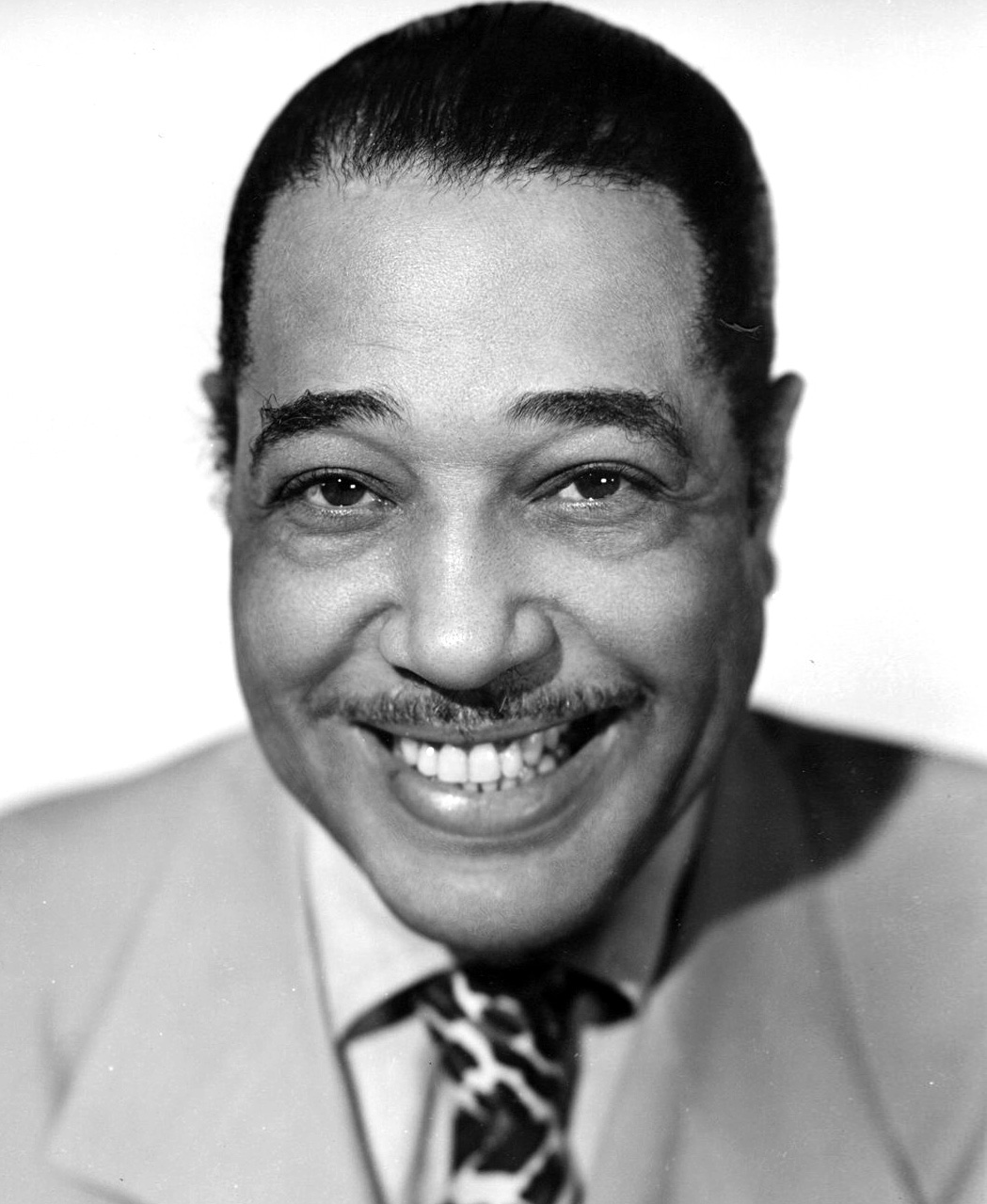
Duke Ellington, also known as “The Duke,” was a composer, pianist, and bandleader who is widely regarded as one of the most influential figures in the history of jazz music. His prolific career spanned over five decades, during which he wrote over 1,000 compositions and recorded more than 2,000 songs. Ellington’s contributions to jazz are immeasurable, and his influence can be heard in the music of countless artists that have come after him.
Early Life and Career:
Born 124 years ago today on April 29, 1899, in Washington, D.C., Ellington began studying piano at a young age and was performing in public by the time he was a teenager. In the early 1920s, he began playing in various bands around the Washington, D.C. area and eventually formed his own group, the Washingtonians. In 1927, Ellington and his band moved to New York City and quickly gained a following, playing in clubs and theaters across the city.
In the 1930s, Ellington’s career really took off with a series of recordings that would become classics of the swing era. His big band, which included such legendary musicians as Johnny Hodges, Cootie Williams, and Ben Webster, became known for their sophisticated arrangements, tight ensemble playing, and Ellington’s own virtuosic piano playing. Hits such as “It Don’t Mean a Thing (If It Ain’t Got That Swing),” “Mood Indigo,” and “Sophisticated Lady” helped establish Ellington as one of the most important figures in jazz.
Help yourself to some live jazz, and help the artists and clubs fulfill their dreams. Sign up to Oh! Jazz to watch live and on-demand performances. 25% of your subscription goes back to the artists and 10% to the clubs.
Learn more about Oh! Jazz here.
Contributions to Jazz:
One of Ellington’s greatest contributions to jazz was his pioneering work in the realm of orchestration. He revolutionized the genre by bringing a new level of sophistication and complexity to big band music, incorporating a wide range of textures and colors into his arrangements. Ellington’s use of unconventional instrumental combinations, such as the use of muted trumpets and growling trombones, created a distinctive sound that set his band apart from others of the era.
Ellington’s compositions were also marked by their evocative and poetic qualities. His music often drew inspiration from the sights and sounds of the world around him, reflecting his deep love for his native country and its diverse cultural traditions. His works captured the energy and excitement of the jazz age, while also exploring more introspective and contemplative themes.
Perhaps one of Ellington’s greatest achievements was his ability to bridge the gap between jazz and the wider world of classical music. He was commissioned to write several major works for symphony orchestras. He also collaborated with several other major artists in the realm of classical music, including violinist Yehudi Menuhin and conductor Leonard Bernstein.
Later Career:
Ellington continued to lead his band throughout the 1940s and 1950s, touring extensively and recording prolifically. He also began to experiment with longer works, such as his “Black, Brown and Beige” suite, which was a groundbreaking exploration of African American history and culture through jazz music. In the 1960s, Ellington’s music began to reflect the changing times, as he incorporated elements of bebop and other modern jazz styles into his compositions.
Despite suffering from several health problems in his later years, Ellington remained active until his death in 1974. His final years were marked by numerous accolades and honors, including the Presidential Medal of Freedom and a posthumous Pulitzer Prize.
Legacy:
Duke Ellington’s influence on jazz cannot be overstated. He was a masterful composer, arranger, and bandleader, and his music continues to inspire and influence musicians today. His use of extended compositions, innovative harmonies, and intricate arrangements helped to elevate jazz to the level of serious art, and his ability to blend traditional jazz elements with more modern styles helped to keep the music fresh and relevant.
Ellington was also an important figure in the struggle for civil rights, using his music to promote equality and social justice. He was one of the first jazz musicians to regularly perform in integrated settings, and he wrote several compositions that explicitly addressed the issues facing African Americans during the Civil Rights Movement.
Conclusion:
Duke Ellington was a true giant of jazz music, whose influence can still be felt in the music of today. His prolific career and innovative compositions helped to elevate jazz to the level of serious art, and his commitment to social justice and equality make him an important figure in American history. His music remains a testament to the power of jazz to communicate complex emotions and ideas, and his legacy continues to inspire generations of musicians and fans alike.
References:
- “Duke Ellington Biography.” Biography.com. https://www.biography.com/musician/duke-ellington.
- “Duke Ellington.” AllMusic. https://www.allmusic.com/artist/duke-ellington-mn0000189777/biography.
- Teachout, Terry. Duke: A Life of Duke Ellington. Gotham Books, 2013.
- Tucker, Mark. The Duke Ellington Reader. Oxford University Press, 1995.
- Collier, James Lincoln. Duke Ellington. Oxford University Press, 1987.
- Duke Ellington picture. Retrieved from https://en.wikipedia.org/wiki/File:Duke_Ellington_-_publicity.JPG

Leave a Reply