Introduction:
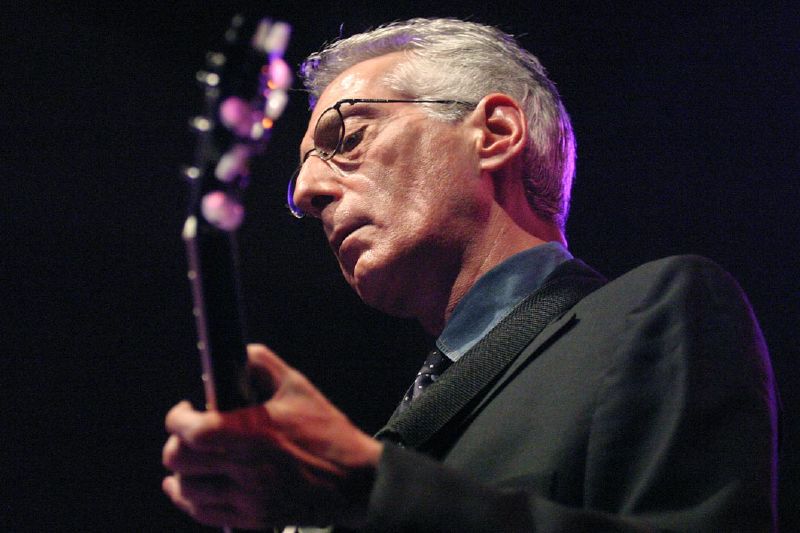
Pat Martino, born Patrick Carmen Azzara eighty years ago today on August 25, 1944, in Philadelphia, Pennsylvania, was an American jazz guitarist whose career and life story are nothing short of extraordinary. Widely regarded as one of the greatest guitarists in jazz, Martino’s journey through the highs and lows of his career is a testament to his resilience, creativity, and unwavering passion for music. From his early beginnings as a teenage prodigy to his remarkable recovery from a life-threatening brain surgery, Martino’s legacy in the jazz world remains unparalleled.
Early Life and Musical Beginnings:
Growing up in a musical household, Martino was exposed to jazz at an early age by his father, Carmen “Mickey” Azzara, who was a tailor and part-time musician. His father’s love for jazz played a significant role in shaping Martino’s musical interests. Martino studied guitar under the guidance of the renowned jazz teacher Dennis Sandole. It was in Sandole’s studio that Martino crossed paths with jazz legends like John Coltrane, McCoy Tyner, and James Moody, all of whom left a lasting impression on the young guitarist.
Help yourself to some live jazz, and help the artists and clubs fulfill their dreams. Sign up to Oh! Jazz to watch live and on-demand performances. 25% of your subscription goes back to the artists and 10% to the clubs.
Learn more about Oh! Jazz here.
At the age of 15, Martino moved to New York City, where he quickly made a name for himself in the vibrant jazz scene. He lived with the iconic guitarist Les Paul, who served as a mentor during Martino’s formative years. Martino’s talent and dedication to his craft soon led him to perform at prominent jazz clubs like Smalls Paradise, where he spent six months honing his skills. By the early 1960s, he was regularly playing with notable jazz organists, including Charles Earland, Richard “Groove” Holmes, Jack McDuff, and Don Patterson.
Career Highlights and Musical Evolution:
Martino’s early recordings as a sideman and leader established him as one of the most promising guitarists of his generation. His debut album, “El Hombre” (1967), released on the Prestige label, showcased his virtuosic guitar playing and deep understanding of jazz harmony. The album featured a blend of hard bop, Latin rhythms, and soul jazz, setting the stage for Martino’s unique style. Subsequent albums like “East!” (1968), “Baiyina (The Clear Evidence)” (1968), and “Desperado” (1970) further solidified his reputation as a leading figure in the jazz world.
Throughout the 1970s, Martino continued to push the boundaries of jazz guitar, experimenting with various styles and genres. His album “Pat Martino/Live!” (1974) featured a mesmerizing rendition of Bobby Hebb’s “Sunny,” which became one of his most recognizable recordings. The album’s success brought Martino wider recognition, and he followed it up with a series of groundbreaking albums, including “Consciousness” (1975) and “Joyous Lake” (1977). The latter saw Martino delving into jazz fusion, incorporating elements of rock and electronic music into his compositions.
The Near-Fatal Aneurysm and Recovery:
Despite his success, Martino’s life took a dramatic turn in 1980 when he suffered a hemorrhaged arteriovenous malformation, leading to a near-fatal seizure. The subsequent brain surgery, which removed part of his brain, left him with complete amnesia. Martino had no recollection of his past, his career, or even how to play the guitar. Faced with the daunting challenge of rebuilding his life, Martino displayed remarkable determination and resilience. He spent years relearning the guitar, painstakingly rediscovering the techniques and musical concepts that had once come so naturally to him.
Martino’s recovery was nothing short of miraculous. By 1987, he made a triumphant return to the jazz scene with the album “The Return,” proving that he had regained his earlier prowess on the guitar. His comeback was met with widespread acclaim, and Martino continued to record and perform with renewed vigor. Albums like “Interchange” (1994) and “All Sides Now” (1997) demonstrated his ability to blend traditional jazz with modern influences, all while maintaining his distinctive sound.
Musical Philosophy and Innovations:
Martino’s approach to guitar playing was deeply rooted in his understanding of the instrument’s architecture. He famously stated, “There are elements within an instrument’s architecture that initiate a continuous source of valuable information. For the guitar, there are two. The first is the major third interval, and the second is the minor third interval. Once we view their repetitive information, they begin to appear as a series of automatic functions.” This analytical yet intuitive approach allowed Martino to develop a highly personalized style, characterized by his precise picking technique and complex harmonic concepts.
Interestingly, despite his deep understanding of music theory, Martino often relied on his melodic instincts rather than rigid formulas. He was known for his ability to create chromatic lines that transcended traditional chord progressions, giving his solos a fluid, organic quality. Martino’s instructional books and videos, such as “A Study of the Opposites and How They Manifest on the Guitar,” offered insights into his unique approach, inspiring countless guitarists to explore new possibilities on the instrument.
Legacy and Later Years:
In the later years of his career, Martino continued to receive accolades for his contributions to jazz. In 2001, he released “Live at Yoshi’s,” a live album that captured his performance with an all-star trio featuring organist Joey DeFrancesco and drummer Billy Hart. The album earned Martino a Grammy nomination for Best Jazz Instrumental Album, reaffirming his status as one of the greats. He followed this up with “Think Tank” (2003), which garnered additional Grammy nominations and showcased Martino’s continued evolution as a musician.
Martino’s tribute to his idol, Wes Montgomery, “Remember: A Tribute to Wes Montgomery” (2006), was another highlight of his later career. The album reached number ten on Billboard’s Jazz Albums chart and served as a fitting homage to the guitarist who had influenced Martino’s early development. Martino continued to release albums and perform until 2018 when a chronic respiratory disorder forced him to retire from active performing.
On November 1, 2021, the jazz world mourned the loss of Pat Martino, who passed away at the age of 77. His impact on jazz guitar and the broader music community is immeasurable, and his legacy lives on through his recordings, teachings, and the countless musicians he inspired.
Pat Martino’s life and career are a testament to the power of resilience, creativity, and an unyielding passion for music. Despite the challenges he faced, including a near-fatal brain surgery that left him with amnesia, Martino’s determination to relearn the guitar and continue making music is nothing short of heroic. His contributions to jazz guitar, from his early recordings in the 1960s to his innovative works in the 2000s, have left an indelible mark on the genre. As we remember Pat Martino, we celebrate not only his technical brilliance and musical genius but also his unwavering spirit and love for the art of jazz.
References:
- Martino, P. & Milkowski, B. (2011). Here and Now!: The Autobiography of Pat Martino. Backbeat.
- Larkin, C. (1995). The Guinness Encyclopedia of Popular Music. Guinness Publishing.
- Pat Martino picture. Retrieved from https://en.wikipedia.org/wiki/File:Pat_Martino.jpg

Leave a Reply