Introduction:
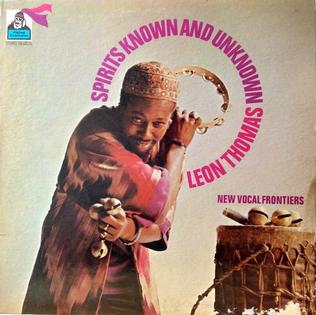
In the vast tapestry of jazz, there are few voices as distinctive and unforgettable as Leon Thomas. His unique vocal techniques, particularly his signature yodeling, coupled with his deep spiritual and avant-garde sensibilities, set him apart from the mainstream. While he is perhaps best known for his collaborations with Pharoah Sanders and other luminaries of the 1960s free jazz movement, Thomas’ solo debut “Spirits Known and Unknown,” released in 1970, captures a moment of artistic transition and innovation. This album marked the beginning of his solo career, and it remains a crucial document in the history of vocal jazz. This post dives into the album’s background, the key tracks, and its lasting significance in the jazz world.
A Voice Like No Other:
Born in 1937, Leon Thomas grew up in East St. Louis, a region rich in musical heritage. His early exposure to jazz, blues, and gospel shaped his vocal style. After studying music in college and performing with jazz legends like Count Basie and Grant Green, Thomas’ big break came when he began collaborating with Pharoah Sanders. His performance on Sanders’ iconic track “The Creator Has a Master Plan,” from the album “Karma,” introduced the world to his unorthodox vocal technique—a mix of scat singing, moaning, howling, and the yodeling style he became famous for. His yodel wasn’t a gimmick but a spiritual invocation, a way of channeling deeper emotions and reaching transcendent levels of expression.
Help yourself to some live jazz, and help the artists and clubs fulfill their dreams. Sign up to Oh! Jazz to watch live and on-demand performances. 25% of your subscription goes back to the artists and 10% to the clubs.
Learn more about Oh! Jazz here.
Thomas’ innovative approach caught the attention of Bob Thiele, a visionary producer behind the Flying Dutchman label, which had established itself as a home for experimental and avant-garde jazz. Thiele, who had produced for icons like John Coltrane, believed in Thomas’ ability to push jazz into new frontiers. In October 1969, at a New York City studio, Thomas recorded “Spirits Known and Unknown” alongside an impressive roster of musicians, including saxophonist James Spaulding, bassist Cecil McBee, pianist Lonnie Liston Smith, drummer Roy Haynes, and Sanders (listed under the pseudonym “Little Rock”).
The Music of “Spirits Known and Unknown:”
“Spirits Known and Unknown,” subtitled “New Vocal Frontiers,” is an apt reflection of its contents. The album comprises seven tracks that combine Thomas’ spiritual and political messages with free-flowing, often unpredictable jazz. The result is a record that is at once deeply personal and universal, rooted in the turbulent social and political climate of the late 1960s while speaking to broader human experiences of struggle, hope, and transcendence.
- “The Creator Has a Master Plan (Peace)” – The album opens with a shorter version of “The Creator Has a Master Plan,” co-written by Thomas and Pharoah Sanders. The track became Thomas’ signature piece, embodying his spiritual outlook and vocal innovation. Here, the yodel is more restrained than in Sanders’ original 32-minute rendition on “Karma,” but it remains central to the song’s emotive power. The yodel rises during the refrains, bubbling up like an offering to the heavens. Thomas’ voice alternates between gentle lyricism and impassioned cries, supported by Lonnie Liston Smith’s soothing piano lines. This rendition, clocking in at just over four minutes, distills the essence of Thomas’ collaboration with Sanders into a concise and accessible form, preparing the listener for the more challenging material that follows.
- “One” and “Echoes” – The second track, “One,” shifts the album’s tone. Written by Thomas, the song showcases his improvisational prowess. Over a fast-moving rhythm led by Lonnie Liston Smith’s piano and James Spaulding’s sharp alto saxophone lines, Thomas alternates between scatting, yodeling, and lyrical singing. His vocal expressions weave in and out of the song’s structure, defying conventional boundaries. “Echoes” continues in this vein, with Thomas’ voice entwining itself with Spaulding’s flute and pan pipes, creating a mystical, almost otherworldly atmosphere. Thomas’ voice soars over the arrangement, pulling the listener deeper into his vision of cosmic jazz.
- “Song for My Father” – Horace Silver’s timeless composition “Song for My Father” emerges as one of the album’s most unexpected yet captivating moments. In this track, Leon Thomas offers a uniquely inventive interpretation, transforming the familiar melody into something distinctly his own. His emotional depth is palpable throughout, imbuing the tune with such intensity that it feels almost miraculous how he manages to contain the raw power of his expression. This rendition not only honors the original but elevates it, leaving a lasting emotional impact on the listener.
- “Damn Nam (Ain’t Goin’ to Vietnam)” – As the album progresses, Thomas’ political convictions come to the forefront. “Damn Nam (Ain’t Goin’ to Vietnam)” is a fiery protest song that directly addresses the Vietnam War. With its insistent rhythm and fierce vocals, the track is almost a rant, but it’s a highly musical one. Thomas delivers a scathing critique of the war, channeling the anger and frustration of many Americans during the late 1960s. His ability to blend political messaging with melodic invention is on full display here. The rhythm section, particularly Roy Haynes’ driving drumming and Richard Landrum’s bongos, provides a relentless backdrop for Thomas’ vocal outbursts.
- “Malcolm’s Gone” – “Malcolm’s Gone,” co-written by Thomas and Pharoah Sanders, is the album’s longest track and its most profound. A tribute to Malcolm X, the song is an intense meditation on loss, power, and legacy. Sanders’ tenor saxophone is at its rawest and most expressive, wailing and crying out in grief. Thomas’ voice follows suit, oscillating between calm reflection and impassioned outcry. The Eastern-inspired improvisation that characterizes much of Sanders’ work during this period is present here, giving the track a spiritual dimension. The tension between Thomas’ vocals and the band’s improvisation creates a deeply moving tribute to one of the most important figures of the Civil Rights Movement.
- “Let the Rain Fall On Me” – The album closes on a more reflective note with “Let the Rain Fall On Me.” Composed by Aaron Bell and Carla Huston, the track is a relatively straightforward jazz ballad, featuring a beautiful piano solo from Lonnie Liston Smith. After the intensity of “Malcolm’s Gone,” this track offers a chance to breathe, to reflect on the emotional journey of the album. Thomas’ voice is smooth and soulful, reminding listeners that beneath the avant-garde experimentation lies a singer capable of deep tenderness and emotional connection.
The Legacy of “Spirits Known and Unknown:”
“Spirits Known and Unknown” remains a landmark album in the history of jazz, not just because of Leon Thomas’ groundbreaking vocal techniques, but also because of its seamless blend of spirituality, political consciousness, and musical innovation. Thomas was a pioneer in expanding the possibilities of the human voice within jazz, and this album captures him at the height of his creative powers.
The reception of the album was overwhelmingly positive. Critics such as Thom Jurek of AllMusic praised Thomas for proving his versatility and accessibility, noting that his music transcends avant-garde labels, appealing to a wide audience through its emotive power. Robert Christgau, in his Consumer Guide, highlighted Thomas as one of the most interesting jazz vocalists to emerge in a long time, acknowledging his inventive approach to jazz singing.
Though Leon Thomas never became a household name, his influence can be heard in the work of countless jazz vocalists who followed him. His use of the voice as an instrument, capable of expressing the full range of human emotion, paved the way for future generations of musicians to explore new vocal possibilities.
“Spirits Known and Unknown” stands as one of Leon Thomas’ finest achievements, a masterwork that challenges and inspires in equal measure. It is an album that captures the spirit of an era, while also transcending time through its spiritual depth and musical innovation. For those willing to journey through its sonic landscapes, the rewards are immense—a glimpse into the mind of a true jazz visionary.
References:
- Larkin, C. (2004). The Virgin Encyclopedia of Jazz. Virgin Pub.
- “Spirits Known and Unknown” album cover art. Retrieved from https://en.wikipedia.org/wiki/File:Spirits_Known_and_Unknown.jpg

Leave a Reply