Introduction:
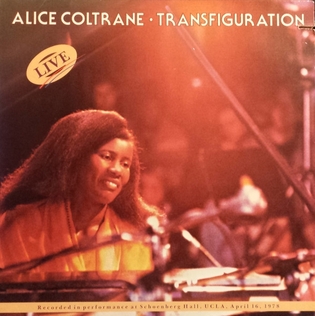
Alice Coltrane’s album Transfiguration stands as a testament to her musical genius and spiritual depth. Recorded live at Schoenberg Hall, UCLA, in April 1978, this double album showcases Coltrane’s mastery of the piano and organ, accompanied by bassist Reggie Workman and drummer Roy Haynes. The album features six tracks, including an extended version of John Coltrane’s “Leo,” and highlights Coltrane’s unique blend of free jazz and spiritual exploration.
Musical Exploration and Spiritual Depth:
Transfiguration opens with the title track, a sprawling composition that sees Coltrane exploring whole-tone improvisations with a sense of profound depth. Her piano solo on “One for the Father” is a moving tribute, blending the emotionalism of gospel music with the harmonic complexity of classical composers like Shostakovich and Stravinsky. The addition of an overdubbed string section on “Prema” adds another layer of richness to the already deep spiritual themes present in the music.
Help yourself to some live jazz, and help the artists and clubs fulfill their dreams. Sign up to Oh! Jazz to watch live and on-demand performances. 25% of your subscription goes back to the artists and 10% to the clubs.
Learn more about Oh! Jazz here.
Collaboration and Musical Synergy:
Throughout the album, Coltrane’s collaboration with Workman and Haynes is telepathic. Their interplay on “Leo” is a highlight, as they navigate John Coltrane’s complex system of relating 12 tones to the 12 signs of the zodiac. Coltrane’s organ soloing on this track is particularly striking, pushing the boundaries of tonality and harmonic structure in ways that are both innovative and deeply emotional.
Critical Reception and Legacy:
Critics and fans alike have praised Transfiguration for its ambitious scope and emotional resonance. Thom Jurek of AllMusic called it “a true masterpiece” and stated that “if you can only own one Alice Coltrane record, this should be it.” The album’s blend of spiritual depth and musical exploration has solidified its place as one of Coltrane’s most important and influential works.
Transfiguration stands as a testament to Alice Coltrane’s musical and spiritual journey. Her ability to blend complex musical ideas with profound spiritual themes set her apart as a truly unique artist. The album’s impact continues to be felt today, inspiring new generations of musicians and listeners to explore the boundaries of music and spirituality.
References:
- Berkman, F.J. (2010). Monument Eternal: The Music of Alice Coltrane. Wesleyan University Press.
- Cook, R. (2008). The Penguin Guide to Jazz Recordings. Penguin Books.
- “Transfiguration” album cover art. Retrieved from https://en.wikipedia.org/wiki/File:Alice_Coltrane_Transfiguration.jpg

Leave a Reply