Introduction:
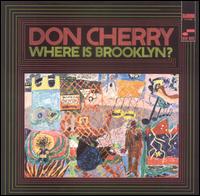
Released in 1969 on the renowned Blue Note label, Don Cherry’s “Where Is Brooklyn?” remains a bold statement in free jazz—a complex, high-energy album that challenges listeners while showcasing Cherry’s willingness to push the boundaries of jazz composition and performance. With contributions from notable avant-garde musicians such as Pharoah Sanders on tenor saxophone and piccolo, Henry Grimes on bass, and Ed Blackwell on drums, the album captures a remarkable interplay among artists at the forefront of jazz innovation.
Album Background and Context:
Recorded on November 11, 1966, at Van Gelder Studio in Englewood Cliffs, New Jersey, “Where Is Brooklyn?” was Cherry’s last album for Blue Note. Known for its exceptional sound quality and acoustics, Van Gelder Studio was the birthplace of countless classic jazz albums, giving Cherry’s music the ideal setting for its detailed, vibrant sound.
Help yourself to some live jazz, and help the artists and clubs fulfill their dreams. Sign up to Oh! Jazz to watch live and on-demand performances. 25% of your subscription goes back to the artists and 10% to the clubs.
Learn more about Oh! Jazz here.
The recording marked a pivotal period in Cherry’s career. Cherry had already developed a reputation as a daring cornetist, a pioneer of free jazz, and a key collaborator with Ornette Coleman. His earlier Blue Note albums, namely “Complete Communion” and “Symphony for Improvisers,” had utilized continuous medleys where compositions flowed into one another in a seamless progression. However, “Where Is Brooklyn?” signaled a departure from this format. Rather than treating the album as a continuous suite, Cherry chose to present each composition as a separate entity, giving the music an individualized structure that allowed each track to breathe independently. This shift in approach emphasized spontaneity and group interaction over thematic unity, highlighting a new phase in Cherry’s creative vision.
The Musicians:
Cherry assembled an impressive lineup for “Where Is Brooklyn?,” drawing on collaborators who shared his avant-garde leanings. Each musician brought a distinct voice to the project, contributing to the album’s unconventional, vibrant texture.
- Don Cherry (Cornet): Cherry’s cornet is, as always, front and center. Known for his exploratory spirit and ability to express emotion through fragmented, open-ended phrasing, Cherry leads the ensemble with a raw, almost confrontational approach to melody.
- Pharoah Sanders (Tenor Saxophone, Piccolo): Sanders, a saxophonist known for his deep, spiritual sound and collaborations with John Coltrane, brings a powerful, intense energy. His playing on “Where Is Brooklyn?” balances Cherry’s melodic lines with a blend of fierceness and sensitivity, lending an additional layer of emotional depth.
- Henry Grimes (Bass): Grimes, a talented bassist in both mainstream and avant-garde jazz, anchors the music with a grounded yet fluid sense of rhythm. His basslines add a subtle structural backbone, allowing the soloists freedom while maintaining cohesion within the compositions.
- Ed Blackwell (Drums): A versatile drummer and longtime collaborator with Cherry, Blackwell’s Afro-Caribbean-influenced drumming style is rhythmic and complex. His drumming on “Where Is Brooklyn?” lends the music a propulsive energy that moves beyond traditional jazz rhythms, pushing the music toward a new territory.
Track listing:
All compositions by Don Cherry
- “Awake Nu” – 6:55
- “Taste Maker” – 6:48
- “The Thing” – 5:50
- “There Is the Bomb” – 4:51
- “Unite” – 17:48
Reception and Legacy:
Upon its release, “Where Is Brooklyn?” received mixed reviews. Some critics, such as those from The Rolling Stone Jazz Record Guide and The Penguin Guide to Jazz Recordings, appreciated the album’s intensity and focus on group dynamics. The Penguin Guide authors called it “a great piece of work,” noting its thoughtful energy and detailed approach to composition.
AllMusic’s Steve Huey offered a nuanced take, suggesting that while the album might lack the cohesive themes of “Complete Communion,” it still has much to offer in terms of group interaction and individual expression. Ollie Bivens of All About Jazz emphasized the challenging nature of the music, describing it as “in-your-face” and rewarding for those willing to dive into its avant-garde elements.
The album’s impact on the free jazz scene has been significant, with the Scandinavian trio “The Thing” naming themselves after one of its tracks, underlining its long-lasting influence. In 2022, Ezz-thetics reissued “Where Is Brooklyn?” alongside Cherry’s “Eternal Rhythm,” introducing the album to a new generation of listeners and reaffirming its place as a classic in the avant-garde jazz canon.
“Where Is Brooklyn?” represents Don Cherry’s commitment to expanding the vocabulary of jazz. By blending structure with spontaneity, Cherry and his collaborators crafted an album that challenges traditional notions of melody and rhythm. This work emphasizes group dynamics over individual virtuosity, highlighting a musical philosophy that values collective creativity. For listeners willing to engage with its intensity, “Where Is Brooklyn?” remains a rewarding journey into the heart of avant-garde jazz, a testament to Don Cherry’s legacy as a boundary-breaking artist.
Whether you’re a seasoned jazz enthusiast or a newcomer to avant-garde sounds, “Where Is Brooklyn?” stands as a powerful, daring album that encapsulates Don Cherry’s artistic courage and commitment to innovation.
References:
- Swenson, J. (1985). Rolling Stone Jazz Record Guide. Random House.
- Cook, R. & Morton, B. (2008). The Penguin Guide to Jazz Recordings. Penguin Books.
- “Where Is Brooklyn?” album cover art. Retrieved from https://en.wikipedia.org/wiki/File:Where_is_Brooklyn.jpg

Leave a Reply